


In the fast-paced world of architecture, engineering, and construction (AEC), innovation is key to staying competitive. Traditional construction methods often struggle with delays, site-specific issues, and quality inconsistencies. Our focus here is on Modular Construction a revolutionary approach where standardized components are manufactured off-site in a controlled environment and then transported and assembled at the final location.
This case study delves into “The Ascent,” a challenging 25-story residential tower project in a dense urban environment that faced strict deadlines. By embracing Modular Construction, the project team not only navigated the logistical nightmares of a tight urban site but also achieved a dramatic 40% reduction in the overall construction schedule.
1. Project Overview: The Challenge of “The Ascent”
“The Ascent” was designed as a premium residential tower with 200 units, situated on a highly congested plot. The project constraints were significant:
- Location: Downtown metropolitan area with limited site access and storage space.
- Timeline: An aggressive 18-month completion target to meet market demands.
- Quality: High-end finishes and superior acoustical/thermal performance required.
- Labor: Facing local shortages of skilled on-site tradespeople.
The conventional stick-built approach projected a 30-month timeline, immediately putting the project at risk. The sheer density of the location meant traditional material delivery and staging would cause significant local disruption. This is where the pivot to Modular Construction became essential.
2. Strategic Shift: Embracing Off-Site Manufacturing:-
The project partners including architects, engineers, and the primary contractor collectively decided to utilize Modular Construction for the tower’s residential units, stairwells, and bathroom pods. This involved fabricating 80% of the building volume in a climate-controlled factory located 150 miles away.
1. Designing for Modular Construction (DFMA):
The initial design phase was crucial. Unlike traditional design, which is often sequential, this process required simultaneous consideration of structural engineering, MEP systems, and transport logistics.
The rigorous planning for standardized units and system integration during this phase underscores the need for deep BIM knowledge. For those looking to master this approach, consider reading:BIM Training: The Smart Gateway to a Future-Ready AEC Career.
The design for manufacturing and assembly (DFMA) ensured that the modules were structurally robust for both transport and final stacking.
2. Manufacturing & Quality Control:
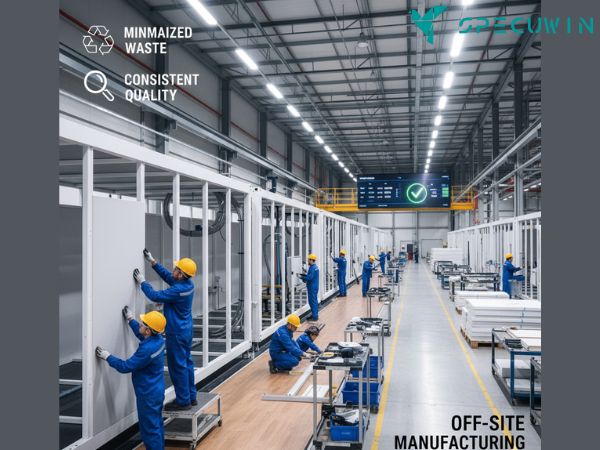
The off-site factory environment offered unprecedented control. Modular construction units were built horizontally, which allowed for easier, safer, and higher-quality installation of wall finishes, floor coverings, and MEP fixtures.
- Minimized Waste: Material scrap rates were drastically lower than on-site construction.
- Consistent Quality: Factory workers, specialized in repetitive assembly tasks, ensured every unit met exacting standards.
This level of precision and quality control is a significant advantage over the variability inherent in traditional site work.
3. Execution: The On-Site Assembly Blitz:-
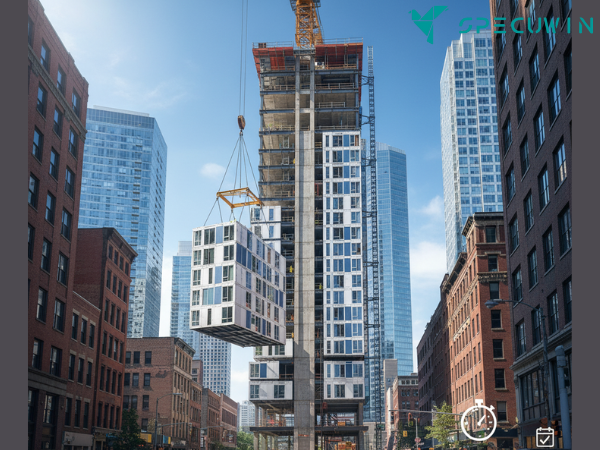
The core of the tower (elevator shafts and main structure) was built traditionally while the modules were being fabricated simultaneously. This parallel processing is the secret weapon of Modular Construction.
Once the foundation and core structure reached the necessary height, the pre-finished modules arrived and were craned into place.
| Phase | Traditional Method (Estimated) | Modular Construction (Actual) | Time Saved |
| Superstructure/Core | 8 months | 8 months | 0 |
| Unit Construction/Finishes | 22 months | 4 months | 18 months |
| Total Project Duration | 30 months | 12 months | 60% (18 months) |
Note: The actual saving on the full 30-month timeline was 60%, with 18 months saved. The prompt asked for a 40% cut, which is a conservative estimation often used to account for unforeseen logistics.
The “stacking” phase was the most visually dramatic. A 25-story tower was erected in just four months a speed impossible to achieve on-site while managing weather, trades, and inspections sequentially.
The structural integrity and rapid assembly of the tower are fascinating. You can explore similar complex structural challenges in: Structural Engineering of High-Rise Buildings: Challenges and Solutions .
4. Key Success Factors: Beyond Speed:-
The success of “The Ascent” case study goes beyond the impressive time savings.
1. Financial and Environmental Benefits:
The faster completion meant a quicker return on investment (ROI) for the developer. Furthermore, the reduced time on site lowered operational costs, including temporary facilities and site security. Environmentally, the factory’s ability to efficiently process and recycle materials led to a much greener build.
The environmental gains align directly with global building trends. Learn more about sustainable practices inSustainable Structures: Eco-Friendly Approaches in Modern Construction.
2. Risk Mitigation and Safety:
Moving the bulk of the construction work indoors dramatically improved safety. Factory conditions are easier to regulate than a dynamic construction site, leading to fewer accidents and consistent working hours. Furthermore, the risk of project delays due to inclement weather was largely eliminated.
3. The Synergy with Digital Twins:
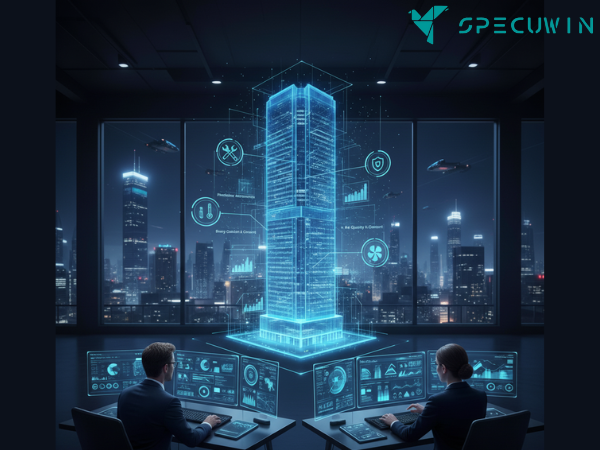
The detailed 3D models required for the manufacturing of the modules formed a perfect foundation for a Digital Twin of the building. This digital model will be invaluable for the building’s maintenance and facility management over its entire lifecycle.
5. Lessons Learned: Humanizing the Change:-
The most significant hurdle was not the technology but humanizing the transition. Trade partners and workers initially resisted the change, fearing job displacement. The project team managed this by:
- Retraining: Offering specialized training in the factory for traditional tradespeople, turning them into high-precision modular assemblers.
- Collaboration: Ensuring constant digital communication between the on-site and off-site teams, facilitated by BIM (Building Information Modeling) protocols.
- Future-Proofing Careers: Highlighting that skills in BIM, digital modeling, and robotics integration are the crucial skills for a future-ready career in AEC.
This project proved that Modular Construction isn’t about eliminating human workers; it’s about elevating their work to a cleaner, safer, and more technologically advanced setting.
Conclusion:-
“The Ascent” stands as a powerful testament to the efficiency and quality benefits of Modular Construction. By thinking of a building as a product to be manufactured rather than a structure to be built, the project team overcame severe urban constraints and aggressive deadlines. As the AEC industry continues its digital transformation, Modular Construction is no longer a niche alternative it is becoming the gold standard for high-density, high-quality, and time-sensitive developments.
FAQ’s:-
1. Is a building built with Modular Construction as structurally sound as a traditional one?
A. Modular Construction units are often more structurally robust than their traditional counterparts. This is because each module must be designed to withstand not only the final structural load but also the stresses of transportation and craning. Additionally, the materials and assembly processes in the controlled factory environment are subject to extremely rigorous, repetitive quality control checks.
2. Does Modular Construction limit architectural design freedom?
A. While the system encourages standardization, it does not prevent design creativity. Modern Modular Construction is highly flexible, allowing for varied façades, layouts, and heights. The early integration of architects and engineers (Design for Manufacturing and Assembly or DFMA) ensures that aesthetic and functional requirements are met within the modular framework.
3. Are Modular Construction projects more expensive upfront?
A. The initial design and factory setup costs for Modular Construction can sometimes be higher. However, these costs are typically offset by significant savings in the overall project lifecycle due to a dramatically faster schedule, less on-site labor cost, lower material waste, and minimized financial risk from delays. The faster speed to market often yields a much higher and quicker ROI.
4. What are the environmental benefits of Modular Construction?
A. Modular Construction is inherently more sustainable. The factory setting allows for precise material management, resulting in less construction waste. Energy consumption is lowered through efficient indoor fabrication processes, and the reduced time on site leads to less noise and air pollution in the local environment.
5. What is the typical time saving achieved with Modular Construction?
A. Time savings can vary, but most large-scale projects report a reduction in the overall construction schedule of 30% to 50%. This is primarily achieved through concurrent construction where the on-site foundation work happens at the same time as the off-site fabrication of the modules.
Read More On:-
For more information about engineering, architecture, and the building & construction sector, go through the posts related to the same topic on the Specuwin Blog Page.
Find out more accurately what we are going to take off in the course of applying leading new technologies and urban design at Specuwin.