

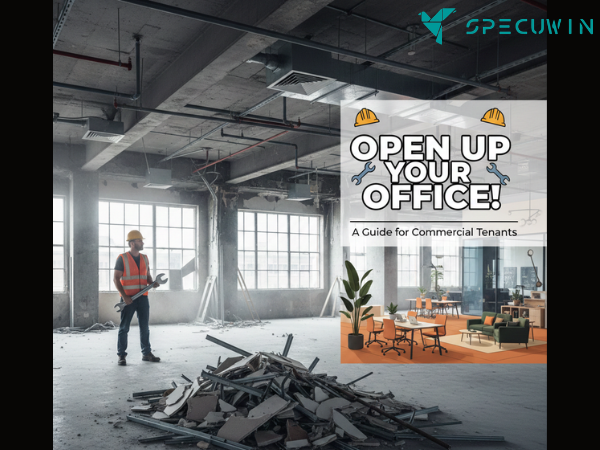
Removing a wall to create an open-concept office can breathe new life into a workspace, but it’s a decision that carries significant weight literally. For Commercial Tenants, the line between a sleek, modern layout and a structural catastrophe is thinner than you might think.
This guide will walk you through the structural, legal, and logistical minefield of knocking down walls in a rented commercial space.
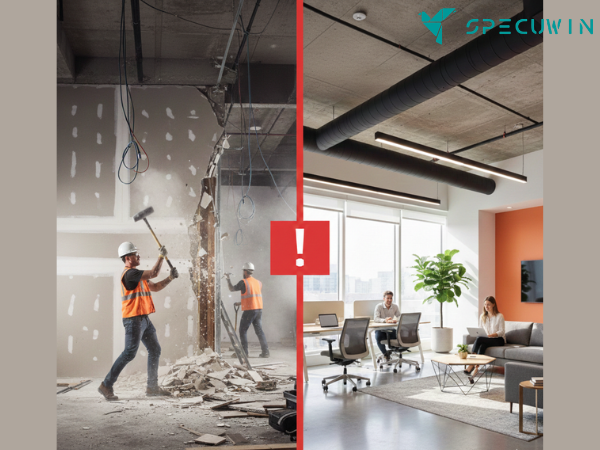
1. The Essential Question for Commercial Tenants: Load-Bearing vs. Partition:-
Before you pick up a sledgehammer, you need to understand what you’re looking at. In the world of architecture, walls generally fall into two categories:
A. Load-Bearing Walls:
These are the “heavy lifters.” A load-bearing wall supports the weight of the floor above it, the roof, or the overall structural integrity of the building. If a Commercial Tenant removes one of these without proper reinforcement, the ceiling could sag or, in extreme cases, collapse.
B. Partition (Non-Load-Bearing) Walls:
These are purely for aesthetics or privacy. They divide space but don’t hold anything up. While easier to remove, they still often contain “hidden” complexities like electrical conduits, HVAC ducts, or plumbing lines.
2. Why Commercial Tenants Must Consult a Structural Engineer:-
You might think you can tell the difference by tapping on the drywall, but commercial buildings are complex beasts. Commercial Tenants often encounter steel frames, concrete slabs, and tension cables that aren’t visible to the naked eye.
A professional structural engineer will look at the original blueprints and perform a site visit to determine the “role” of the wall. Understanding the Role of a structural engineer is the first step in ensuring your renovation is safe and compliant.
3. Structural Risks and Solutions for Commercial Tenants:-
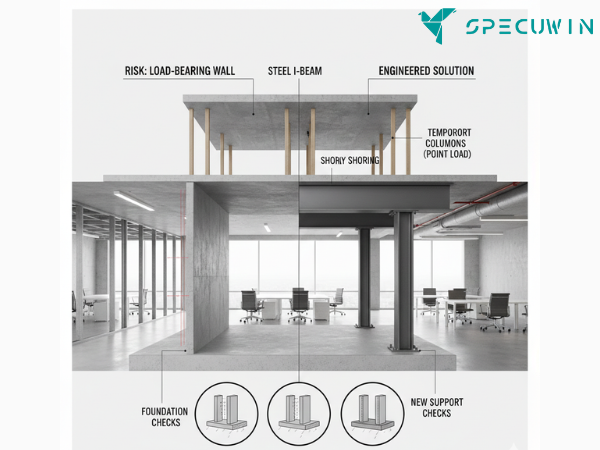
If the wall you want to remove is load-bearing, all is not lost. However, it requires an engineered solution. Usually, this involves:
- Steel I-Beams: Replacing the wall with a beam to transfer the weight to existing columns.
- Temporary Shoring: Propping up the ceiling while the work is being done.
- Foundation Checks: Ensuring the floor can handle the new “point loads” created by the columns supporting the new beam.
For Commercial Tenants, failing to address these risks can lead to Top 10 structural issues that plague residential and commercial buildings alike.
4. The Legal Maze: Leases and Permits for Commercial Tenants:-
Even if the wall is a simple partition, you don’t own the building. Commercial Tenants must navigate several layers of approval:
- Landlord Consent: Your lease likely has an “Alterations” clause. You will need written permission (often called a License to Alter) before starting work.
- Building Permits: Most jurisdictions require a permit for any structural change.
- Code Compliance: You must ensure the new open layout still meets fire exit requirements and ADA accessibility standards.
5. Hidden Infrastructure: What’s Inside the Walls?
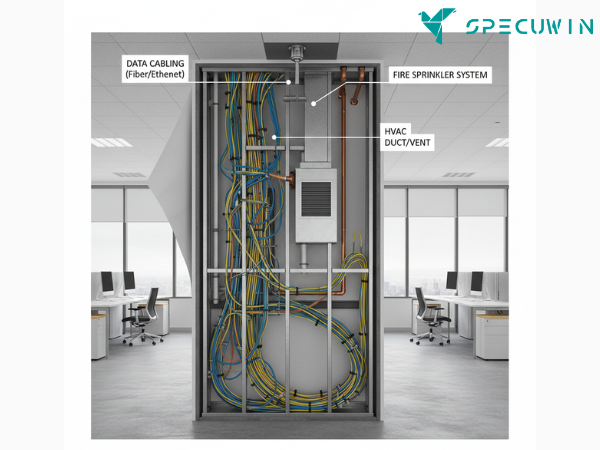
Commercial Tenants often forget that walls are “highways” for building services. Even a non-structural wall might contain:
- Data Cabling: Fiber optics and ethernet that run your office network.
- HVAC: Air returns or supply vents.
- Fire Sprinklers: Moving a wall might require a complete redesign of the sprinkler head layout to maintain legal coverage.
6. Budgeting the “Open Concept” for Commercial Tenants:-
Opening up a floor plan is rarely as cheap as a single “demolition” line item. Commercial Tenants should budget for:
- Professional Fees: Structural engineers and architects.
- Permit Fees: Local government costs.
- Remediation: Patching the floor and ceiling where the wall used to be. (Often, the carpet or ceiling tiles won’t match, leading to a larger replacement project).
7. Maximizing the New Space: Advice for Commercial Tenants:-
Once the wall is gone, how do you make the most of it? Open plans are great for collaboration but can be tough on focus. Consider “Zoning” your space using:
- Acoustic Panels: To dampen the “echo” of an open office.
- Modular Furniture: To keep the space flexible.
- BIM Integration: If you are doing a large-scale renovation, using Building Information Modeling (BIM) can help you visualize the workflow and “clash detection” of utilities before you even start building.
Summary for Commercial Tenants:-
Removing a wall is a powerful way to transform a cramped office into a vibrant, future-ready workspace. However, it requires a disciplined approach: verify the structural load, get landlord approval, and always consult the pros. By doing your homework, you ensure that your “open plan” is a foundation for growth, not a structural liability.
FAQ’s:-
1. How do I know if a wall is load-bearing in my office?
A. Without blueprints, it’s difficult to be 100% sure. Generally, walls that run perpendicular to floor joists or are made of masonry/concrete are load-bearing. However, Commercial Tenants should always hire a professional to confirm.
2. Can I remove a wall if it has electrical outlets?
A. Yes, but you will need a licensed electrician to safely disconnect, reroute, or terminate the wiring. Never just cut into a wall without checking for live power.
3. Will my landlord pay for the wall removal?
A. Usually, no. This is typically considered a “Tenant Improvement” (TI). However, if you are negotiating a new lease, you can sometimes secure a “TI Allowance” where the landlord provides a budget for these types of upgrades.
4. How long does the process take?
A. The physical demolition might take a day, but the “pre-game” getting engineering reports, landlord approval, and city permits—can take 4 to 12 weeks.
5. Do I need a structural engineer for a partition wall?
A. Technically, no, but Commercial Tenants often find it’s worth a small consultation fee to ensure the wall isn’t hiding a structural column or a vital building vent that could cost thousands to move.
Read More On:-
For more information about engineering, architecture, and the building & construction sector, go through the posts related to the same topic on the Specuwin Blog Page.
Find out more accurately what we are going to take off in the course of applying leading new technologies and urban design at Specuwin.