

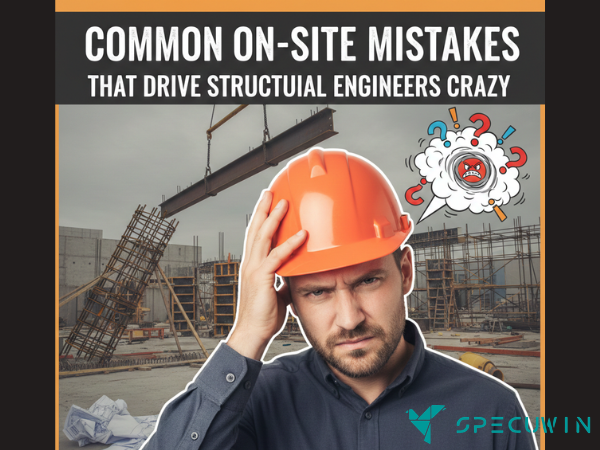
Structural engineering is often a game of millimeters. We spend hundreds of hours calculating loads, analyzing soil reports, and detailing reinforcement to ensure a building remains standing for a century. Then, we walk onto a site and see a plumber cutting through a primary load-bearing beam to fit a 4-inch drainpipe.
It’s enough to make any engineer lose their mind.
While some On-site Mistakes are minor and easily fixed, others compromise the integrity of the entire project. This post dives into the most frequent blunders we see in the field, why they happen, and how you can avoid being the reason your structural engineer has a premature mid-life crisis.

The High Stakes of On-site Mistakes
The relationship between the design office and the construction site is a delicate bridge. When that bridge collapses metaphorically or literally it’s usually because of a lack of communication or a “we’ve always done it this way” attitude.
Understanding these On-site Mistakes isn’t just about making an engineer’s life easier; it’s about project safety, budget control, and legal liability. Whether you are a contractor, a developer, or a homeowner, knowing what to look for can save you thousands in retrofitting costs.
1. Foundation Fails: Poor Soil Management and Excavation:-
Everything starts with the dirt. One of the most common On-site Mistakes involves ignoring the specifications regarding soil bearing capacity or excavation depths.
- Over-excavation: Digging too deep and then filling it back with loose soil creates a soft spot that leads to uneven settling.
- Ignoring Water: Letting a foundation trench fill with water and then pouring concrete into the mud is a recipe for disaster.
- The Solution: Always verify the soil conditions match the structural report. If you aren’t sure how to read one, check out this guide on How to read a structural engineering report.
2. Rebar Recklessness: The “Close Enough” Mentality:-
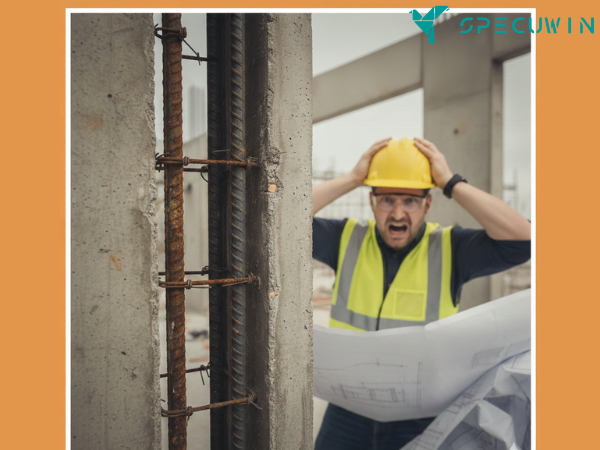
Reinforcement steel (rebar) is the skeleton of your building. Unfortunately, it is often treated like a suggestion rather than a requirement. On-site Mistakes in rebar placement are notoriously difficult to fix once the concrete is poured.
Improper Concrete Cover:
Rebar needs a specific amount of concrete “cover” to protect it from corrosion. When we see rebar pressed right against the formwork, we know that in five years, that steel will rust, expand, and cause the concrete to spall.
Missing or Displaced Ties:
Ties and stirrups hold the longitudinal bars in place and provide shear resistance. When these are spaced too far apart or left out “to save time,” the structural integrity of columns and beams is significantly diminished.
3. The “Swiss Cheese” Effect: Field-Cutting Structural Members:-
This is perhaps the most infuriating of all On-site Mistakes. We call it the “Swiss Cheese” effect when sub-contractors (HVAC, plumbing, electrical) decide that a wooden joist or a steel beam is simply an obstacle in their path.
- Notching Beams: Cutting a deep notch in the middle of a span kills the beam’s strength.
- Drilling Large Holes: There are very specific zones where you can drill through a member. Drilling through the bottom or top flange of a beam is a critical error.
- The Solution: Coordination is key. If a pipe needs to go through a beam, it must be planned in the design phase, not “figured out” with a saw on Tuesday morning.
4. Material Mix-ups: Using the Wrong Strength
Sometimes, On-site Mistakes are as simple as ordering the wrong “flavor” of material. Using a lower grade of concrete or a different type of steel than specified can lead to catastrophic failure.
Engineers select materials based on specific environmental and load factors. Swapping out a 4000 PSI concrete mix for a 2500 PSI mix because it was cheaper or more “available” is not an “optimization” it’s a hazard. Understanding The impact of material selection on structural integrity is vital for any project manager.
5. Ignoring Temporary Loads and Shoring:-
A building is often at its most vulnerable during construction. Many On-site Mistakes occur when contractors stack heavy pallets of bricks or roofing materials on a floor slab that hasn’t reached full strength yet.
- Premature Stripping: Removing the wooden supports (shoring) before the concrete has cured sufficiently.
- Point Loading: Concentrating a massive amount of weight in one small area of an incomplete structure.
6. Connection Errors: The Weakest Link:-
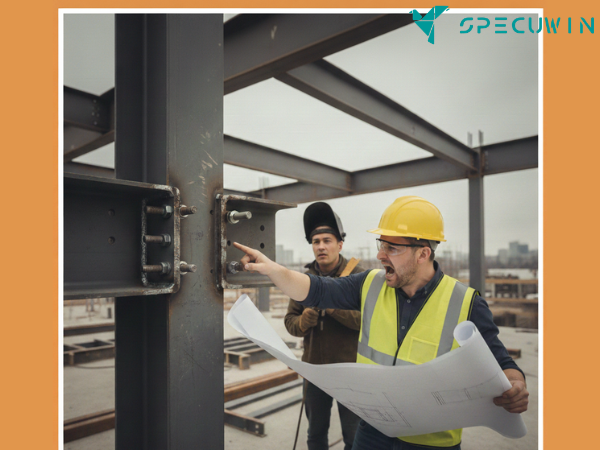
A building is only as strong as its joints. In steel and timber construction, On-site Mistakes regarding bolts, welds, and hangers are rampant.
- Loose Bolts: We often find “snug-tight” bolts where “pre-tensioned” bolts were required.
- Poor Welding: Using unqualified welders on structural joints is a massive liability.
- The Solution: Building a high-rise? The stakes are even higher. Look into the specific challenges and solutions in high-rise structural engineering to see why connection precision matters.
How to Prevent These On-site Mistakes:-
The best way to keep your structural engineer happy (and your building standing) is through communication and technology.
- BIM Integration: Using Building Information Modeling helps catch “clashes” (like a pipe hitting a beam) before you even break ground. It’s why BIM is transforming consultancy today.
- Regular Inspections: Don’t wait for the final walkthrough. If you see something odd, call for an inspection.
- Collaborative Spirit: Contractors and engineers shouldn’t be enemies. Why collaboration between contractors and structural engineers is key is a lesson best learned early.
Conclusion: Reducing On-site Mistakes:-
At the end of the day, structural engineers don’t point out On-site Mistakes because they want to be difficult; they do it because they are the last line of defense for public safety. By respecting the blueprints, coordinating with sub-contractors, and utilizing modern tools like BIM, we can build structures that are safe, efficient, and built to last.
If you suspect your project is suffering from some of these issues, it might be time for a professional eye. Be sure to look for the Top 5 signs your building needs a structural inspection before the problem becomes permanent.
FAQ’s:-
1. What are the most dangerous On-site Mistakes in residential construction?
A. The most dangerous mistakes involve cutting load-bearing walls without proper temporary shoring and ignoring soil conditions, which can lead to foundation failure.
2. How do On-site Mistakes affect project insurance?
A. If an accident occurs due to a deviation from the engineered plans, insurance companies may deny claims, leaving the contractor or owner liable for all damages.
3. Can BIM help reduce On-site Mistakes?
A. Absolutely. BIM allows for “clash detection,” identifying where mechanical systems might interfere with structural elements before construction begins, preventing field-cutting.
4. What should I do if I find a sub-contractor making On-site Mistakes?
A. Stop work immediately in that area. Consult the structural engineer to see if the damage can be repaired or if a new design solution is required.
5. Are On-site Mistakes common in high-rise buildings?
A. While oversight is stricter, mistakes still happen often involving concrete strength or rebar placement. This is why structural engineering of high-rise buildings requires constant onsite monitoring.
Read More On:-
For more information about engineering, architecture, and the building & construction sector, go through the posts related to the same topic on the Specuwin Blog Page.
Find out more accurately what we are going to take off in the course of applying leading new technologies and urban design at Specuwin.