

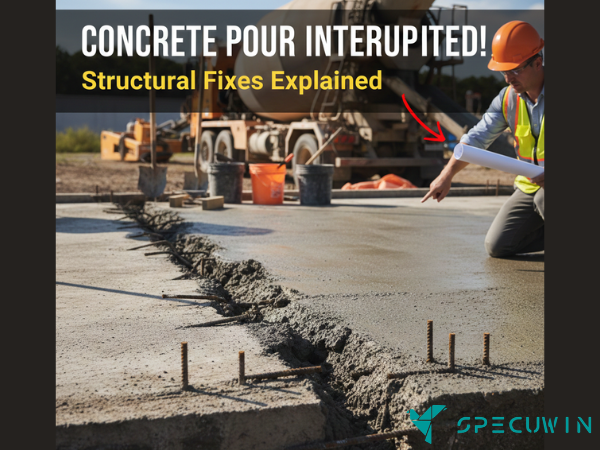
In the world of construction, timing isn’t just a logistical preference; it is a structural necessity. When you are managing a Concrete Pour, the goal is a seamless, monolithic structure where the material bonds perfectly from top to bottom. But construction sites are unpredictable. A pump failure, a sudden thunderstorm, or a late delivery truck can bring a Concrete Pour to a grinding halt.
When this happens, you aren’t just losing time you are facing the creation of a “cold joint.” This is a vulnerability in the concrete where the first batch has begun to set before the second batch can be integrated. If not handled with technical precision, this interruption can lead to water seepage, structural weakness, and long-term durability issues.
In this comprehensive guide, we will explore the science of interrupted concrete, how to mitigate the damage, and the structural fixes required to ensure your building remains “future-ready.”
1. The Science of the Interrupted Concrete Pour:-
Concrete is a living material undergoing a chemical reaction called hydration. Ideally, a Concrete Pour happens fast enough that the entire mass stays “plastic” (workable) until the form is full.
What is a Cold Joint?:
A cold joint occurs when the initial layer of a Concrete Pour loses its plasticity and begins its initial set. When fresh concrete is placed on top of this hardened layer, they do not intermix. Instead of a single solid block, you end up with two separate slabs sitting on top of one another.
Why Interruption is Risky:
- Permeability: The seam of an interrupted Concrete Pour acts as a highway for moisture and chemicals.
- Structural Integrity: Without a chemical bond, the joint cannot transfer shear forces effectively.
- Aesthetics: A visible line will always remain, which is a major issue for architectural concrete.
2. Immediate Site Actions During a Concrete Pour Interruption:-
If the trucks stop rolling, you have a limited window of time. Your immediate actions determine whether the Concrete Pour can be saved or if a structural repair will be necessary later.
Assessment of the Set Time:
Check the “fingerprint” of the concrete. If you can still push a rebar or a tool into the surface easily, the Concrete Pour is still active. If it resists, you have a cold joint.
Creating a Bulkhead:
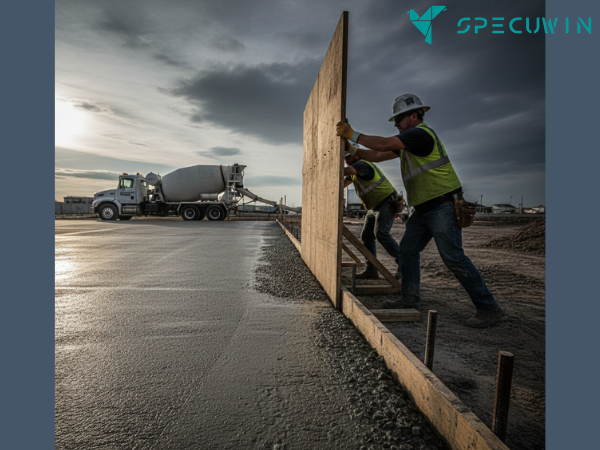
If you know the delay will be long, do not let the concrete “taper” off into a thin edge. Cleanly terminate the Concrete Pour with a vertical bulkhead. A vertical joint is much easier to fix structurally than a messy, sloped “feathered” edge.
3. Structural Fixes for a Halted Concrete Pour:-
Once a cold joint has formed, you cannot simply pour more concrete and hope for the best. You must treat the interface to ensure structural continuity.
Surface Preparation and Cleaning:
To fix a stalled Concrete Pour, the hardened surface must be “roughened.” This involves removing the laitance (the milky layer on top) to expose the aggregate.
- Wire Brushing: Good for very fresh sets.
- Chipping Hammers: Necessary for concrete that has cured for more than 24 hours.
- Pressure Washing: High-PSI water jets can expose the aggregate without damaging the underlying structure.
Using Bonding Agents:
Before resuming the Concrete Pour, applying an epoxy bonding agent or a “slurry” of cement and water can help the new material adhere to the old. This is critical in Modern Materials in Structural Engineering where high-performance bonds are required to meet safety codes.
Reinforcement Drills and Dowels:
If the interruption happened in a high-stress area (like a beam or a load-bearing wall), you may need to drill into the hardened section and grout in steel dowels. This “stitches” the two halves of the Concrete Pour together, allowing them to share the load.
4. Engineering Considerations for Concrete Pour Failures:-
When a pour is interrupted, the original design of the building might be compromised. A structural engineer should be consulted to verify if the joint is in a “low-shear” zone.
Understanding What is the Role of a Structural Engineer? is vital here, as they will calculate whether the unplanned joint requires additional carbon fiber wrapping or external bracing. This is especially true in India, where Green Building standards demand high durability to reduce the need for future reconstruction.
5. Prevention: Planning the Perfect Concrete Pour:-
The best way to fix an interrupted pour is to ensure it never happens.
- Backup Equipment: Always have a second vibrator and pump on standby.
- Admixtures: Use “retarders” in the mix during hot weather to extend the window of the Concrete Pour.
- Communication: Ensure the batch plant, the drivers, and the site crew are in constant contact.
For those looking to advance their technical oversight, BIM Training can help project managers simulate the logistics of a major pour before the first truck even arrives, identifying potential bottlenecks in the supply chain.

Conclusion:-
A disrupted Concrete Pour is a high-stress event, but it isn’t the end of the project. By identifying the cold joint early, preparing the surface through mechanical roughening, and potentially using dowels for structural “stitching,” you can maintain the safety of the building. In the AEC industry, being future-ready means knowing how to handle the imperfections of the job site with engineering excellence.
FAQ’s:-
Q1: How long can a Concrete Pour be delayed before it becomes a cold joint?
A. Typically, 30 to 90 minutes depending on the ambient temperature and the use of chemical retarders. In hot weather, this window shrinks significantly.
Q2: Is a cold joint always a structural failure?
A. Not necessarily. If the joint is placed in a zone of low stress and treated with bonding agents, it can be perfectly safe. However, it must be inspected by a professional.
Q3: Can I use water to keep the surface “wet” during a Concrete Pour delay?
A. No. Adding excess water to the surface weakens the water-cement ratio, leading to a “soft” layer that will eventually scale and peel off.
Q4: What is the best tool to fix a hardened edge before resuming a Concrete Pour?
A. A scabbler or a bush hammer is best for creating the “1/4 inch amplitude” roughness recommended by structural codes for optimal bonding.
Q5: Should I stop a Concrete Pour if it starts raining?
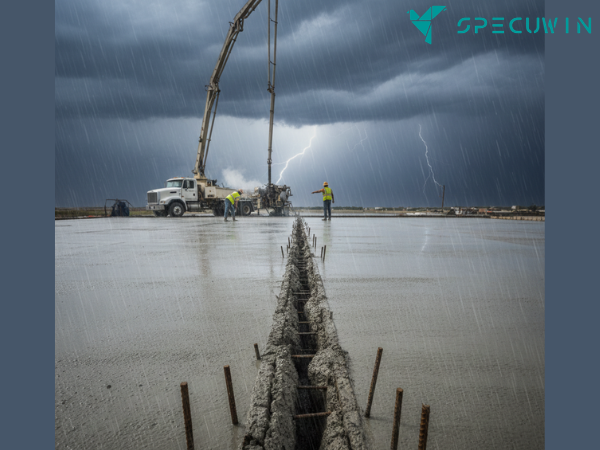
A. Light rain is manageable, but heavy rain can wash out the cement paste. If a downpour occurs, it is better to bulkhead the pour and treat it as a cold joint later.
Read More On:-
For more information about engineering, architecture, and the building & construction sector, go through the posts related to the same topic on the Specuwin Blog Page.
Find out more accurately what we are going to take off in the course of applying leading new technologies and urban design at Specuwin.