

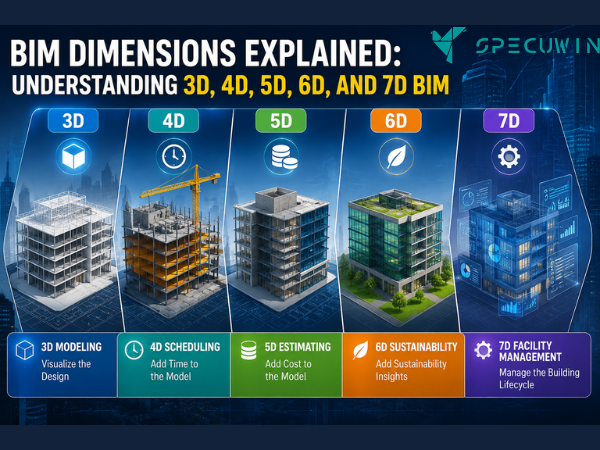
The BIM Dimensions represent the evolution of Building Information Modeling beyond traditional 3D design. While many people associate BIM with intelligent 3D models, modern BIM incorporates additional dimensions that improve project planning, scheduling, budgeting, sustainability, and facility management.
Each BIM dimension adds valuable project information that helps architects, structural engineers, contractors, project managers, and building owners make better decisions throughout a building’s lifecycle. Instead of relying solely on drawings, project teams can analyze time, cost, performance, and maintenance using a single digital model.
In this guide, you’ll learn what BIM Dimensions are, how each dimension works, and why they are essential for modern construction projects.
What Are BIM Dimensions?
BIM Dimensions refer to the different layers of information added to a Building Information Model. While 3D BIM focuses on the building’s geometry, higher dimensions incorporate project scheduling, cost estimation, sustainability, and facility management.
Each additional dimension expands the capabilities of BIM and supports better collaboration across the Architecture, Engineering, and Construction (AEC) industry.
The most commonly used BIM Dimensions include:
- 3D BIM
- 4D BIM
- 5D BIM
- 6D BIM
- 7D BIM
Together, these dimensions provide a comprehensive digital representation of a building throughout its lifecycle.
Why Are BIM Dimensions Important?
Construction projects involve numerous stakeholders, complex schedules, and significant investments. Without integrated project information, teams often face delays, budget overruns, and communication issues.
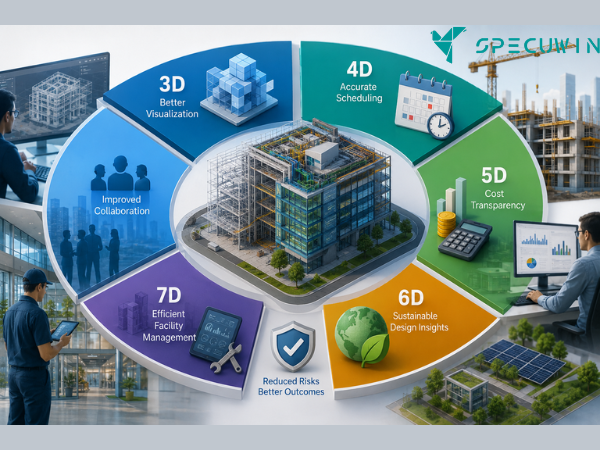
The BIM Dimensions help overcome these challenges by providing:
- Better visualization
- Accurate scheduling
- Cost transparency
- Sustainable design insights
- Efficient facility management
As a result, organizations improve productivity while reducing project risks.
Understanding 3D BIM:-
3D BIM is the foundation of all BIM Dimensions.
It creates an intelligent digital model that represents the physical characteristics of a building. Unlike traditional 2D drawings, 3D BIM includes detailed information about every building component.
Features of 3D BIM:
- Intelligent building models
- Architectural visualization
- Structural modeling
- MEP coordination
- Automatic documentation
Benefits:
- Improved design accuracy
- Better communication
- Easier design reviews
- Enhanced client presentations
Because project teams can visualize the building before construction begins, design decisions become more informed.
Understanding 4D BIM:-
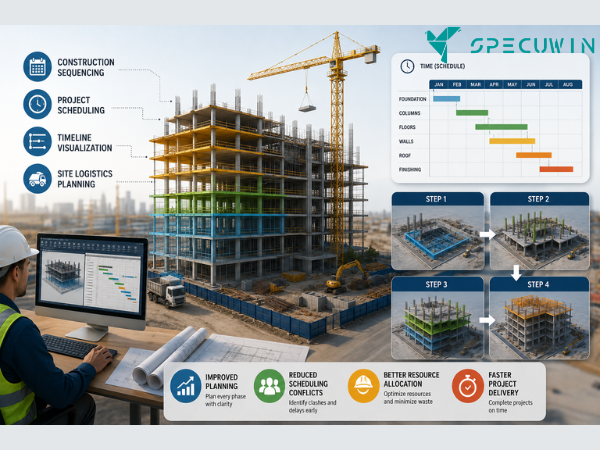
4D BIM adds the element of time to the 3D model.
Every construction activity is linked to the project schedule, allowing teams to visualize how the building will be constructed over time.
Features of 4D BIM:
- Construction sequencing
- Project scheduling
- Timeline visualization
- Site logistics planning
Benefits:
- Improved planning
- Reduced scheduling conflicts
- Better resource allocation
- Faster project delivery
Consequently, contractors can identify potential delays before they affect construction.
Understanding 5D BIM:-
5D BIM integrates cost information with the digital building model.
Every design change automatically updates project estimates, allowing stakeholders to monitor budgets in real time.
Features of 5D BIM:
- Quantity take-offs
- Cost estimation
- Budget forecasting
- Material tracking
Benefits:
- Accurate budgeting
- Better financial planning
- Reduced material waste
- Improved cost control
Therefore, project owners gain greater confidence in financial decision-making.
Understanding 6D BIM:-
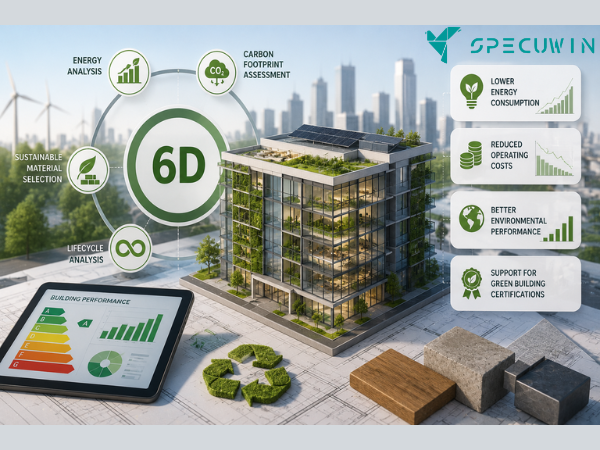
6D BIM focuses on sustainability and long-term building performance.
It provides valuable information that helps optimize energy efficiency and environmental impact throughout a building’s lifecycle.
Features of 6D BIM:
- Energy analysis
- Carbon footprint assessment
- Sustainable material selection
- Lifecycle analysis
Benefits:
- Lower energy consumption
- Reduced operating costs
- Better environmental performance
- Support for green building certifications
As sustainability becomes increasingly important, 6D BIM plays a vital role in responsible construction.
Understanding 7D BIM:-
7D BIM extends the digital model into facility management and asset maintenance.
Once construction is complete, the BIM model becomes a valuable resource for building owners and facility managers.
Features of 7D BIM:
- Asset management
- Equipment maintenance schedules
- Warranty information
- Space management
- Maintenance planning
Benefits:
- Improved building operations
- Faster maintenance
- Better asset tracking
- Lower lifecycle costs
Instead of relying on paper documents, facility managers can access all building information through the BIM model.
Comparison of BIM Dimensions:-
| BIM Dimension | Purpose | Main Benefit |
|---|---|---|
| 3D BIM | Design & Visualization | Better project coordination |
| 4D BIM | Time Management | Improved scheduling |
| 5D BIM | Cost Management | Accurate budgeting |
| 6D BIM | Sustainability | Energy-efficient buildings |
| 7D BIM | Facility Management | Long-term asset management |
Each dimension builds upon the previous one, creating a more comprehensive project management system.
Real-World Applications of BIM Dimensions:-
Organizations across the construction industry use BIM Dimensions to improve project outcomes.
Common applications include:
- Commercial buildings
- Residential developments
- Hospitals
- Airports
- Industrial facilities
- Educational campuses
- Infrastructure projects
- Smart city developments
Additionally, governments increasingly require advanced BIM workflows for public infrastructure projects.
Best Practices for Using BIM Dimensions:-
To maximize the value of BIM Dimensions, organizations should:
- Develop a BIM Execution Plan (BEP)
- Use standardized modeling practices
- Maintain accurate project data
- Perform regular model coordination
- Train project teams continuously
- Implement a Common Data Environment (CDE)
- Follow international BIM standards such as ISO 19650
These best practices improve collaboration while ensuring consistent project information.
Frequently Asked Questions:-
1. What are BIM Dimensions?
A. BIM Dimensions are additional layers of information added to a Building Information Model, including design, scheduling, cost, sustainability, and facility management.
2. What is the difference between 3D and 4D BIM?
A. 3D BIM focuses on the building’s physical model, while 4D BIM adds project scheduling and construction sequencing.
3. Why is 5D BIM important?
A. 5D BIM integrates cost estimation with the digital model, allowing teams to monitor budgets and material quantities more accurately.
4. Which BIM Dimension supports facility management?
A. 7D BIM supports facility management by providing maintenance schedules, asset information, and lifecycle management data.
Conclusion:-
Understanding BIM Dimensions is essential for professionals who want to maximize the benefits of Building Information Modeling. From intelligent 3D visualization to long-term facility management, each dimension adds valuable information that improves collaboration, reduces project risks, and enhances decision-making.
As digital construction continues to evolve, organizations that adopt advanced BIM Dimensions will be better equipped to deliver efficient, sustainable, and high-quality projects. Whether you’re designing a residential building or managing a large infrastructure project, BIM Dimensions provide the foundation for smarter construction and better building performance.
Read More On:-
For more information about engineering, architecture, and the building & construction sector, go through the posts related to the same topic on the Specuwin Blog Page.
Find out more accurately what we are going to take off in the course of applying leading new technologies and urban design at Specuwin.