

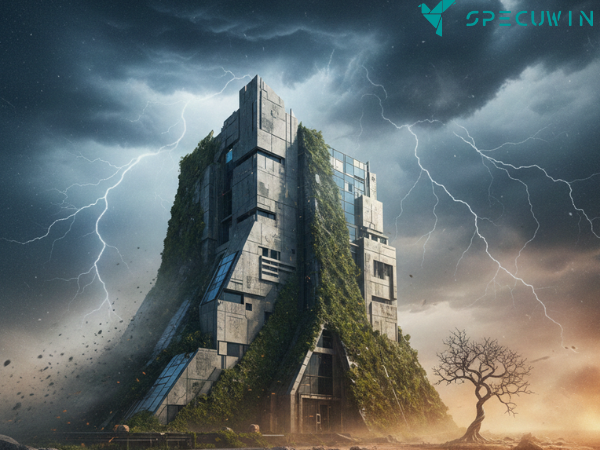
We used to talk about “100-year storms” as if they were rare, almost mythical events that our great-grandchildren might encounter once in a lifetime. Those days are gone. Today, the climate reality has shifted. Architects, engineers, and developers are no longer just designing for aesthetics or standard functionality; we are in a race to adapt our built environment to a volatile climate.
The concept of Extreme Weather has moved from the fringes of environmental science directly into the heart of construction meetings. Whether it is a skyscraper in a hurricane zone, a residential complex facing flash floods, or a bridge enduring unprecedented heatwaves, the mandate is clear: we must build better. But how exactly do we achieve this? It requires a shift in mindset from merely resisting nature to building resilience that allows structures to survive and recover.
In this guide, we will explore the critical strategies, materials, and technologies involved in Designing for Extreme Weather.
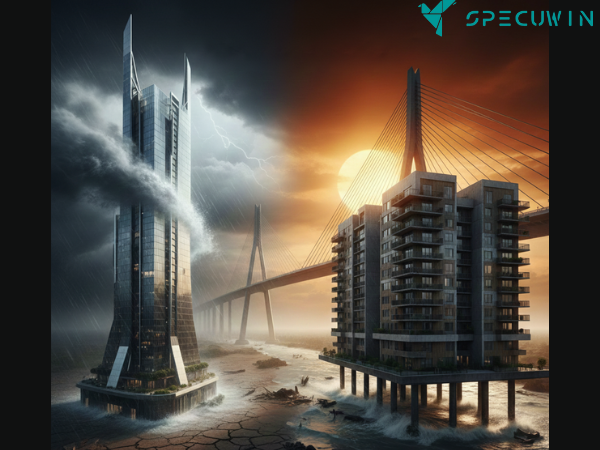
Understanding the Reality of Extreme Weather:-
Before we can solve the problem, we have to understand the scope of the threat. Extreme Weather isn’t just one thing; it is a multi-headed hydra. We are seeing wind speeds that exceed historical maximums, rainfall patterns that overwhelm traditional drainage systems, and thermal expansion issues in materials due to prolonged heat.
For professionals in the AEC (Architecture, Engineering, and Construction) industry, this means historical data is no longer the only reliable predictor for the future. We have to look forward. This shift from reactive to proactive engineering is vital. We are seeing a move where the industry is actively tackling climate change by rethinking how risk is calculated. It is not just about keeping the building standing; it is about ensuring it remains functional during and after an event.
Read more on:- From Risk to Resilience: How Engineers are Tackling Climate Change
Core Principles When Designing for Extreme Weather:-
When we talk about resilience, we are talking about more than just brute strength. You cannot simply pour more concrete and hope for the best. Designing for Extreme Weather requires a nuanced approach known as “passive survivability.”
This concept ensures that a building can maintain critical life-support conditions (like temperature and potable water) even if the power grid fails and external fuel sources are cut off. For example, in high-heat environments, this means prioritizing natural ventilation and orientation that minimizes solar gain. In flood-prone areas, it means elevating critical infrastructure like generators and HVAC systems—well above the projected flood plain, rather than leaving them in the basement.
Furthermore, this approach ties heavily into sustainability. A resilient building is often a green building. By utilizing it, we often find that eco-friendly materials and designs naturally lend themselves to better thermal mass and water management, which are crucial when the weather turns violent.
Read more on:- Sustainable Structures: Eco-Friendly Approaches in Modern Construction
Material Selection for Extreme Weather:-
The materials we choose act as the first line of defense. Standard timber or untreated steel might not cut it in an era defined by Extreme Weather.
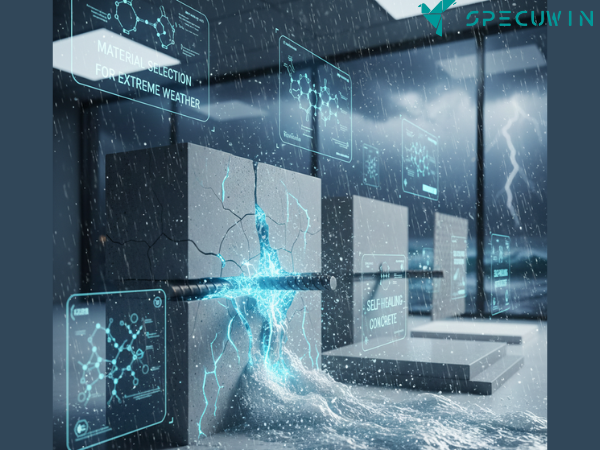
We are seeing a revolution in material science. For instance, high-performance concrete (HPC) offers greater impermeability, which is essential for resisting saltwater intrusion during storm surges. Innovations in composite materials allow for flexibility during high-wind events without compromising structural integrity.
It is time to look beyond the basics. The industry is exploring to find solutions that offer high durability with lower maintenance needs. For example, self-healing concrete can automatically seal micro-cracks caused by thermal stress, preventing water from reaching the steel reinforcement and causing corrosion.
Read more on:- Modern Materials in Structural Engineering: Beyond Concrete and Steel
The Role of Tech in Mitigating Extreme Weather Risks:-
How do you test a building for a storm that hasn’t happened yet? You build it digitally first. The integration of Building Information Modeling (BIM) and advanced structural analysis software allows engineers to run complex simulations.
We can now model how a structure will behave under specific Extreme Weather loads, such as a Category 5 hurricane or a massive snow load. These digital twins allow us to fail safely in a computer simulation so that we don’t fail in real life. This is where it becomes a game-changer. By predicting stress points and failure modes early in the design phase, we can reinforce critical joints and modify geometries to deflect wind rather than absorb it.
Retrofitting Existing Structures for Extreme Weather:-
While designing new buildings is exciting, the biggest challenge lies in our existing infrastructure. We cannot tear down every building and start over. We have to adapt what we have.
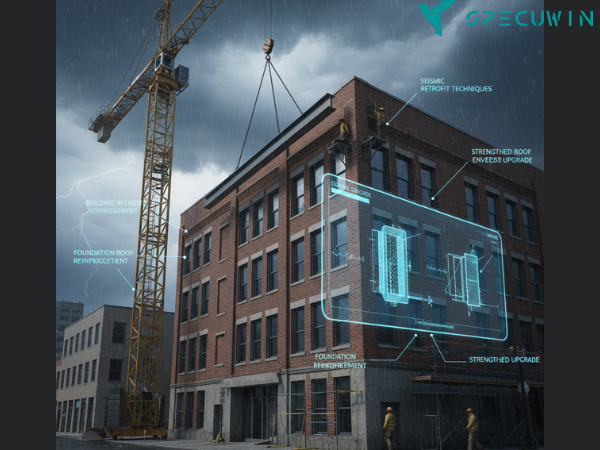
Retrofitting for Extreme Weather shares many similarities with seismic retrofitting. It involves strengthening the connection points between the roof and the walls, reinforcing the foundation, and upgrading the building envelope (windows and cladding) to resist impact damage.
We have learned a lot from earthquake engineering. For instance, the techniques used in such as adding bracing systems or dampers can also be effective in mitigating the swaying caused by high-velocity winds.
However, retrofitting isn’t just a “one-and-done” task. It requires vigilance. After any major weather event, or as a building ages, proactive maintenance is key. You need to know when a structure is compromised. Being aware of the can save property owners millions in damages and, more importantly, prevent catastrophic failure when the next storm hits.
Conclusion:-
The forecast for the future is volatile, but our buildings don’t have to be. Designing for Extreme Weather is no longer a niche specialization; it is a fundamental requirement for responsible architecture and engineering.
By combining advanced materials, smart technology, and a philosophy of resilience, we can create built environments that don’t just withstand the storm they thrive in spite of it. As we move forward, the collaboration between architects, structural engineers, and climate scientists will be the bedrock of a safer, more durable world.
FAQ’s:-
1. What is the difference between weather resistance and weather resilience?
A. Resistance implies fighting the weather (e.g., a sea wall), while resilience implies the ability to adapt, survive damage, and recover quickly (e.g., a building designed to flood on the ground floor without damaging the electrical systems on the floors above).
2. How does Designing for Extreme Weather impact construction costs?
A. Initially, it can increase upfront costs by 5-10% due to specialized materials and engineering. However, the long-term ROI is significant due to reduced insurance premiums, lower repair costs, and extended building lifespans.
3. Can older buildings be updated for Extreme Weather?
A. Yes. Retrofitting is a major part of the industry. This includes installing impact-resistant windows, reinforcing roof-to-wall connections, and upgrading drainage systems to handle higher rainfall intensities.
4. What role does BIM play in Designing for Extreme Weather?
A. BIM (Building Information Modeling) allows engineers to simulate weather scenarios like wind tunnels or thermal stress on a digital model before construction begins, identifying weak points and optimizing the design for safety.
5. Is concrete always the best material for Extreme Weather?
A. Not always. While concrete is durable against wind and water, it has a high carbon footprint and can be brittle. Modern composites, engineered timber, and flexible steel alloys are often used in conjunction with concrete to create structures that can flex without breaking.
Read More On:-
For more information about engineering, architecture, and the building & construction sector, go through the posts related to the same topic on the Specuwin Blog Page.
Find out more accurately what we are going to take off in the course of applying leading new technologies and urban design at Specuwin.