

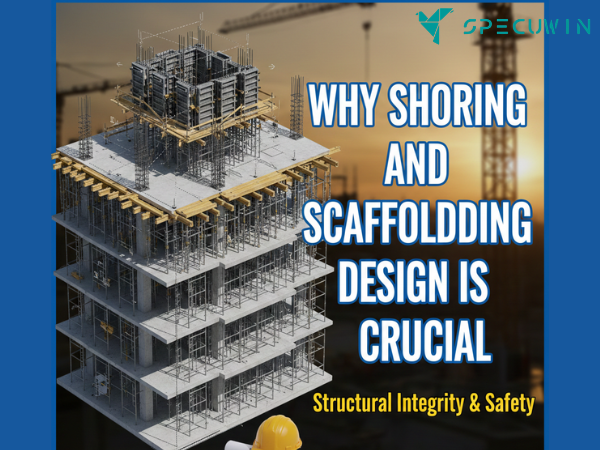
Construction sites are high-stakes environments where gravity is the constant adversary. Whether you are erecting a shimmering glass skyscraper or restoring a heritage masonry facade, the temporary structures that hold everything up are just as vital as the permanent ones. While often viewed as “ancillary,” the precision behind scaffolding design and shoring systems is what separates a successful project from a catastrophic failure.
In this deep dive, we will explore why engineering these temporary works is non-negotiable, the legal and safety implications involved, and how modern technology is changing the way we look at structural support.
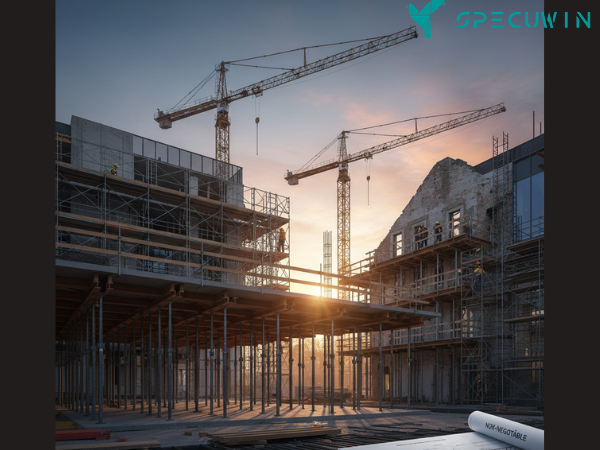
Understanding the Difference: Shoring vs. Scaffolding Design:-
Before we get into the “why,” it is important to clarify the “what.”
- Shoring: This is a temporary support used during the construction, demolition, or alteration of a building. It is designed to prevent the collapse of a structure that is not yet self-supporting or has been weakened. Think of it as the “crutch” for a building.
- Scaffolding Design: This refers to the engineering of elevated platforms used to support workers and materials. Unlike shoring, which primarily supports the building, scaffolding is designed to support the people building it.
Both systems require rigorous engineering to handle vertical loads (gravity) and horizontal loads (wind and vibration).
1. Ensuring Worker Safety Through Precise Scaffolding Design:-
The primary reason for professional design is, and always will be, human life. According to global safety statistics, falls from heights remain the leading cause of fatalities in the construction industry.
A “makeshift” scaffold might look sturdy at a glance, but without a dedicated scaffolding design, it may lack the lateral bracing necessary to prevent a sway-induced collapse. Professional designs account for:
- Live Loads: The weight of workers, tools, and materials.
- Environmental Factors: Wind speeds that can act like a sail against draped scaffolding.
- Point Loads: Specific areas where heavy machinery or palletized bricks might be placed.
2. Structural Integrity: How Shoring Protects the Project:-
When a building is under construction, its structural members (like beams and slabs) often haven’t reached their full design strength. For instance, concrete takes time to cure. Shoring provides the necessary reinforcement during this “vulnerable” phase.
If shoring is improperly calculated, the weight of the wet concrete can cause “deflection” or a total collapse of the formwork. This doesn’t just put workers at risk; it can ruin the structural integrity of the entire project, leading to costly teardowns and rebuilds.
Read more on:- The Impact of Material Selection on Structural Integrity
3. Legal Compliance and Risk Management in Scaffolding Design:-
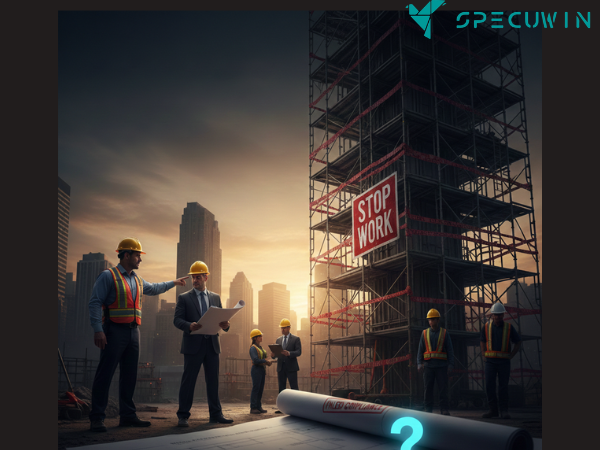
In modern construction, you cannot simply “wing it.” Regulatory bodies (like OSHA or local building authorities) require stamped engineering drawings for scaffolds and shoring over certain heights or complexities.
Failing to provide a certified scaffolding design can lead to:
- Hefty Fines: Safety inspectors can shut down a site immediately if temporary works aren’t documented.
- Insurance Liability: If an accident occurs on an un-designed scaffold, insurance providers may deny coverage, citing negligence.
- Professional Reputation: For contractors, a single structural failure can be a “brand killer.”
Read more on:- What is the Role of a Structural Engineer?
4. Operational Efficiency and Cost Savings:-
It seems counterintuitive, but spending money on a professional scaffolding design actually saves money.
When a scaffold is over-engineered by a non-professional (using more poles and planks than needed “just to be safe”), you waste material and labor hours. Conversely, under-engineering leads to accidents. A professional designer optimizes the equipment used, ensuring the scaffold is exactly as strong as it needs to be no more, no less. This streamlines the assembly and disassembly process, keeping the project on schedule.
5. Adapting to Complex Geometry:-
Not every building is a perfect cube. Modern architecture often features curves, cantilevers, and irregular angles. Standard “out-of-the-box” scaffolding kits don’t always fit these shapes.
This is where specialized scaffolding design becomes an art form. Engineers use 3D modeling to create custom configurations that allow workers to reach difficult spots safely without compromising the stability of the platform.
Read more on:- Structural Engineering of High-Rise Buildings
6. The Role of Technology in Modern Scaffolding Design:-
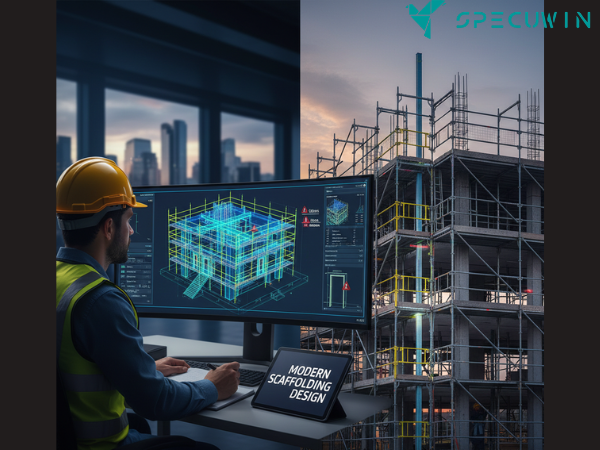
The industry is moving away from hand-drawn sketches toward Building Information Modeling (BIM). By integrating temporary works into the BIM model, engineers can simulate how a scaffold will interact with the permanent structure. This allows for “clash detection” identifying if a scaffold pole will block a crane’s path or a doorway before a single piece of steel is even delivered to the site.
Read more on:- How BIM is Transforming Consultancy
Conclusion:-
Shoring and scaffolding are the “silent partners” of every great architectural feat. While they are removed once the project is finished, their impact remains in the straightness of the walls and the safety record of the crew. Investing in a professional scaffolding design isn’t just a box to tick for the building inspector; it is a fundamental commitment to quality, efficiency, and the lives of those who build our world.
FAQ’s:-
1. When is a professional scaffolding design legally required?
A. Generally, any scaffold that exceeds a certain height (often 12 meters/40 feet) or involves complex elements like cantilevered sections or public protection fans requires a bespoke design by a qualified engineer.
2. Can shoring be reused across different projects?
A. While the components (props, beams) are reusable, the arrangement (the shoring plan) must be recalculated for every project based on the specific loads and soil conditions of that site.
3. How does weather affect scaffolding design?
A. Wind is a major factor. Designers must calculate “wind loading,” especially if the scaffold is covered in debris netting or banners, which act like sails and can pull a scaffold away from a building.
4. What is the difference between “Standard” and “Designed” scaffolding?
A. Standard scaffolds follow pre-approved configurations found in safety manuals. “Designed” scaffolds are custom-engineered for situations that fall outside those standard parameters, such as extra-heavy loads or irregular building shapes.
5. How does BIM improve scaffolding design?
A. BIM allows engineers to visualize the scaffold in a 3D environment, helping to identify potential physical conflicts with the building’s permanent features and ensuring more accurate material lists.
Read More On:-
For more information about engineering, architecture, and the building & construction sector, go through the posts related to the same topic on the Specuwin Blog Page.
Find out more accurately what we are going to take off in the course of applying leading new technologies and urban design at Specuwin.