

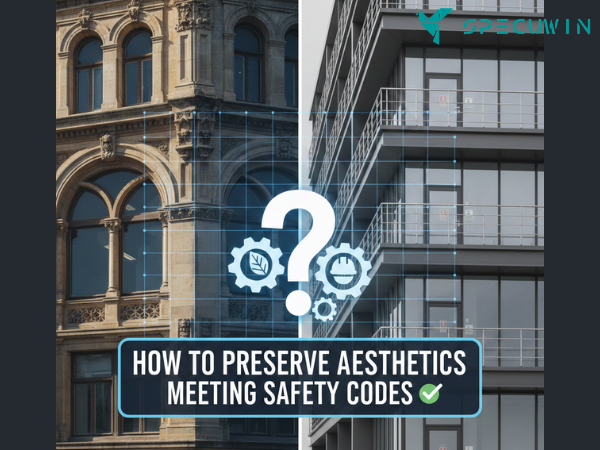
For many architects and homeowners, the word “safety code” conjures up images of bulky fire doors, intrusive railings, and clunky exit signs that threaten to derail a minimalist vision. However, the modern era of engineering proves that safety and beauty aren’t mutually exclusive. We are entering an age where structural integrity and visual elegance are designed in tandem, ensuring that we never have to sacrifice a building’s “soul” to keep its occupants safe.
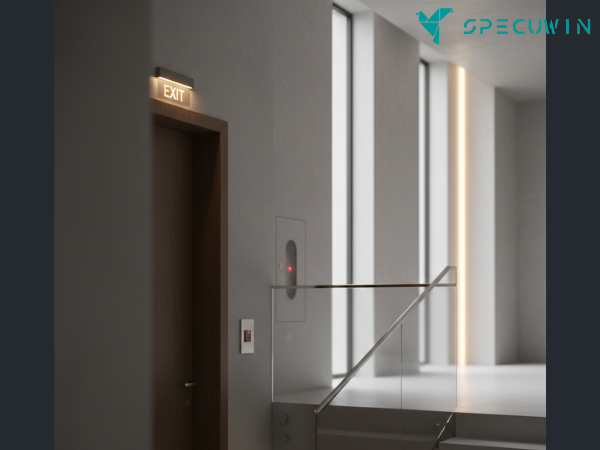
The Evolution of Design: Learning to Preserve Aesthetics:-
In the past, safety features were often “tacked on” at the end of a project. Today, the philosophy has shifted toward integrated safety. To truly preserve aesthetics, safety requirements must be viewed as design constraints rather than obstacles. When you treat a building code like a structural puzzle, the solutions often lead to more innovative and breathtaking architecture.
The Challenge of Modern Retrofitting:
One of the hardest tasks in the industry is taking a historic or mid-century building and bringing it up to 2026 standards. Whether it’s seismic reinforcement or fire safety, the goal is to preserve aesthetics while ensuring the structure can withstand modern threats. For older homes, focusing on Common structural problems in old houses allows engineers to identify where reinforcements can be hidden within existing walls or crawlspaces.
Structural Innovations to Preserve Aesthetics:-
Modern materials have revolutionized how we meet code. We no longer rely solely on heavy masonry or thick steel beams that block views.
1. Transparent Safety Barriers:
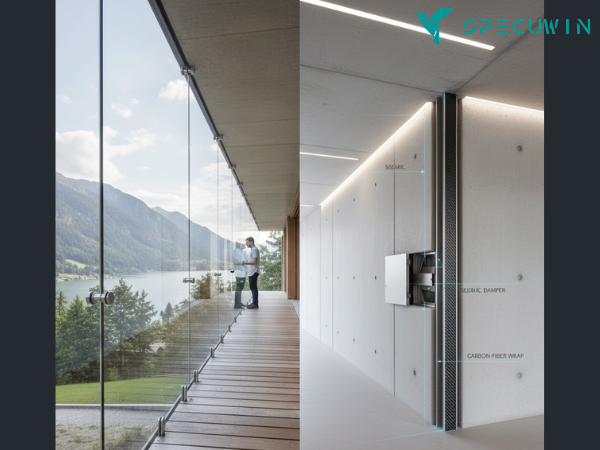
High-strength tempered and laminated glass allows us to meet strict fall-protection codes for balconies and stairways without creating a visual cage. To preserve aesthetics on a residential deck, for example, frameless glass systems offer the necessary protection while maintaining an unobstructed view of the landscape. Understanding Balcony safety and structural considerations is essential to ensuring these “invisible” barriers are anchored correctly into the primary structure.
2. Concealed Seismic Reinforcement:
In earthquake-prone regions, “X-bracing” used to be a visible eyesore. Now, engineers use specialized dampers and internal carbon-fiber wraps. These methods preserve aesthetics by keeping the “skeletal” upgrades hidden behind the finishes, allowing the original architectural lines to shine. Utilizing Innovations in earthquake-resistant design allows for flexibility that traditional rigid bracing cannot offer.
Fire Safety: Design that Doesn’t Distract:-
Nothing ruins a clean ceiling line like a poorly placed sprinkler head. To preserve aesthetics in high-end interiors, architects are opting for:
- Concealed Sprinkler Heads: These sit flush with the ceiling and are covered by plates that match the paint color.
- Intumescent Coatings: These are fire-retardant paints applied to exposed steel or wood. They allow the raw material to be seen while providing the required fire rating.
Utilizing BIM to Preserve Aesthetics in the Planning Phase:-
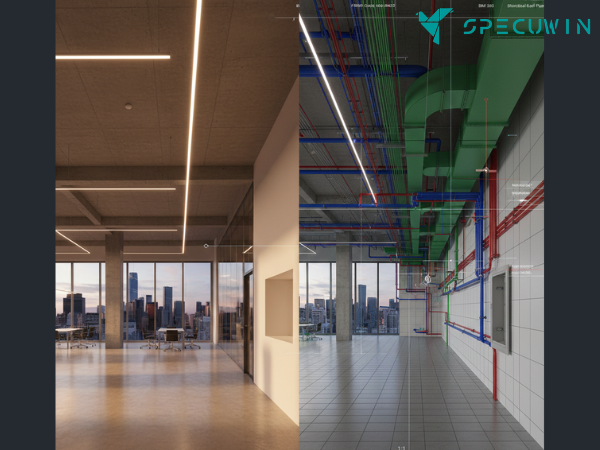
Building Information Modeling (BIM) is perhaps the greatest tool we have for “hiding” safety. By creating a 1,:1 digital twin of a building, designers can see exactly where a vent pipe or fire sensor might interfere with a visual element.
By using BIM for beginners techniques, even smaller firms can coordinate MEP (Mechanical, Electrical, Plumbing) systems early on. This foresight allows you to preserve aesthetics by rerouting necessary but ugly infrastructure through “dead zones” in the floor or ceiling before construction even begins.
Smart Materials: The Future of Compliance:-
We are moving toward “smart” materials that change properties under stress. From self-healing concrete to high-performance alloys, the selection of materials is vital. Choosing Modern materials in structural engineering allows for thinner profiles that meet higher load-bearing codes, directly helping to preserve aesthetics by reducing bulk.
Conclusion: A Seamless Blend:-
Meeting safety codes is a legal and moral obligation, but it doesn’t have to be a visual compromise. By integrating safety into the initial concept, utilizing advanced materials, and leveraging digital tools like BIM, we can build a world that is both incredibly safe and undeniably beautiful.
FAQ’s:-
1. Does meeting safety codes always increase the project budget?
A. Not necessarily. While some “invisible” safety features like concealed sprinklers or high-strength glass may have a higher material cost, integrating them early via BIM can reduce costly on-site changes and rework.
2. How do I preserve aesthetics in a historic building?
A. The key is “sympathetic retrofitting.” This involves using materials like carbon fiber wraps or internal steel plates that reinforce the building from the inside out without altering the protected exterior facade.
3. Can I use wood in modern construction and still meet fire codes?
A. Yes. Through the use of mass timber (like CLT) and intumescent coatings, wood can achieve high fire ratings while remaining an exposed, beautiful design element.
4. What is the role of a structural engineer in aesthetic design?
A. A good structural engineer acts as a partner to the architect. They find creative ways to support the building’s weight such as using cantilevered beams or hidden columns to maintain the desired “look.”
5. How can I ensure my balcony is safe without a bulky railing?
A. Look into structural glass balustrades. When engineered according to proper balcony safety considerations, these provide a legal safety barrier that is almost entirely transparent.
Read More On:-
For more information about engineering, architecture, and the building & construction sector, go through the posts related to the same topic on the Specuwin Blog Page.
Find out more accurately what we are going to take off in the course of applying leading new technologies and urban design at Specuwin.