

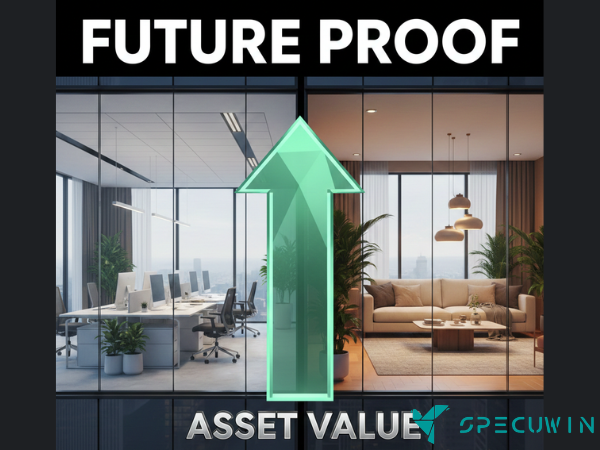
The skyline of any modern city is a testament to change. However, beneath the glass and steel of many iconic structures lies a rigid design philosophy that often leads to a premature end. Historically, buildings were designed for a single purpose: an office was an office, and a warehouse was a warehouse. But in today’s volatile economic climate, the most valuable asset isn’t just the one that stands tall it’s the one that can change its mind. Designing a building to be flexible, particularly the ability to transition from office to residential use, is no longer just an architectural trend; it is a critical strategy for increasing long-term asset value.
The Economic Case for Designing Multi-Purpose Shells:-
In the real estate world, “highest and best use” is a moving target. What is profitable today say, premium commercial office space might become a liability tomorrow due to shifts in work culture or economic downturns. By designing structures with a “loose fit” philosophy, developers can pivot their assets to meet current demand without the astronomical costs of total demolition.
When a building is “future-proofed” through flexible designing, it carries a lower risk profile. Investors and lenders are increasingly favoring assets that can weather market cycles. A building that can shift from a tech hub to a luxury apartment complex is inherently more valuable than a “single-use” relic because its income-generating potential is never tied to just one industry.
Designing Core Infrastructures for Residential Transitions:-
One of the greatest hurdles in office-to-residential conversions is the “deep floor plate” common in commercial builds. Designing with a focus on natural light penetration and plumbing flexibility from day one changes the math entirely.
- Plumbing and HVAC: Standard office buildings have centralized “wet cores.” Designing distributed utility zones allows for the easy insertion of kitchens and bathrooms required for residential units.
- Floor-to-Ceiling Heights: Designing for generous vertical space (typically 10-12 feet) ensures that even after adding residential flooring and dropped ceilings for acoustic privacy, the space feels premium and habitable.
Designing for Sustainability and Circular Economy:-
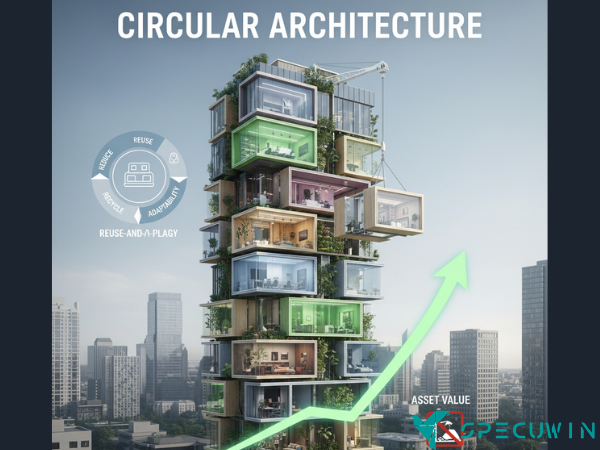
Sustainability is now a major driver of asset value. The “greenest” building is the one that is already built. Designing for flexibility is a cornerstone of the circular economy. By avoiding the “build-demolish-rebuild” cycle, owners save significantly on embodied carbon taxes and demolition costs.
Furthermore, designing with modular internal components allows for “plug-and-play” renovations. When the interior layout can be changed without structural intervention, the building remains modern and competitive for decades longer than its rigid counterparts. This longevity is a direct contribution to the property’s terminal value.
Designing the Structural Framework for Load Versatility
The structural requirements for an office often differ from those of a residential building. Designing the primary skeleton to handle a variety of live loads or ensuring the column grid is wide enough to accommodate residential corridors is a masterstroke in foresight.
Often, the designing phase of a project overlooks the long-term structural health. For instance, understanding the importance of soil testing in structural engineering is foundational. If the foundation is built to a specific, narrow tolerance, it may not support the partitions and plumbing weight of a residential conversion. By designing for structural resilience from the ground up, you ensure the building can support various “lives” over its 50-to-100-year lifespan.
Designing for Human-Centric Urban Environments:-
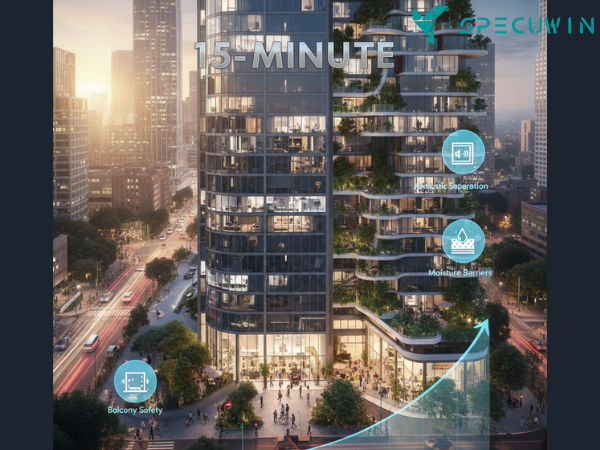
Ultimately, a building’s value is tied to its desirability. Designing for flexibility allows developers to respond to the “15-minute city” concept, where people live, work, and play in the same area. As urban centers become more residential-focused, the ability to convert vacant office blocks into vibrant housing is a social and financial win.
When designing these transitions, architects must look at the Top 10 structural issues in residential buildings to avoid common pitfalls during the conversion process. Addressing moisture barriers, acoustic separation, and balcony safety early in the designing phase ensures the final residential product doesn’t feel like a “converted office” but like a home.
Frequently Asked Questions:-
1. Is designing for flexibility significantly more expensive upfront?
A. While initial costs may be 5-10% higher due to better materials and distributed utilities, the long-term ROI is significantly higher. You avoid future “stranded asset” risks where a building becomes un-leasable because it cannot be repurposed.
2. What is the most important factor when designing an office for future residential use?
A. Natural light. Commercial buildings often have deep interiors. Designing with an atrium or ensuring the distance from the windows to the core is within residential standards (usually 30-45 feet) is vital.
3. How does structural engineering impact the designing of flexible buildings?
A. Structural engineers must ensure the floor slabs can handle the concentrated loads of residential partitions. Consulting on the role of technology in structural analysis and design helps in simulating these different use cases before a single brick is laid.
4. Can old buildings be retrofitted for this kind of flexibility?
A. Yes, but it is harder. It often requires seismic retrofitting and significant structural reinforcement. It is always more cost-effective to incorporate these features during the initial designing phase.
5. Does designing for flexibility improve ESG scores?
A. Absolutely. It demonstrates a commitment to “Long-Life, Loose-Fit” principles, reducing waste and carbon emissions over the building’s lifecycle, which is highly attractive to institutional investors.
Read More On:-
For more information about engineering, architecture, and the building & construction sector, go through the posts related to the same topic on the Specuwin Blog Page.
Find out more accurately what we are going to take off in the course of applying leading new technologies and urban design at Specuwin.