

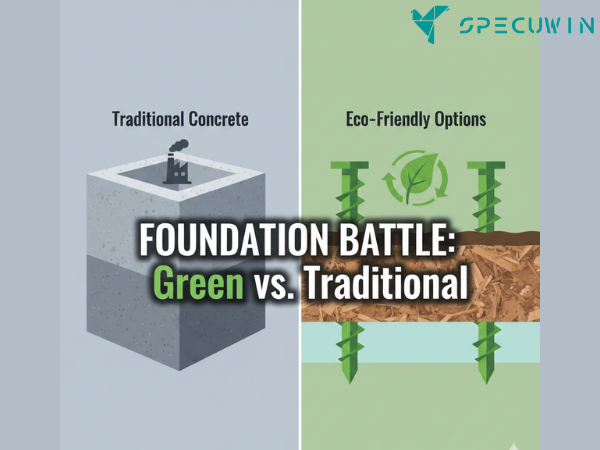
When we discuss sustainable architecture, our eyes usually drift upward toward solar panels, living walls, or recycled timber cladding. However, true sustainability begins where the building meets the earth. The Environmental Impact of a structure is often anchored quite literally in its foundation. As the AEC (Architecture, Engineering, and Construction) industry shifts toward a “future-ready” mindset, understanding how substructures affect our planet is no longer optional; it is a core responsibility of modern engineering.
The foundation is typically the most carbon-intensive part of a building because it relies heavily on concrete and steel. By analyzing the Environmental Impact of various foundation systems, we can make informed choices that preserve soil health, reduce carbon footprints, and ensure long-term ecological resilience.
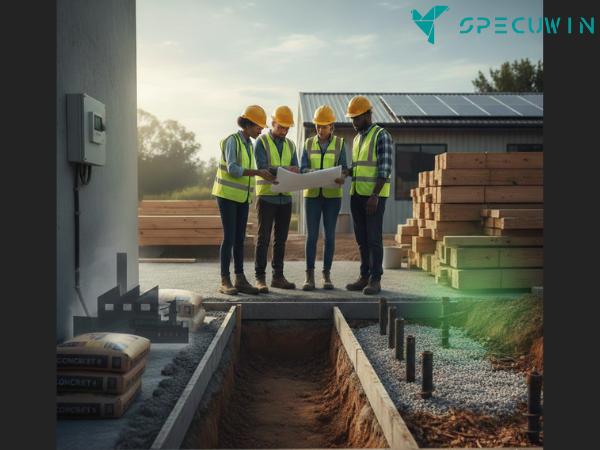
Analyzing the Environmental Impact of Concrete Foundations:-
Concrete is the traditional “king” of foundations, but it carries a heavy ecological price tag. The production of cement, a key ingredient in concrete, is responsible for a significant portion of global CO2 emissions.
Shallow Foundations: Spread Footings and Mats:
Shallow foundations are common in residential projects. While they require less excavation than deep foundations, their Environmental Impact is tied to the sheer volume of wet concrete poured into the earth. This process disrupts the local soil microbiome and creates a permanent “seal” over the ground, preventing natural water filtration.
Deep Foundations: Driven and Drilled Piles:
For larger structures, deep foundations are necessary. However, the Environmental Impact of driving steel or concrete piles includes significant noise pollution and ground vibration, which can disturb local wildlife and neighboring structures. Furthermore, the massive amount of embodied energy required to manufacture and transport these heavy components adds to the project’s total emissions.
Reducing the Environmental Impact with Innovative Systems:-
As we look toward Sustainable structures and eco-friendly approaches in modern construction, several alternatives are gaining traction for their lower Environmental Impact.
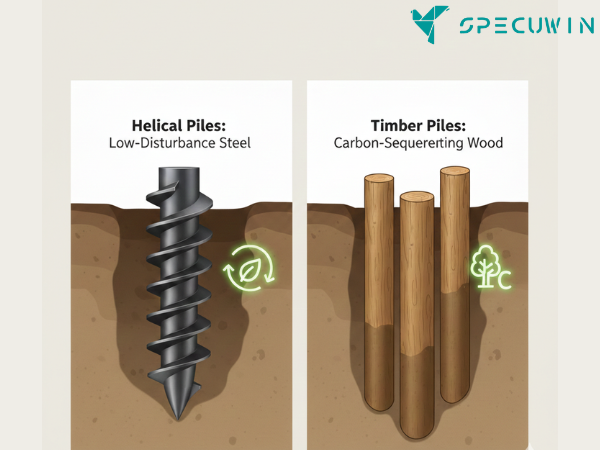
Helical Piles: A Low-Disturbance Choice:
Helical piles are steel screw-in anchors. Their primary advantage regarding Environmental Impact is that they require minimal excavation. Because they are “screwed” in rather than “dug” in, the soil structure remains largely intact. Additionally, these piles can often be removed and recycled if the building is eventually decommissioned.
Timber Piles: Tapping into Carbon Sequestration:
In specific soil conditions, timber piles offer a fascinating way to lower the Environmental Impact. Unlike concrete or steel, timber stores carbon. If sourced from sustainably managed forests, timber foundations can act as a carbon sink, though they require careful treatment to ensure they don’t rot and release that carbon back into the atmosphere.
Soil Health and Biodiversity: The Long-Term Environmental Impact:-
The Environmental Impact of a foundation isn’t just about the “cradle-to-gate” emissions of the materials; it’s about what happens to the land for the next 50 to 100 years.
- Permeability and Runoff: Traditional slab foundations increase the Environmental Impact by creating impervious surfaces. This leads to increased rainwater runoff, which can cause erosion and overwhelm local sewage systems.
- Soil Chemistry: The leaching of chemicals from certain concrete treatments or treated lumbers can alter the pH of the surrounding soil, affecting local flora. Choosing inert materials is a key step in mitigating this Environmental Impact.
The Role of Technology in Mitigating Environmental Impact:-
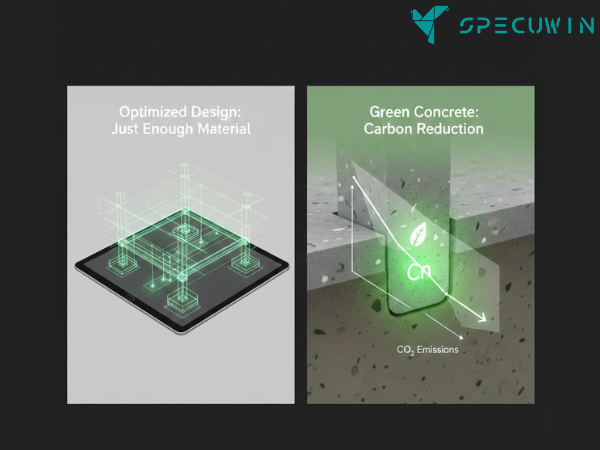
We are seeing a revolution in how we design these systems. By utilizing The role of technology in structural analysis and design, engineers can now optimize foundation sizes.
Through precise modeling, we can use “just enough” material to ensure safety without the wasteful over-engineering that characterized the last century. This reduction in material volume is perhaps the most direct way to slash the Environmental Impact of any construction project. Furthermore, as seen in The future of structural engineering, the use of “Green Concrete” which incorporates industrial by-products like fly ash or slag is becoming a standard method for lowering the carbon profile of our footings.
Conclusion:-
Choosing a foundation is no longer just a matter of load-bearing capacity and cost. We must weigh the Environmental Impact of every cubic meter of earth moved and every tonne of concrete poured. By moving toward low-impact materials and smarter design, we ensure that our buildings are supported by more than just solid ground they are supported by a commitment to the planet.
FAQ’s:-
1. Which foundation type has the lowest carbon footprint?
A. Generally, helical piles or specialized timber foundations have a lower Environmental Impact than traditional mass concrete due to reduced material volume and higher recyclability.
2. Can “Green Concrete” significantly reduce a foundation’s Environmental Impact?
A. Yes. By replacing a portion of Portland cement with recycled materials, the embodied carbon of a foundation can be reduced by 30% to 50%.
3. Does the depth of a foundation affect its Environmental Impact?
A. Typically, yes. Deeper foundations require more materials and more energy-intensive machinery for installation, leading to a higher overall Environmental Impact.
4. How does soil testing help in reducing Environmental Impact?
A. Accurate soil testing allows engineers to design a foundation that is perfectly suited for the site, preventing over-specification and the unnecessary use of carbon-heavy materials.
5. Are eco-friendly foundations more expensive?
A. While some innovative materials have a higher upfront cost, they often reduce costs in excavation, site cleanup, and long-term environmental remediation.
Read More On:-
For more information about engineering, architecture, and the building & construction sector, go through the posts related to the same topic on the Specuwin Blog Page.
Find out more accurately what we are going to take off in the course of applying leading new technologies and urban design at Specuwin.