

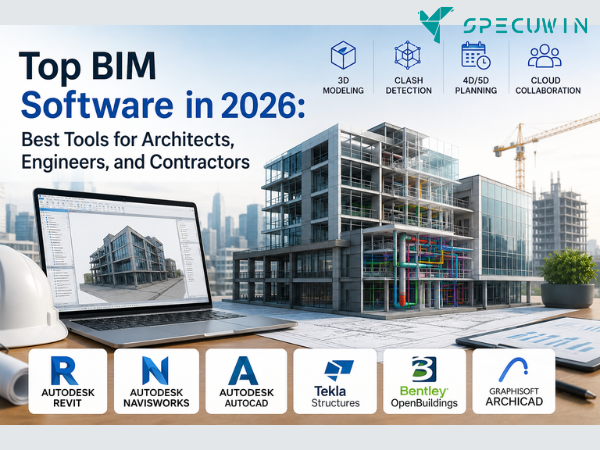
Choosing the right BIM Software is one of the most important decisions for any Architecture, Engineering, and Construction (AEC) professional. As projects become increasingly complex, firms need digital tools that improve collaboration, reduce design errors, and streamline project delivery.
Modern BIM software goes far beyond creating 3D models. It enables architects, structural engineers, MEP designers, contractors, and project owners to work from a shared digital model containing accurate project information. Consequently, teams can detect clashes, estimate costs, generate construction documents, and manage buildings more efficiently.
Whether you’re starting your BIM journey or looking to upgrade your current workflow, this guide explores the best BIM software available in 2026, along with their features, advantages, and ideal use cases.
What Is BIM Software?
BIM Software refers to digital applications that support Building Information Modeling throughout a project’s lifecycle. Unlike traditional CAD software, BIM applications create intelligent 3D models that store both geometry and valuable project data.
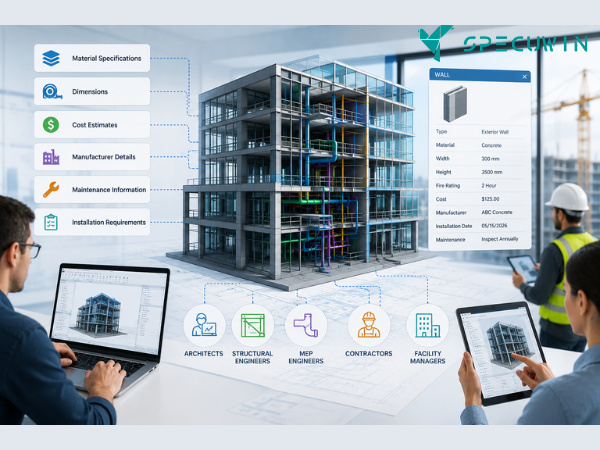
Each building component contains information such as:
- Material specifications
- Dimensions
- Cost estimates
- Manufacturer details
- Maintenance information
- Installation requirements
As a result, project teams collaborate more effectively while reducing manual work and design conflicts.
Why Is BIM Software Important?
Construction projects involve multiple disciplines working simultaneously. Without proper coordination, errors can quickly become expensive.
Using BIM software provides several advantages:
- Improved collaboration
- Real-time model updates
- Better visualization
- Automatic quantity take-offs
- Clash detection
- Faster documentation
- Better project planning
- Improved facility management
Therefore, BIM software has become an essential tool for modern construction projects.
1. Autodesk Revit:-
Autodesk Revit is one of the most widely used BIM Software platforms in the AEC industry. It supports architectural, structural, and MEP design within a single intelligent model.
Key Features:
- Intelligent 3D modeling
- Parametric design
- Automatic documentation
- Structural reinforcement detailing
- Cloud collaboration
- Quantity schedules
Best For:
- Architects
- Structural Engineers
- MEP Engineers
- BIM Coordinators
Advantages:
- Industry-standard platform
- Excellent interoperability
- Strong documentation tools
- Large user community
2. Navisworks:-
Navisworks specializes in project coordination and clash detection.
Instead of creating models, it combines BIM models from different disciplines into one coordinated environment.
Key Features:
- Clash detection
- Construction simulation
- Model review
- Project coordination
- 4D scheduling
- Quantity analysis
Best For:
- Contractors
- BIM Managers
- Project Coordinators
Its powerful coordination capabilities help identify design conflicts before construction begins.
3. Tekla Structures:-
Tekla Structures is known for advanced structural BIM modeling.
It is widely used for steel structures, reinforced concrete, precast elements, and complex infrastructure projects.
Key Features:
- Steel detailing
- Reinforcement modeling
- Fabrication drawings
- Construction sequencing
- Quantity reports
Best For:
- Structural Engineers
- Steel Fabricators
- Contractors
Tekla excels in projects requiring high levels of structural accuracy.
4. Bentley OpenBuildings:-
Bentley OpenBuildings provides comprehensive BIM solutions for large infrastructure and commercial projects.
Key Features:
- Architectural design
- Building performance analysis
- Structural integration
- Infrastructure connectivity
- Digital twin support
Best For:
- Infrastructure projects
- Airports
- Rail stations
- Government facilities
Its scalability makes it suitable for large and complex developments.
5. Autodesk Civil 3D:-
Although primarily designed for civil engineering, Autodesk Civil 3D integrates seamlessly with BIM workflows.
Key Features:
- Terrain modeling
- Road design
- Utility design
- Drainage analysis
- Survey data integration
Best For:
- Civil Engineers
- Infrastructure Consultants
- Highway Projects
It supports efficient planning and coordination of civil infrastructure.
How to Choose the Right BIM Software:-
Selecting the best BIM Software depends on several factors.
Consider the following:
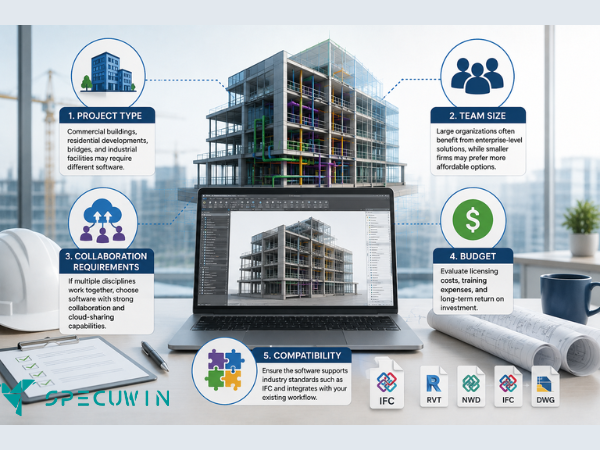
Project Type:
Commercial buildings, residential developments, bridges, and industrial facilities may require different software.
Team Size:
Large organizations often benefit from enterprise-level solutions, while smaller firms may prefer more affordable options.
Collaboration Requirements:
If multiple disciplines work together, choose software with strong collaboration and cloud-sharing capabilities.
Budget:
Evaluate licensing costs, training expenses, and long-term return on investment.
Compatibility:
Ensure the software supports industry standards such as IFC and integrates with your existing workflow.
BIM Software Comparison:-
| Software | Best For | Key Strength |
|---|---|---|
| Autodesk Revit | Building Design | Complete BIM Modeling |
| Navisworks | Coordination | Clash Detection |
| Tekla Structures | Structural Engineering | Steel & Concrete Detailing |
| Bentley OpenBuildings | Infrastructure | Large-Scale Projects |
| Autodesk Civil 3D | Civil Engineering | Site & Infrastructure Design |
Each platform offers unique strengths depending on your project’s requirements.
Benefits of Using BIM Software:-
Organizations adopting BIM software often experience measurable improvements.
These include:
- Better communication
- Improved productivity
- Fewer construction errors
- Faster approvals
- Reduced project costs
- Better visualization
- Accurate documentation
- Easier facility management
Furthermore, BIM software supports digital transformation across the entire construction industry.
Future Trends in BIM Software:-
The next generation of BIM software continues to evolve rapidly.
Emerging trends include:
- Artificial Intelligence (AI)
- Digital Twins
- Cloud collaboration
- Reality Capture
- Generative Design
- Sustainability analysis
- Predictive maintenance
- Automation
As these technologies mature, BIM software will become even more powerful and data-driven.
Frequently Asked Questions:-
What is BIM Software?
A. BIM Software is a digital application used to create, manage, and share intelligent building models throughout the construction lifecycle.
Which BIM software is most popular?
A. Autodesk Revit remains one of the most widely used BIM platforms for architectural, structural, and MEP design.
Is BIM software only for large companies?
A. No. Small and medium-sized firms can also benefit from BIM software by improving collaboration, reducing errors, and increasing productivity.
Can different BIM software work together?
A. Yes. Most modern BIM platforms support interoperability through open standards such as IFC, allowing teams to exchange project information efficiently.
Conclusion:-
Choosing the right BIM Software is essential for delivering efficient, accurate, and collaborative construction projects. Whether you need advanced building modeling with Autodesk Revit, structural detailing through Tekla Structures, project coordination using Navisworks, or infrastructure design with Bentley OpenBuildings and Civil 3D, each platform offers unique advantages.
As the AEC industry continues its digital transformation, investing in the right BIM software will improve productivity, reduce project risks, and enhance collaboration across every stage of the building lifecycle. Organizations that embrace BIM technology today will be better prepared for the future of construction.
Read More On:-
For more information about engineering, architecture, and the building & construction sector, go through the posts related to the same topic on the Specuwin Blog Page.
Find out more accurately what we are going to take off in the course of applying leading new technologies and urban design at Specuwin.