

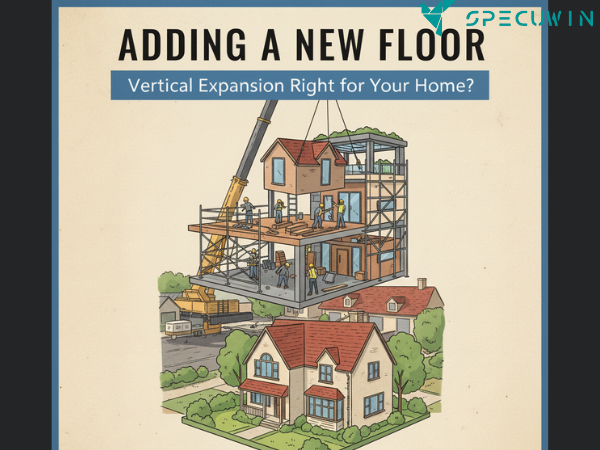
You love your neighborhood. You have the perfect commute, your favorite coffee shop is around the corner, and the local schools are great. But there is one glaring problem: your house is shrinking. Well, not literally, but as your family grows or your needs change (hello, home office!), the walls seem to involve themselves a little closer every day.
You are faced with a classic dilemma: move to a bigger house in a different area, or improve what you have. For many, the answer lies in looking up. Adding a floor to an existing structure is a brilliant way to double your living space without sacrificing your yard or your address.
However, turning a single-story home into a double-decker isn’t just about nailing some wood together. It is a complex engineering feat that requires careful planning. In this guide, we will walk you through everything you need to know about the vertical extension process.
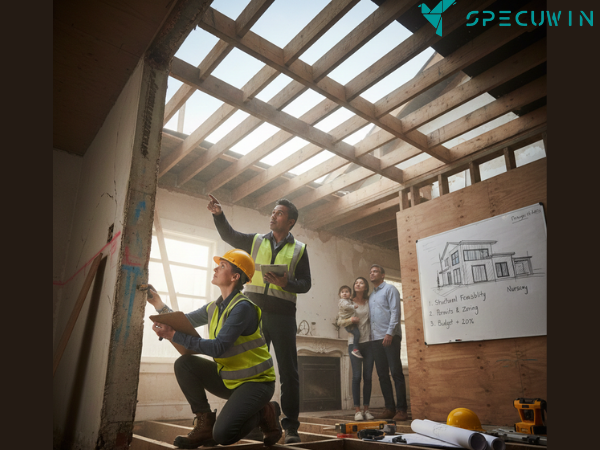
Assessing the Feasibility of an Additional Floor:-
Before you start picking out paint colors for the upstairs master suite, you need to answer one hard question: Can you actually build up? Not every house was designed to carry the weight of a second story.
When a house is built, the foundation is calculated based on the load it expects to carry. If you have a single-story ranch, the footings might be relatively shallow. Adding a new level adds significant “dead load” (the weight of the materials) and “live load” (people, furniture, and snow).
This is where the investigative work begins. You need to check local zoning laws first. Are you allowed to increase the height of your building? What is the Floor Area Ratio (FAR) in your municipality? Once you clear the bureaucratic hurdles, you need to look at the physical bones of the house. When discussing the need to check the current state of the building. Before making any plans, it is vital to assess the current health of your structure. You should look for Signs your building needs a structural inspection to ensure the existing bones can handle the stress.”
Structural Considerations Before Building a New Floor:-
Once you decide to move forward, the engineering reality sets in. Gravity is a strict law to follow. The weight of the new floor has to travel down through the walls, into the foundation, and eventually into the soil.
If your current foundation isn’t strong enough, you don’t necessarily have to abandon the project. Structural engineers can design “underpinning” strategies to strengthen the existing foundation, or they might suggest adding new external columns that bypass the existing structure entirely, acting like stilts for the new level.
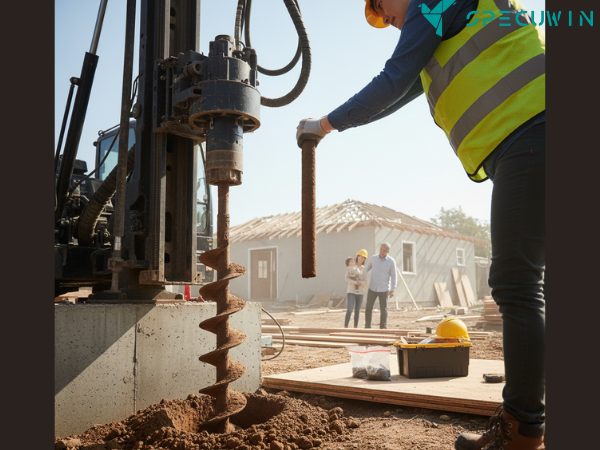
Another major factor is the soil itself. The ground beneath your home might be fine for a light bungalow but could compress or shift under a two-story colonial. Discussing the ground conditions. Understanding what lies beneath your home is just as important as what goes on top. This is where The importance of soil testing in structural engineering comes into play to ensure the ground won’t settle unevenly.”
Choosing Materials for Your Second Floor:-
When you are building on top of an old structure, weight is your enemy. The heavier the new materials, the more reinforcement the old house needs. This is why you rarely see heavy masonry or brick used for second-story additions on older homes.
Modern engineering allows us to be smarter about this. Using lightweight steel framing or timber framing can significantly reduce the load compared to traditional concrete or brick construction. To keep the weight down, engineers often look at Modern materials in structural engineering beyond concrete and steel that offer high strength without the heavy mass.”
Furthermore, you have to think about the “connection.” How does the new floor attach to the old roof line? Usually, the existing roof has to be completely removed. This exposes your home to the elements, which leads us to the logistics of the build.
The Logistics of Adding a Floor:-
Let’s be real: this is invasive surgery for your house. Unlike a kitchen remodel where you can set up a microwave in the dining room and make do, adding a level usually requires removing the roof.
Weather Protection: Contractors will usually tarp the structure or build a temporary “scaffold roof” over the entire house to protect the lower level from rain while the roof is off.
Living Arrangements: Can you live downstairs while they build upstairs? in most cases, the answer is no. The noise, the dust, and the temporary loss of utilities (as plumbing and electrical lines are extended up) make it safer and more comfortable to move out for a few months.
The Staircase Dilemma: One thing homeowners often forget is that they have to lose space downstairs to gain space upstairs. A staircase takes up a significant footprint (usually about 40 to 80 square feet). Finding the right spot for the stairs so it doesn’t ruin the flow of your living room is a design challenge that requires a skilled architect.
Cost vs. Value: Is a New Floor Worth It?:-
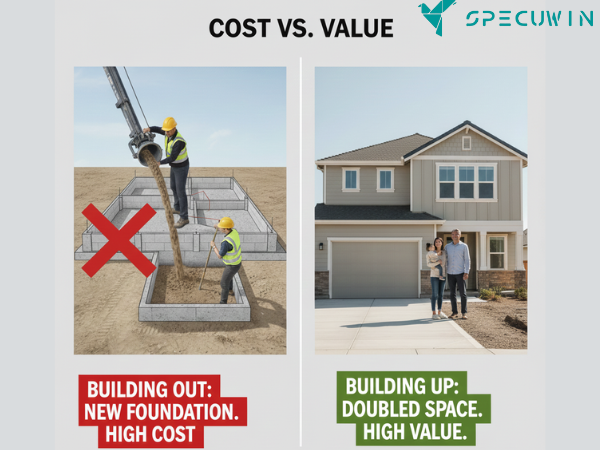
Financially, building up is often cheaper than building out (adding an extension to the side). When you build out, you have to pour a new foundation, which is expensive. When you build up, you are utilizing the existing footprint.
However, the cost varies wildly based on complexity. If you need extensive structural reinforcement or seismic retrofitting to bring the old house up to code, the price tag jumps.
Despite the cost, the ROI (Return on Investment) is generally high. You are effectively doubling your square footage. In high-demand urban areas where land is scarce, this can skyrocket the property value.
Finding the Right Team for Your Floor Addition:-
This isn’t a DIY job. It requires a symphony of professionals: an architect to make it look good, a structural engineer to make it stand up, and a contractor to put it together. Because this involves changing the structural integrity of your home, hiring a qualified engineer is non-negotiable.
Adding a level is a journey. It involves dust, decisions, and a fair bit of money. But when you walk up those new stairs to a view you’ve never seen before, right in the neighborhood you love, you’ll realize it was worth every penny.
FAQ’s:-
1. How much does adding a floor typically cost?
A. While costs vary by location and finish quality, adding a second story generally costs significantly more per square foot than a ground-level renovation but less than buying a new, larger home in the same area. It typically ranges from $150 to $350 per square foot, depending on whether foundation reinforcement is needed.
2. Do I need planning permission for adding a floor?
A. Absolutely. Vertical extensions almost always require planning permission and building regulation approval. You must comply with local zoning laws regarding building height, “rights to light” for neighbors, and the aesthetic character of the neighborhood.
3. Will my existing foundation support a new floor?
A. Not always. A structural engineer must assess your foundation. If it is too weak, it can be reinforced through a process called underpinning, or lightweight materials can be used for the extension to reduce the load.
4. How long does the construction take?
A. A vertical addition is a major project. Depending on the complexity and weather conditions, it typically takes between 4 to 9 months from the start of demolition to the final coat of paint.
5. Can I stay in my house while they are adding a floor?
A. It is generally not recommended. The process involves removing the roof, which exposes the house to weather risks, and involves significant noise, dust, and utility interruptions. Moving out temporarily is usually the safest and least stressful option.
Read More On:-
For more information about engineering, architecture, and the building & construction sector, go through the posts related to the same topic on the Specuwin Blog Page.
Find out more accurately what we are going to take off in the course of applying leading new technologies and urban design at Specuwin.