


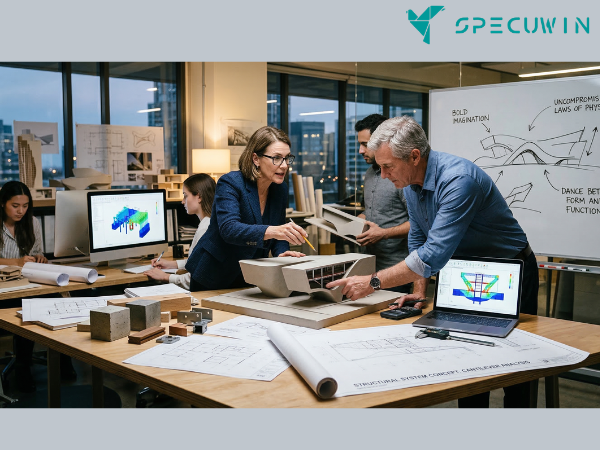
Every great architectural masterpiece is a delicate dance between bold imagination and the uncompromising laws of physics. As an architect, your vision pushes boundaries, but it is the invisible skeleton beneath the aesthetics that holds those dreams in the sky. This is why the process of finding and selecting the right Structural Firms is one of the most critical decisions you will make during the lifecycle of any project. The right partnership can elevate a design from a mere concept into a breathtaking reality, while the wrong one can lead to compromised aesthetics, blown budgets, and endless frustrations.
Why Evaluating Structural Firms is Crucial for Architects:-
The relationship between those who design spaces and those who ensure they stand up is often filled with a natural, healthy tension. You want soaring cantilevers, column-free expanses, and floating staircases; your engineering partner is tasked with figuring out how gravity, wind loads, and seismic forces will interact with those desires.
Taking the time to properly assess engineering consultancies before signing a contract is essential because this relationship dictates the rhythm of your entire project. When you rush the selection process, you risk pairing up with a team that defaults to the easiest, most conventional solutions rather than exploring innovative ways to preserve your design intent. A truly great engineering partner acts as a co-creator. They do not simply look at your sketches and say, “No, that can’t be done.” Instead, they look at the challenges and say, “Here is how we can make that work.”
Furthermore, the complexity of modern building codes, sustainability requirements, and advanced material sciences requires a deeply integrated approach from day one. By thoroughly vetting potential partners, you ensure that you are bringing on a team that respects your creative process and possesses the technical chops to execute it flawlessly.
The Balance of Vision and Practical Reality:-
Architecture is inherently optimistic; it imagines a better built environment. Engineering is inherently pragmatic; it grounds that optimism in safety and viability. Finding a team that gracefully straddles both worlds is the ultimate goal. You need professionals who Understand the core role of your engineer not just as a human calculator, but as a crucial collaborator who understands proportion, light, and spatial flow. If the engineering team does not appreciate the why behind a design element, they will struggle to engineer the how effectively.
Key Criteria for Assessing Structural Firms:-
When sitting across the table from potential engineering partners, it can be difficult to look past the impressive portfolios and glossy presentations. To truly gauge how they will perform when the pressure is on, you need to look at several specific criteria.
Technical Expertise and Portfolio Alignment:
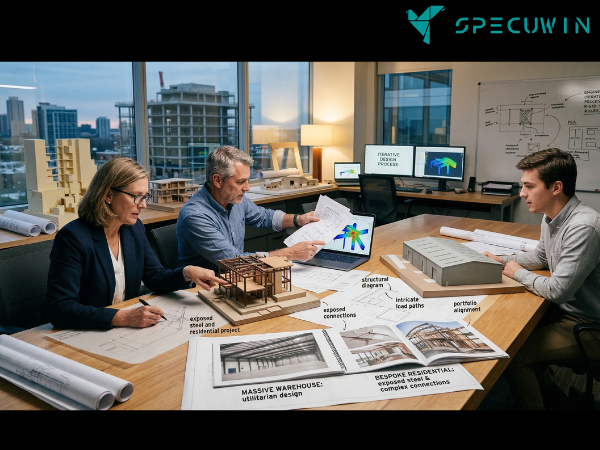
It goes without saying that technical competence is the baseline. However, not all engineering experience is created equal. A team that excels at designing massive, utilitarian warehouse spaces may not have the finesse required for a bespoke, high-end residential project with exposed steel connections and intricate load paths.
When reviewing their past work, look for projects that mirror the complexity and scale of your own. Ask them to walk you through a specific challenge on a past project. How did they handle a situation where the architectural vision clashed with standard engineering practices? Their answer will reveal their problem-solving methodology. You are looking for a team that treats engineering as an iterative design process, not a rigid set of rules.
Communication and Collaborative Culture:
The success of a building project lives and dies by the quality of communication among the project team. A brilliant engineering solution is useless if it cannot be clearly communicated to the architectural team, the client, and ultimately, the builders on site.
During your initial meetings, pay attention to their communication style. Do they speak entirely in impenetrable technical jargon, or do they translate complex physics into understandable concepts? The best engineering teams are bilingual; they speak the language of mathematics, but they also speak the language of design. Furthermore, ask about their approach to Collaboration between all project stakeholders. A team that values proactive communication will flag potential clashes early in the schematic design phase, saving countless hours of redesign later.
Technological Proficiency and Future Readiness:
The architecture, engineering, and construction (AEC) industry is undergoing a massive digital transformation. Hand-drawn calculations and disconnected 2D CAD drawings are rapidly becoming relics of the past. Today, you need a partner who is deeply entrenched in Building Information Modeling (BIM) and parametric design.
Ask potential partners about their software stack. Are they using advanced 3D modeling tools that can seamlessly integrate with your architectural models? How do they handle clash detection? A forward-thinking team will leverage technology not just for drafting, but for complex structural analysis, allowing them to test dozens of iterations in the time it used to take to test one. This ability to rapidly prototype digital models is crucial for optimizing material usage and keeping construction costs in check. Understanding the Trends and innovations shaping the industry is a strong indicator of a consultancy that will keep your projects on the cutting edge.
Red Flags When Interviewing Structural Firms:-
Just as there are green flags to look for, there are several warning signs that should make you reconsider a potential partnership.
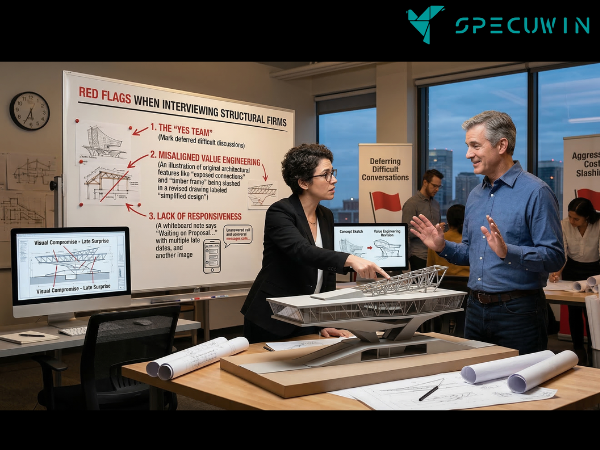
First, beware of the “Yes Team.” While you want a collaborative partner, you do not want a team that agrees to every wild idea without raising valid safety or budget concerns early on. An overly agreeable engineer might just be deferring the difficult conversations until the construction documents phase, which is exactly when you don’t want a surprise.
Second, pay attention to their attitude toward value engineering. In a healthy partnership, cost-saving measures are discussed as a way to optimize the building without losing the design intent. If a potential partner’s first instinct is to aggressively slash the architectural features to save a few dollars on steel, they probably do not respect the vision.
Finally, a lack of responsiveness during the proposal phase is a glaring red flag. If it takes them a week to reply to a simple email when they are trying to win your business, imagine how difficult it will be to get an answer when you have a contractor standing on-site waiting for a clarification.
Building Long-Term Partnerships with Structural Firms:-
Once you have learned How to choose the right engineering partner, the goal should be to cultivate a relationship that lasts beyond a single project. The most successful architects often work with the same core team of engineers for decades.
This longevity breeds a shorthand communication style. Over time, the engineering team learns your design quirks and preferences, anticipating your needs before you even articulate them. They know that you prefer hidden connections, or that you have a penchant for a specific type of timber framing, and they begin their calculations with those preferences in mind.
To foster this kind of loyalty, treat your engineers as equals. Bring them into the design process as early as the conceptual phase. Give them credit when a project wins an award. When challenges arise on site and they always do approach the problem as a unified front rather than pointing fingers. By investing in the relationship, you ensure that you always have a dedicated team ready to help you push the boundaries of what is possible in architecture.
Frequently Asked Questions:-
1. When is the best time to bring an engineering partner onto a new architectural project?
A. It is highly recommended to engage your engineering team during the conceptual or early schematic design phase. Bringing them in early allows them to provide input on fundamental building massing and grid layouts, which can prevent costly and time-consuming redesigns later in the project.
2. How do I know if an engineering consultancy is technically capable of handling my complex design?
A. Beyond reviewing their portfolio for similar projects, ask them to explain their problem-solving process. Request case studies of past projects where they had to overcome significant design challenges. A capable team will be able to clearly articulate how they balanced safety, cost, and architectural intent.
3. What role does software play in the collaboration between architects and engineers?
A. Software, particularly Building Information Modeling (BIM), is the central nervous system of modern collaboration. It allows both teams to work within a shared 3D environment, ensuring that the architectural model and the engineering model do not physically clash, thereby reducing errors during actual construction.
4. Why is a localized engineering partner sometimes preferred over a national one?
A. Local engineers possess invaluable knowledge regarding regional building codes, localized weather patterns (like snow loads or hurricane wind speeds), and specific soil conditions. They also often have established relationships with local municipal reviewers, which can expedite the permitting process.
5. How should disputes over design versus engineering practicality be handled?
A. Disputes should be handled through open, respectful dialogue focused on the project’s ultimate goals. The best approach is iterative: the architect explains the aesthetic goal, the engineer explains the physical limitation, and both brainstorm alternative materials or methods to bridge the gap without compromising safety or beauty.
Read More On:-
For more information about engineering, architecture, and the building & construction sector, go through the posts related to the same topic on the Specuwin Blog Page.
Find out more accurately what we are going to take off in the course of applying leading new technologies and urban design at Specuwin.