

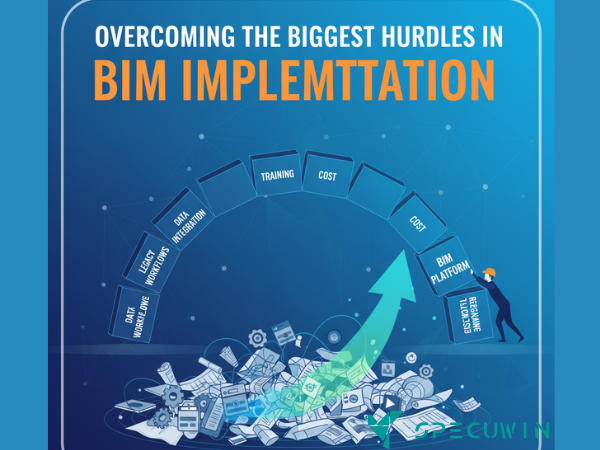
Building Information Modeling (BIM) is a powerful process that transforms the Architecture, Engineering, and Construction (AEC) industry, moving it from traditional 2D drafting to an intelligent, collaborative 3D model-based environment. While the benefits like improved coordination, reduced errors, and enhanced project efficiency are clear, the path to successful BIM implementation is often paved with significant challenges. Overcoming these hurdles requires a strategic, human-centric approach that goes beyond simply buying new software.
This blog post explores the biggest obstacles firms face in their journey toward full BIM adoption and offers practical, human-centered strategies to ensure a smooth and successful transition.
1. The Human Element: Tackling Resistance to Change:-
The single greatest challenge in any technological overhaul, and especially in BIM implementation, is the human resistance to change. Seasoned professionals who have worked with traditional Computer-Aided Design (CAD) workflows for decades may view BIM as a steep, intimidating learning curve or an unnecessary complication to their established routines. This resistance isn’t about laziness; it’s about comfort, fear of the unknown, and a natural skepticism toward disrupting proven methods.
The Solution: Championing the “Why” and Phased Adoption:
A successful transition starts with empathy and clear communication.
- Communicate the Value: Leadership must clearly articulate why the organization is adopting BIM, focusing not just on business metrics but on how it simplifies the employee’s day-to-day work for instance, by showing how clash detection will save hours of manual coordination. Highlighting the benefits of BIM training as a “smart gateway to a future-ready AEC career” can also motivate staff.
- Gradual Integration: Don’t throw everyone into the deep end. Start with a small, manageable pilot project or a single, enthusiastic team. This allows staff to build confidence and provides internal “champions” who can share their positive experiences and knowledge, effectively peer-toeing the new process. This is a far gentler approach than a full-scale rollout.
2. Bridging the Knowledge Gap: Training and Skill Development:-
BIM implementation is a process shift, not just a software installation. A common stumbling block is the lack of internal expertise and the initial high cost of comprehensive training. BIM requires a different skill set one that merges technical modeling skills with an understanding of collaborative project workflows and data management.
The Solution: Strategic Investment in Continuous Learning:
Investing in people is investing in the future of the firm.
- Role-Specific Training: Not every team member needs to be a BIM modeling expert. Tailor training to roles. Project managers need to understand BIM workflows and coordination, while designers require in-depth modeling skills. Offer specialized training, like the guide to becoming an outstanding BIM specialist, to develop key internal expertise.
- Blended Learning: Combine external, specialized training with internal, peer-to-peer mentorship. Pair experienced staff with new BIM users to foster a culture of knowledge-sharing. This approach is more cost-effective and helps build a sustainable in-house knowledge base.
- The BIM Specialist Advantage: Recognize and empower your BIM specialists. These individuals are crucial to the transition, as they can help navigate the process of moving “from CAD to BIM,” ensuring enhanced project delivery.
3. The Technical Tangle: Data Management and Interoperability:-
BIM models are repositories of vast amounts of data geometry, specifications, structural properties, and more. This wealth of information introduces significant technical challenges:
- Interoperability: Ensuring that different software platforms (e.g., architectural, structural, and Mechanical, Electrical, and Plumbing (MEP) tools) can seamlessly exchange data without loss or corruption.
- Data Standards: Establishing consistent naming conventions, data formats, and Level of Development (LOD) protocols across all projects and teams.
The Solution: Establishing a Common Data Environment (CDE):
The key to unlocking the collaborative power of BIM is establishing clear protocols and a centralized information hub.
- BIM Execution Plan (BEP): Before any modeling begins, create a comprehensive BEP that defines the project’s BIM goals, standards, roles, and data exchange protocols. This document is the roadmap for how information will be created, managed, and shared, helping to maintain data consistency and accuracy.
- Open Standards: Advocate for and utilize open, vendor-neutral data standards like Industry Foundation Classes (IFC) to mitigate interoperability issues between various software platforms.
- Centralized Data: Implement a Common Data Environment (CDE). This cloud-based platform ensures that all project stakeholders—architects, engineers, and contractors are working from a single, up-to-date source of truth. This directly improves collaboration, which is often key to successful projects.
4. Financial Realities: Managing Initial Cost and ROI:-
The upfront costs associated with BIM software licenses, hardware upgrades, and training can be a major deterrent, particularly for smaller firms. It can be hard for management to see the immediate return on a large initial investment.
The Solution: Calculating Long-Term Return on Investment (ROI):
A change in perspective is vital: BIM is an investment, not an expense.
- Phased Investment: Adopt a phased BIM implementation plan. Start with essential software and a smaller team, scaling up the investment as pilot projects demonstrate clear, measurable returns.
- Quantify Savings: Focus on the long-term ROI. Use BIM to track reductions in costly rework, fewer Requests for Information (RFIs), and reduced construction waste. For example, BIM’s clash detection features can help minimize structural issues in residential buildings, leading to cost avoidance. Furthermore, the benefits of pre-engineered buildings often facilitated by BIM can be quantified for commercial projects.
- Showcase Success: Publicize the success stories and the quantifiable benefits within your firm. Highlight projects where BIM was used effectively, much like a case study on the structural engineering of high-rise buildings. Showing how BIM transformed a challenging project into a success will secure greater management buy-in.
Conclusion:-
BIM implementation is a marathon, not a sprint. It demands more than just new software; it requires a cultural shift toward open collaboration and a commitment to continuous learning. By directly addressing the human element, investing strategically in training, establishing clear data protocols, and focusing on long-term ROI, your firm can successfully overcome the biggest hurdles and fully leverage the transformative power of Building Information Modeling.
FAQ’s
1: What is the single biggest hurdle to successful BIM Implementation?
A: The biggest hurdle is typically the resistance to change from personnel accustomed to traditional CAD workflows, requiring a cultural shift and demonstrating the value of the new process.
2: How can we convince management to approve the high initial cost of BIM Implementation?
A: Focus on the long-term ROI, quantifying savings from reduced rework, faster project delivery, and better coordination, using case studies to prove its value as an investment.
3: What is a Common Data Environment (CDE) and why is it crucial for BIM?
A: A CDE is a centralized, single source of truth for all project information; it is crucial for ensuring all stakeholders are working with the latest, most accurate data, which is the foundation of effective BIM collaboration.
4: Should everyone on my team receive the same level of BIM training?
A: No, training should be role-specific. Designers need in-depth modeling skills, while project managers need to understand BIM workflows and data management for efficient coordination.
5: How does BIM address the interoperability issue between different software programs?
A: Interoperability is addressed by establishing a comprehensive BIM Execution Plan (BEP) and utilizing open, standardized data formats like IFC, which allow different software applications to exchange information reliably.
Read More On:-
For more information about engineering, architecture, and the building & construction sector, go through the posts related to the same topic on the Specuwin Blog Page.
Find out more accurately what we are going to take off in the course of applying leading new technologies and urban design at Specuwin.