


Have you ever walked into a massive cathedral or stood on the 50th floor of a skyscraper and wondered, “How does this actually stay up?” It’s a common question. While we often admire the aesthetics of architecture the glass facades, the sweeping curves, and the modern interiors the real magic happens in the math that keeps those elements from coming crashing down.
At the heart of every safe building is a deep understanding of Structural Loads. Whether you are a student, a budding architect, or a homeowner planning a renovation, understanding how forces interact with a building is crucial. It isn’t just about gravity; it’s about a complex dance of physics, materials, and nature. In this guide, we will break down exactly what Structural Loads are, why they matter, and how engineers account for them to keep us safe.

What Are Structural Loads?:-
In the simplest terms, Structural Loads are forces applied to a component of a structure or to the structure as a whole.
Think of a bookshelf. The shelf itself has weight (that’s a load). When you add books, you add more weight (another load). If you lean on the shelf, you apply force (yet another load). If the shelf isn’t designed to handle the sum of these Structural Loads, it bows or breaks.
In the construction industry, identifying these loads is the very first step in the design process. Before a single beam is sized or a foundation is poured, engineers must calculate the burdens the building will bear throughout its lifespan. To get a broader picture of where load calculation fits into the bigger picture, you might want to read about What structural engineering actually is and how it shapes our world.
The Two Main Categories: Dead Loads vs. Live Loads:-
When analyzing Structural Loads, engineers generally divide them into two primary camps: the permanent and the temporary.
1. Dead Loads (Permanent):
Dead loads are the forces that are always there. They consist of the weight of the structure itself. This includes the concrete foundation, the steel beams, the floor finishes, the walls, the roof, and even fixed equipment like HVAC units.
Gravity is the main driver here. The building is constantly fighting gravity just to hold itself up. When engineers select materials, they have to consider the weight-to-strength ratio. Heavy materials create higher dead loads, which in turn requires a stronger structure to support them. This relationship between weight and strength is critical. You can learn more about how different choices affect a building in our article on The impact of material selection on structural integrity.
2. Live Loads (Variable):
Live loads are transient. They move, change, and shift. These Structural Loads include:
- People: The weight of occupants walking around.
- Furniture: Desks, beds, and cabinets.
- Vehicles: Cars in a parking garage.
- Storage: Goods in a warehouse.
Because live loads change, engineers use “safety factors.” They assume the worst-case scenario like a packed party in a living room to ensure the floor doesn’t collapse under maximum capacity.

Environmental Structural Loads: When Nature Strikes:-
Beyond the weight of the building and the people inside, structures must withstand the forces of nature. These are often the most difficult Structural Loads to predict because they can be violent and sudden.
1. Wind Loads:
Wind doesn’t just blow past a building; it pushes against it. On a high-rise, wind can exert massive pressure, causing the building to sway. If you’ve ever been on the top floor of a skyscraper during a storm, you might have felt this movement. Engineers design bracing systems specifically to counteract these lateral (sideways) Structural Loads.
2. Snow Loads:
In colder climates, snow is a massive concern. Wet snow is incredibly heavy. If a roof is flat, snow accumulates, creating a significant downward force. The design must account for the maximum expected snowfall in that specific geographic region to prevent roof collapse.
3. Seismic Loads (Earthquake Loads):
Perhaps the most complex of all are seismic loads. During an earthquake, the ground shakes, but the building tries to stay still due to inertia. This creates massive internal forces that can tear a structure apart. Designing for these unpredictable events is a specialty field. We dive deeper into this in our post on Innovations in earthquake-resistant design.
The Hidden Role of Soil and Settlement Loads:-
We often look up at the building, but some of the most critical Structural Loads come from below. The soil exerts pressure on the basement walls and foundations.
Furthermore, if the soil shifts or settles unevenly, it induces “settlement loads” into the building frame. If one corner of a house sinks while the others stay firm, the structure twists, leading to cracks and instability. This is why skipping the geotechnical investigation is a recipe for disaster. Read more about The importance of soil testing in structural engineering to understand why the ground matters as much as the steel.
Special Structural Loads: Thermal and Dynamic:-
Thermal Loads:
Have you ever noticed the gaps in a bridge or the lines in a concrete sidewalk? Those are expansion joints. Materials expand when hot and contract when cold. If a building is rigid and doesn’t allow for this movement, “Thermal Loads” build up, causing the materials to crack or buckle.
Dynamic Loads:
These are loads caused by movement or vibration. Examples include:
- Machinery: A heavy generator vibrating on a factory floor.
- Traffic: A bridge vibrating as trucks drive over it.
- Impact: A barrier designed to stop a crashing vehicle.
Analyzing Structural Loads in High-Rise Buildings:-
The higher you build, the more complex the Structural Loads become. In a single-story house, gravity (dead and live loads) is the main concern. In a 50-story tower, lateral loads (wind and seismic) become the dominant factors.
The sheer weight of a high-rise also requires massive foundations to transfer the load deep into the earth. The engineering required to balance these forces is nothing short of an art form. Vertical construction has its own set of rules. Check out our detailed look at Structural engineering of high-rise buildings: challenges and solutions.
How Technology helps Calculate Structural Loads:-
Gone are the days when engineers calculated complex load combinations by hand using slide rules. Today, we utilize advanced software and Building Information Modeling (BIM) to simulate Structural Loads.
We can create a digital twin of a building and “stress test” it against virtual wind storms, earthquakes, and maximum occupancy scenarios. This ensures that when the real building goes up, there are no surprises.
Signs Your Building Can’t Handle the Structural Loads:-
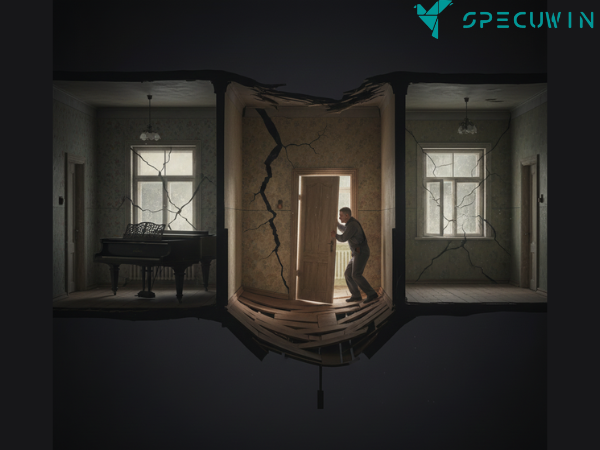
What happens when the calculations are wrong, or a building is subjected to loads it wasn’t designed for (like an illegal addition or a change in building use)? The structure starts to warn you.
Common signs include:
- Sagging floors: Indicating the joists are over-spanned or overloaded.
- Diagonal cracks in walls: Often a sign of shear stress or settlement.
- Doors and windows sticking: Indicating the frame has shifted.
If you spot these issues, ignoring them is dangerous. Here are the Top 5 signs your building needs a structural inspection .
Conclusion:-
Understanding Structural Loads is about understanding the relationship between the built environment and the laws of physics. It is the responsibility of the structural engineer to anticipate every force from the weight of a snowflake to the shake of an earthquake and ensure the building stands firm.
Whether you are building a deck or a skyscraper, respecting these invisible forces is the key to longevity and safety.
FAQ’s:-
1. What is the difference between a load and a force?
A. In structural engineering, a “load” refers to an external weight or pressure applied to a structure (like wind or a car). A “force” is the internal reaction of the structure resisting that load (like the tension in a cable or compression in a column).
2. Can I change the flooring in my house without worrying about Structural Loads?
A. Usually, yes. However, switching from a light material (like carpet) to a heavy material (like thick stone or concrete screed) significantly increases the dead load. In older houses, it is wise to consult an engineer to ensure the floor joists can handle the extra weight.
3. How do engineers know how much snow a roof can hold?
A. Engineers rely on local building codes, which provide “snow load maps” based on historical weather data for that specific region. They calculate the weight based on the worst-case accumulation scenarios.
4. What is the most dangerous type of Structural Load?
A. Seismic (earthquake) loads are often considered the most dangerous because they are unpredictable and apply forces in multiple directions simultaneously, testing the building’s ductility and strength in ways gravity does not.
5. Do Structural Loads change over time?
A. Yes. Materials can degrade (corrosion or rot), reducing their capacity to carry loads. Additionally, the use of a building might change (e.g., turning an office into a library full of heavy books), which drastically increases the live loads.
Read More On:-
For more information about engineering, architecture, and the building & construction sector, go through the posts related to the same topic on the Specuwin Blog Page.
Find out more accurately what we are going to take off in the course of applying leading new technologies and urban design at Specuwin.