

When we think about a building’s design, we often compartmentalize. Architects handle the aesthetics, structural engineers handle the “bones” (beams and columns), and contractors handle the finishes. In this mindset, keeping water out is often relegated to a finishing detail something tackled with a bit of sealant or a membrane just before the tiles go on.
However, this is a dangerous misconception. Water is widely considered the single most destructive force against a building’s longevity. It doesn’t just ruin carpets or stain drywall; it attacks the integrity of the building itself. Understanding the relationship between waterproofing and structural engineering is critical for anyone who owns, manages, or designs buildings.
The Hidden Danger: How Failed Waterproofing Attacks Reinforced Concrete:-
The most common misconception about concrete is that it is a solid, impermeable block. In reality, concrete is porous like a dense sponge. While it is incredibly strong in compression, it relies on steel reinforcement bars (rebar) for tensile strength.
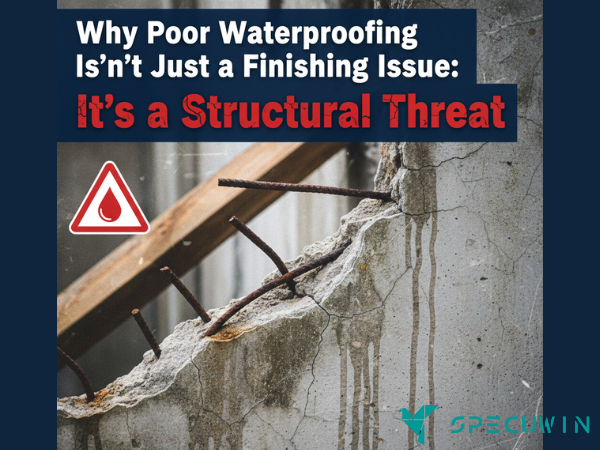
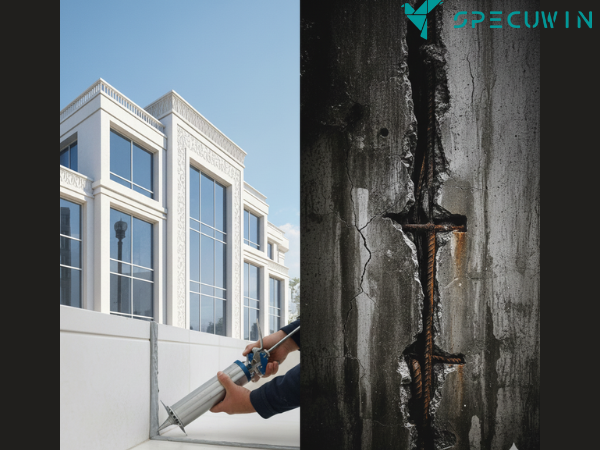
When a waterproofing system fails, moisture seeps into the concrete pores. Once that moisture reaches the steel reinforcement, a chemical reaction begins: oxidation, or rust. As steel rusts, it expands up to seven times its original volume. This internal pressure pushes against the surrounding concrete from the inside out, leading to spalling (concrete breaking off) and severe cracking. This phenomenon is often called “concrete cancer.”
By the time you see a brown stain on a ceiling or a crack in a wall, the structural damage within may already be advanced. This is why Material durability is so closely tied to moisture control.
Waterproofing the Foundation: Protecting the Base of Your Structure:-
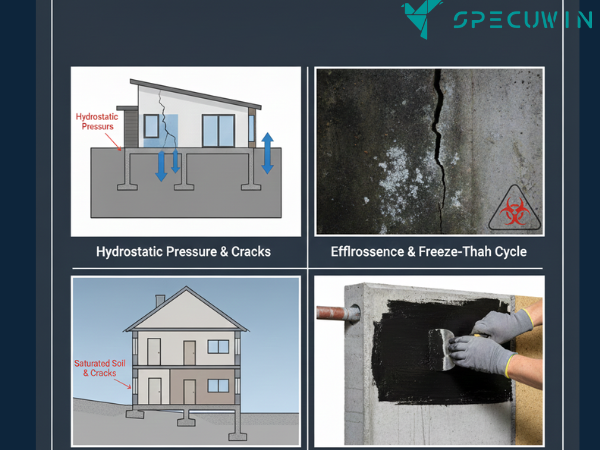
The roof gets all the attention when it comes to leaks, but the most catastrophic water damage often happens where you can’t see it: the foundation. Groundwater is a relentless force. Without adequate waterproofing barriers, hydrostatic pressure builds up against basement walls and foundations.
This pressure can force water through the smallest hairline cracks, slowly widening them over time. In colder climates, the freeze-thaw cycle exacerbates this, literally wedging the foundation apart. If the soil surrounding the foundation becomes overly saturated due to poor drainage, it can lose its bearing capacity, leading to settlement or sinking. For owners of Older properties, this is a frequent culprit behind uneven floors and sticking doors.
The High-Risk Zone: Balcony Waterproofing and Exterior Safety:-
Few structural failures are as dangerous or as sudden as a balcony collapse. Because balconies are exposed to the elements on three sides (top, bottom, and edge), they are the most vulnerable parts of a building’s envelope.
If the waterproofing membrane on a balcony fails, water can pool against the connection points where the balcony meets the main building. These connections are structurally critical. If the cantilever beams or brackets corrode, the balcony loses its ability to support weight. This isn’t just a repair bill; it is a profound safety hazard. Regular Checks on these external elements are non-negotiable for residential safety.
Signs Your Building Has a Waterproofing and Structural Issue:
How do you know if a leak is just a nuisance or a structural threat? While a bucket under a drip is an obvious sign, structural water damage is often more subtle.
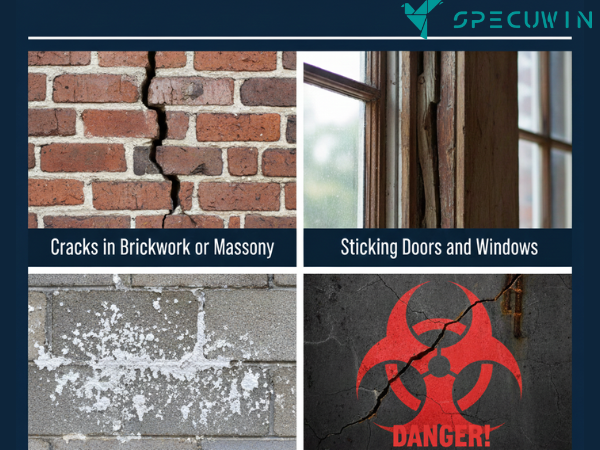
- Cracks in Brickwork or Masonry: This can indicate the foundation is shifting due to soil saturation.
- Sticking Doors and Windows: A classic sign of structural distortion potentially caused by water-damaged timber or shifting foundations.
- Efflorescence: A white, powdery residue on walls. This is salt left behind as water migrates through masonry, signaling that the barrier has been breached.
If you spot these warning signs, applying a patch or a fresh coat of paint is a dangerous “band-aid” solution. It covers the symptom while the disease structural degradation continues to spread. You likely need a professional assessment to determine the depth of the issue.
The Role of the Structural Engineer in Waterproofing Design:-
Ideally, moisture protection shouldn’t be an afterthought; it should be integrated into the structural design phase. A structural engineer doesn’t just calculate loads; they anticipate environmental stressors.
Modern engineering involves designing slopes for drainage directly into the slab, specifying concrete mixes with lower permeability, and detailing joints that accommodate thermal expansion without tearing the waterproofing membranes.
For existing buildings, if you are planning a renovation or notice persistent dampness, consulting an engineer before a contractor ensures you aren’t just trapping moisture inside the walls. A holistic approach to residential issues ensures that the fix lasts a lifetime, not just a season.
Conclusion: Treat Water as a Structural Load:-
We calculate for wind loads, snow loads, and seismic loads. It is time we started treating water with the same level of seriousness. It is a load that attacks chemically and physically. By understanding the link between waterproofing and structural integrity, building owners can save thousands in repairs and, more importantly, ensure the safety of the people inside. Don’t wait for the leak to find you; ensure your structure is defended today.
FAQ’s:-
1. Is waterproofing considered a structural repair?
A. While the application of a membrane is often considered a finishing trade, the reason for doing it is structural protection. If the repair involves fixing concrete spalling, rusted rebar, or foundation shifting caused by water, it is definitely a structural repair that requires an engineer’s oversight.
2. How do I know if my waterproofing has failed structurally?
A. Look for rust stains bleeding through concrete, horizontal cracks in basement walls, or “spalling” (chunks of concrete falling off). These indicate that water has moved past the surface and is attacking the structural core of the building.
3. Can I just paint over water damage?
A. No. waterproofing paint is a surface measure. If water is entering from the outside (negative side pressure), painting the inside wall will only trap the moisture in the wall, accelerating the rot or corrosion. You must stop the water source first.
4. How often should balcony waterproofing be inspected?
A. It is recommended to inspect balconies professionally every 3 to 5 years, or immediately if you notice cracks in the tile grout, pooling water, or rust spots. Balconies are high-risk areas for structural failure due to water.
5. Do structural engineers do the waterproofing themselves?
A. No, structural engineers design the solutions and assess the damage. They will specify how the repair should be done to ensure safety, but a specialized waterproofing contractor will physically apply the membranes and coatings.
Read More On:-
For more information about engineering, architecture, and the building & construction sector, go through the posts related to the same topic on the Specuwin Blog Page.
Find out more accurately what we are going to take off in the course of applying leading new technologies and urban design at Specuwin.