

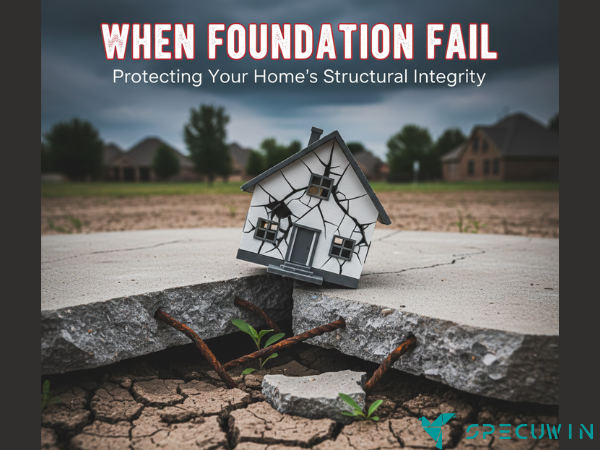
Imagine your home as a living, breathing entity. The walls are the skin, the framing is the skeleton, and the mechanical systems are the organs. But the feet the part that bears the entire weight of your world is the most critical component of all. We rarely think about what happens underground until a crack appears in the living room drywall, or a door suddenly refuses to close. This post explores the scary but manageable reality of what happens when a Foundation is compromised.
While the idea of structural issues can be nightmarish for any property owner, understanding the mechanics of failure strips away the fear. It empowers you to act fast, saving your wallet and your peace of mind. Let’s dig into the dirt to understand why this happens and how to ensure your Foundation stands the test of time.

Recognizing the Subtle Signs of a Failing Foundation:-
Foundation failure rarely happens overnight. It is usually a slow creep a game of inches that takes place over years. Unfortunately, because the damage starts beneath the soil, your house often tries to “tell” you something is wrong long before the catastrophic damage occurs. You just have to know the language.
The most obvious sign is cracking, but not all cracks are created equal. Hairline fissures in concrete are often just shrinkage from curing. However, “stair-step” cracks in brickwork, horizontal cracks in your basement walls, or wide vertical gaps are screaming for attention. These indicate that the structure is shifting unevenly.
Inside the home, the signs can be more subtle. Have you noticed gaps opening up between your crown molding and the ceiling? Do your windows stick, or do doors swing open on their own? These aren’t just quirks of an old house; they are often symptoms of the structure twisting. If you are noticing these symptoms and want a detailed checklist to verify your suspicions, you should review the Signs Your Building Needs a Structural Inspection to catch these issues early.
The Primary Causes of Foundation Instability:-
Why does this happen? Concrete and stone are incredibly durable, so the culprit is rarely the material itself it is almost always the environment surrounding it.
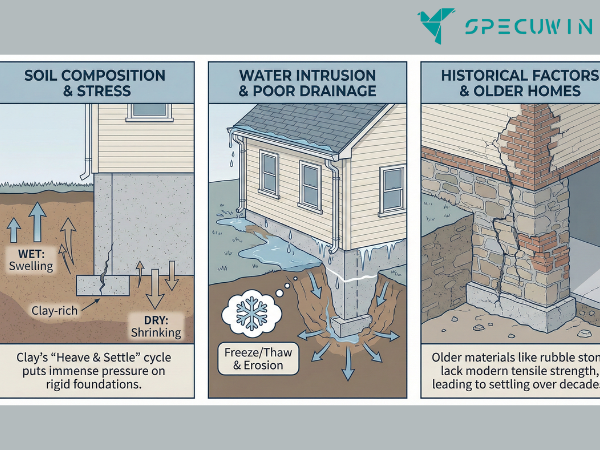
Soil Composition and Foundation Stress:
The ground beneath your home is not a static object. It swells when wet and shrinks when dry. Clay-rich soil is particularly notorious for this “heave and settle” cycle. When the soil expands, it pushes up against the concrete; when it dries, it pulls away, leaving the structure unsupported. Over time, this movement snaps the rigid materials of your base. Before starting any major construction or remediation, understanding the ground you are building on is vital. You can learn more about this in our guide on The Importance of Soil Testing in Structural Engineering.
Water Intrusion and the Foundation:
Water is the enemy of stability. Poor drainage is the number one cause of structural failure. If your gutters are clogged or the grading around your house slopes toward the walls, water pools around the footings. In cold climates, this water freezes and expands, exerting massive pressure. In warmer climates, it erodes the soil, creating voids that the house eventually sinks into.
Historical Factors: Why Older Homes See Foundation Issues:
If you live in a historic property or a home built more than 50 years ago, you are dealing with different construction standards. Older structures often used rubble stone, brick, or non-reinforced concrete, which lack the tensile strength of modern steel-reinforced slabs. While these homes have character, they are more susceptible to settling over decades. Owning a vintage property requires a specific approach to maintenance. For a deeper dive into preserving these structures, read about Common Structural Problems in Old Houses and How to Fix Them.
Steps to Take When Your Foundation Needs Repair
The moment you suspect failure, the clock starts ticking. Ignoring the problem will never make it go away; it will only make the eventual repair bill exponentially larger.
- Don’t Panic, but Don’t Wait: Most failures are fixable. The house is unlikely to collapse tomorrow, but the stress is accumulating.
- Call a Professional: This is not a DIY project. You need an expert who understands load paths and soil mechanics. A general contractor might patch the crack, but a structural engineer will diagnose why the crack appeared.
- The Remediation Plan: Solutions range from “mudjacking” (pumping a slurry under the slab to lift it) to installing steel piers (helical or push piers) that reach down to stable bedrock to support the home’s weight.
Finding the right expert is half the battle. To ensure you are hiring a qualified professional for this critical task, check out our article on How to Choose the Right Structural Engineer for Your Project.
The Role of Modern Engineering in Foundation Success:-
The good news is that modern engineering has come a long way. Today, we have access to Building Information Modeling (BIM) and advanced structural analysis tools that allow us to predict how a building will interact with the soil long before the concrete is poured.
For new construction, prevention is key. Proper site preparation, adequate drainage planning, and using the right mix of reinforced materials can prevent 99% of these issues. For existing buildings, the focus shifts to moisture management. Keeping your gutters clean and ensuring downspouts extend at least five feet away from the house are simple, low-cost ways to protect your biggest investment.
If you are planning a renovation or looking to understand the expert’s role in keeping your home safe, it is helpful to understand What is the Role of a Structural Engineer in the broader context of construction.

Conclusion:-
A failing structural base is stressful, but it is a problem with a solution. By keeping an eye on the warning signs like sticking doors and stair-step cracks and managing the water around your property, you can mitigate most risks. Remember, your home relies on you to maintain the ground it stands on. When you take care of the Foundation, the rest of the house will take care of you.
FAQ’s:-
1. How do I know if a crack in my wall is serious?
A. Not all cracks indicate failure. Vertical or diagonal cracks that are wider than 1/8th of an inch, or cracks that resemble a “stair-step” pattern in brickwork, are concerning. If you can fit a coin into the crack, or if one side of the wall feels uneven compared to the other, it is time to call a professional.
2. Can a house collapse from foundation failure?
A. Sudden collapse is extremely rare in residential homes. Foundation failure is usually a slow process. However, if left untreated for years, it can lead to severe structural instability, roof collapse, or plumbing ruptures that make the home unsafe to inhabit.
3. Does homeowner’s insurance cover foundation repair?
A. Typically, standard policies do not cover foundation repair if it is caused by normal settling, earth movement, or poor maintenance (like age). However, if the damage is caused by a covered “sudden and accidental” event, like a burst pipe washing away the soil, you might be covered. Always check your specific policy.
4. How long does it take to repair a foundation?
A. It depends on the method. Mudjacking or polyurethane injection can often be done in a single day. Extensive underpinning with steel piers might take 3 to 5 days. You usually do not have to move out of the house during these repairs.
5. How much does it cost to fix a foundation?
A. Costs vary wildly based on the severity. Minor crack repairs might cost a few hundred dollars. extensive underpinning (piering) can range from $10,000 to $30,000 or more depending on how many piers are required to stabilize the structure.
Read More On:-
For more information about engineering, architecture, and the building & construction sector, go through the posts related to the same topic on the Specuwin Blog Page.
Find out more accurately what we are going to take off in the course of applying leading new technologies and urban design at Specuwin.