

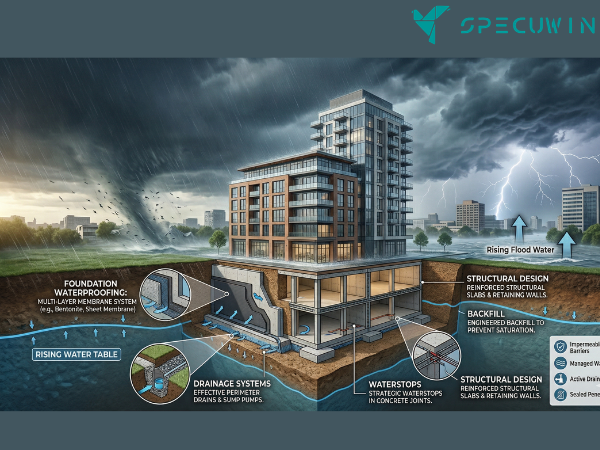
In an era of unpredictable climate shifts, the integrity of our built environment is being tested like never before. From sudden cloudbursts to the silent, steady pressure of rising water tables, moisture is the primary antagonist of structural longevity. Effective water proofing is no longer just a checkbox in the construction process; it is a fundamental pillar of resilient design.
When we talk about protecting a building, we aren’t just talking about keeping the carpets dry. We are talking about preserving the chemical and physical bonds of the materials that hold the structure upright. Whether you are managing a high-rise commercial project or a residential development, understanding the intersection of hydrology and engineering is vital for long-term success.
The Physics of Failure: Why Water Proofing is Essential:-
Water is the “universal solvent,” and in the world of AEC (Architecture, Engineering, and Construction), it is also the universal destroyer. It finds its way into the smallest fissures, expands when it freezes, and corrodes reinforcement steel through carbonation and chloride ingress.
For those deep in the industry, the transition from traditional methods to advanced modeling has been a game-changer. Just as firms have moved From CAD to BIM to enhance project delivery, we must now move from reactive “patch-work” to proactive, integrated moisture management systems.
Understanding Hydrostatic Pressure:
One of the most misunderstood forces in construction is hydrostatic pressure. When the water table rises, the water in the soil exerts an upward and inward force on the foundation. Without a robust water proofing strategy, this pressure can force moisture through seemingly solid concrete slabs.
The Challenge of Heavy Rainfall and Extreme Weather:-
Climate change has shifted the baseline for “normal” rainfall. Modern structures must be designed to shed water at a rate that exceeds historical averages.
Surface Drainage vs. Sub-Surface Protection:
Designing for extreme weather requires a dual-track approach:
- Macro-level Management: Roof systems and gutters must be sized for 100-year storm events.
- Micro-level Management: Use of vapor barriers and crystalline admixtures to prevent capillary action.
In complex projects, such as structural engineering of high-rise buildings, these challenges are magnified. High-rise structures often have deeper foundations that penetrate multiple soil strata, making them more vulnerable to fluctuating water tables.
Comprehensive Water Proofing Systems for Foundations:-
The foundation is the most difficult part of a building to repair once construction is complete. Therefore, the “belt and braces” approach is often the most cost-effective in the long run.
Positive Side vs. Negative Side Water Proofing:
- Positive Side: This involves applying a membrane to the exterior face of the foundation (the side facing the water source). It is the most effective method because it keeps the water from ever entering the structural element.
- Negative Side: This is applied to the interior. While useful for retrofitting, it doesn’t prevent the concrete itself from becoming saturated, which can lead to the corrosion of rebar over time.
The Role of Material Selection:
Modern materials have evolved significantly. Beyond traditional bitumen, we now utilize thermoplastic membranes and bentonite clay liners that “self-heal” when punctured. As we explore Modern materials in structural engineering beyond concrete and steel, we see a greater emphasis on chemical compatibility between structural elements and their protective coatings.
Rising Water Tables: The Silent Threat:-
While a storm is visible and immediate, a rising water table is a slow-motion disaster. Soil testing becomes a critical precursor to design in these scenarios. As highlighted in the importance of soil testing in structural engineering, understanding the soil’s permeability and saturation levels dictates whether a simple damp-proof course is sufficient or if a fully tanked system is required.
Designing for Buoyancy:
In areas with high water tables, engineers must occasionally design against “buoyancy.” If a basement is empty and the water table rises rapidly, the entire building can act like a boat, leading to catastrophic structural heaving. Water proofing in this context involves not just membranes, but sometimes pressure-relief valves or additional structural weight to keep the building anchored.
Water Proofing for High-Occupancy and Commercial Decks:-
In residential and commercial projects, balconies and decks are frequent points of failure. Water ingress here doesn’t just cause aesthetic damage; it can lead to structural collapse. We must take balcony safety and structural considerations for residential decks seriously, ensuring that drainage slopes are precise and that flashing is integrated into the building’s primary water barrier.
The Generative Design Edge:
With the advent of new technology, we can now simulate water flow across complex geometries before a single brick is laid. Using generative design in structural engineering, AI can help optimize the slope and placement of drainage points to ensure that “ponding” never occurs, even during extreme weather.
Future-Proofing Through Digital Integration:-
The future of moisture protection lies in “Smart Infrastructure.” Imagine a building that can alert a facility manager when moisture is detected behind a foundation wall before a leak even becomes visible to the human eye.
The Impact of digital twins on facility management and operations is profound. By embedding sensors within the water proofing layers, we create a live map of the building’s health. This is the next frontier of AEC moving from static structures to responsive environments.
Maintenance: The Final Frontier of Water Proofing:-
No system is “set it and forget it.” Regular inspections are the only way to ensure that extreme weather hasn’t compromised the structure’s envelope. Property owners should be aware of the signs your building needs a structural inspection, which often include efflorescence (white salty stains), musty odors in lower levels, or hairline cracks in the foundation.
If you are dealing with an older property, the stakes are even higher. Identifying common structural problems in old houses such as degraded mortar joints or failed clay pipes is the first step toward implementing a modern moisture management plan.
Conclusion: A Holistic Approach to Resilience:-
Designing for water is about more than just keeping it out; it’s about respecting its power. By integrating advanced water proofing techniques with the latest in BIM and structural analysis, we can build structures that don’t just survive extreme weather, but thrive through it.
Whether it’s a bridge using BIM in bridge design to manage digital connections or a residential high-rise, the principle remains: moisture control is structural control.
Frequently Asked Questions:-
1. What is the difference between damp-proofing and water proofing?
A. Damp-proofing is intended to resist moisture in a gaseous state (vapor control), whereas water proofing is designed to resist hydrostatic pressure from water in a liquid state. For areas with high water tables, only the latter is sufficient.
2. Can I apply water proofing to an existing building?
A. Yes, this is often called “remedial” or “negative side” protection. While interior coatings and crystalline injections can help, it is often more effective (though more expensive) to excavate and apply a positive-side membrane.
3. How does climate change affect my building’s drainage requirements?
A. Traditional designs based on old “10-year” or “50-year” flood data are becoming obsolete. Engineers now suggest designing for higher intensities of rainfall and considering the potential for long-term rises in local water tables.
4. Is BIM useful for planning moisture protection?
A. Absolutely. Using BIM (Building Information Modeling) in consultancy allows for better coordination between the architect, the structural engineer, and the specialist contractor, ensuring no gaps are left in the building envelope.
5. What are the signs of a failed foundation membrane?
A. Common indicators include persistent dampness on walls, the appearance of mold, peeling paint at the base of walls, or visible “heaving” of the floor slab due to hydrostatic pressure.
Read More On:-
For more information about engineering, architecture, and the building & construction sector, go through the posts related to the same topic on the Specuwin Blog Page.
Find out more accurately what we are going to take off in the course of applying leading new technologies and urban design at Specuwin.