

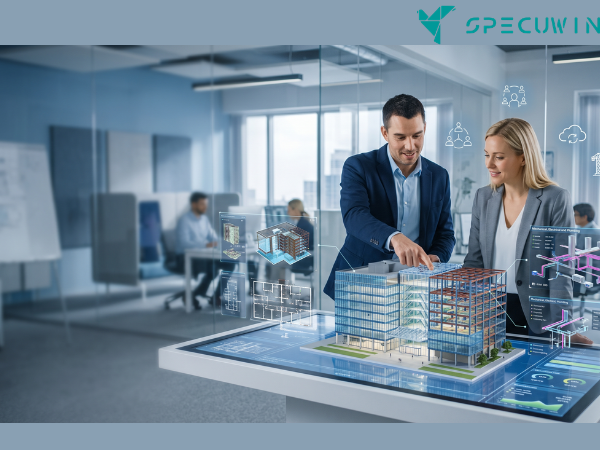
Building Information Modeling (BIM) has become one of the most important technologies in the Architecture, Engineering, and Construction (AEC) industry. From improving collaboration to reducing construction errors, BIM is changing how buildings are designed, constructed, and managed. However, if you’re new to BIM, it’s natural to have questions about how it works and why it has become the industry standard.
This guide answers the most Frequently Asked Questions About BIM in simple language. Whether you’re a student, architect, engineer, contractor, or project owner, these answers will help you understand BIM fundamentals and its role in modern construction.
What Is BIM?
Building Information Modeling (BIM) is a digital process for creating and managing intelligent 3D models of buildings and infrastructure. Unlike traditional CAD drawings, BIM models contain both geometric information and project data such as materials, dimensions, quantities, costs, and maintenance details.
Instead of working with separate drawings, all project stakeholders collaborate using a shared digital model that updates automatically whenever changes are made.
Why Is BIM Important?
One of the most common Frequently Asked Questions About BIM is why it has become so popular.
BIM improves construction projects by:
- Enhancing collaboration
- Reducing design conflicts
- Improving project visualization
- Increasing cost accuracy
- Supporting sustainable design
- Simplifying facility management
These advantages help organizations deliver projects more efficiently while reducing costly mistakes.
Who Uses BIM?
BIM is used by professionals throughout the construction industry.
Common users include:
- Architects
- Structural Engineers
- MEP Engineers
- Contractors
- Quantity Surveyors
- BIM Coordinators
- Project Managers
- Facility Managers
- Building Owners
Each stakeholder uses the same project model, improving communication and coordination.
What Is the Difference Between BIM and CAD?
Traditional CAD software focuses primarily on creating 2D drawings or basic 3D models.
BIM goes much further by creating intelligent models that include information about every building component.
For example, changing a wall in a BIM model automatically updates floor plans, sections, elevations, schedules, and material quantities. In CAD, these updates usually require manual revisions.
What Software Is Used for BIM?
Several software platforms support BIM workflows.
Popular BIM software includes:
- Autodesk Revit
- Navisworks
- Tekla Structures
- Bentley OpenBuildings
- Archicad
- Civil 3D
Each application is designed for different stages of design, coordination, or construction.
What Are BIM Dimensions?
BIM Dimensions refer to additional information added to a BIM model beyond 3D geometry.
Common BIM Dimensions include:
- 3D BIM – Design and visualization
- 4D BIM – Construction scheduling
- 5D BIM – Cost estimation
- 6D BIM – Sustainability and energy analysis
- 7D BIM – Facility management
These dimensions help manage projects throughout their entire lifecycle.
What Is Clash Detection?
Clash Detection identifies conflicts between different building systems before construction begins.
Examples include:
- HVAC ducts passing through beams
- Pipes intersecting columns
- Electrical conduits conflicting with ceilings
By resolving clashes during design, project teams reduce rework, delays, and construction costs.
Is BIM Only for Large Projects?
No.
Another common item in the Frequently Asked Questions About BIM is whether BIM is suitable only for large commercial developments.
In reality, BIM can be used for:
- Residential buildings
- Commercial projects
- Hospitals
- Schools
- Industrial facilities
- Infrastructure projects
Even small projects benefit from improved coordination and accurate documentation.
Does BIM Reduce Construction Costs?
Yes.
Although implementing BIM requires an initial investment, it often reduces overall project costs by:
- Detecting errors early
- Reducing material waste
- Improving quantity estimation
- Minimizing rework
- Increasing construction efficiency
Many organizations recover their BIM investment through better project performance and fewer on-site issues.
What Skills Are Needed to Learn BIM?
Learning BIM involves both technical and collaborative skills.
Beginners should focus on:
- 3D modeling
- Construction fundamentals
- Revit or BIM software
- Model coordination
- Basic project management
- Communication skills
As experience grows, professionals can specialize in areas such as BIM coordination or BIM management.
Is BIM Difficult to Learn?
Not necessarily.
Most beginners can understand BIM concepts within a few weeks, especially if they already have experience with architecture, engineering, or construction.
Mastering advanced workflows, however, requires regular practice and real-world project experience.
What Is the Future of BIM?
The future of BIM includes advanced technologies such as:
- Artificial Intelligence (AI)
- Digital Twins
- Cloud Collaboration
- Automation
- Internet of Things (IoT)
- Virtual Reality (VR)
These innovations are making BIM smarter, more connected, and increasingly valuable throughout a building’s lifecycle.
What Are the Benefits of Learning BIM?
Learning BIM offers several career advantages.
Benefits include:
- High industry demand
- Better career opportunities
- Improved technical skills
- Enhanced collaboration
- Greater project efficiency
- Opportunities to work on international projects
As BIM adoption continues to grow worldwide, professionals with BIM expertise are becoming increasingly valuable.
Frequently Asked Questions:-
1. Is BIM a software?
A. No. BIM is a process and methodology. Software like Autodesk Revit or Tekla Structures is used to implement BIM workflows.
2. Can BIM replace CAD?
A. BIM is gradually replacing traditional CAD for many projects because it provides intelligent models and better collaboration. However, CAD is still used in certain drafting tasks.
3. How long does it take to learn BIM?
A. Basic BIM concepts can be learned within a few weeks, while becoming proficient typically takes several months of regular practice.
4. Is BIM required for construction projects?
A. Many government agencies and large organizations now require BIM for public infrastructure and major commercial developments because it improves project quality and information management.
Conclusion:-
These Frequently Asked Questions About BIM provide a strong foundation for anyone beginning their BIM journey. Understanding what BIM is, how it differs from CAD, the software involved, and its benefits helps professionals make informed decisions about adopting digital construction workflows. As technologies such as AI, Digital Twins, and Cloud Collaboration continue to evolve, BIM will play an even greater role in shaping the future of the construction industry. Whether you’re a student or an experienced professional, learning BIM is an investment that can open new career opportunities and improve project outcomes.
Read More On:-
For more information about engineering, architecture, and the building & construction sector, go through the posts related to the same topic on the Specuwin Blog Page.
Find out more accurately what we are going to take off in the course of applying leading new technologies and urban design at Specuwin.