

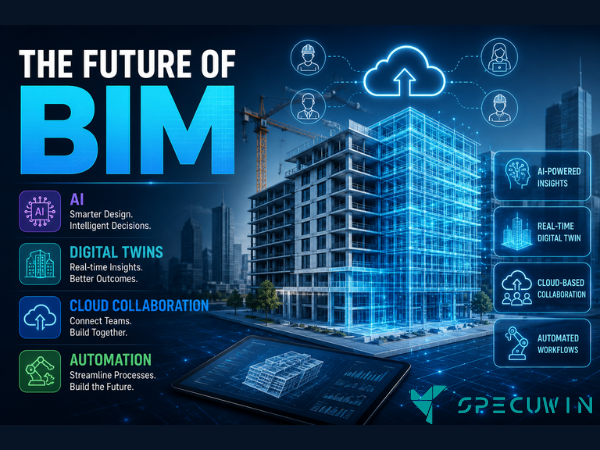
The Future of BIM is reshaping how buildings are designed, constructed, and managed. Building Information Modeling (BIM) has already transformed the Architecture, Engineering, and Construction (AEC) industry by replacing traditional 2D drawings with intelligent 3D models that improve collaboration and reduce project errors. However, BIM is evolving beyond design coordination. Emerging technologies such as Artificial Intelligence (AI), Digital Twins, Cloud Collaboration, and Automation are taking BIM to the next level.
As construction projects become larger and more complex, organizations need smarter ways to improve productivity, reduce costs, and make data-driven decisions. According to industry research, digital construction technologies can reduce project rework by up to 25% while improving project delivery by 10–15%. These advancements are driving the Future of BIM, enabling project teams to work more efficiently throughout a building’s entire lifecycle.
In this article, we’ll explore the technologies shaping the Future of BIM and why they are becoming essential for modern construction.
Why the Future of BIM Matters:-
The construction industry faces increasing challenges, including labor shortages, rising material costs, tighter deadlines, and growing sustainability requirements. Traditional project management methods often struggle to address these demands.
The Future of BIM helps solve these problems by combining intelligent building models with advanced digital technologies. Instead of using BIM only during design and construction, organizations can now manage building performance throughout its entire lifecycle.
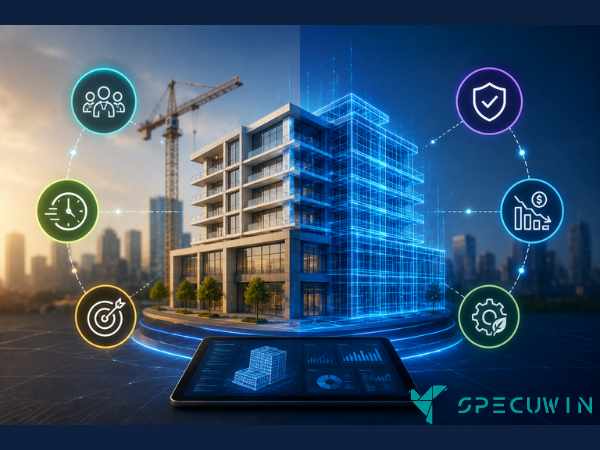
Some of the key benefits include:
- Better collaboration among project teams
- Faster decision-making
- Improved project accuracy
- Reduced construction risks
- Lower operational costs
- Smarter facility management
These advantages make BIM a critical part of digital transformation in construction.
Artificial Intelligence Is Making BIM Smarter:-
Artificial Intelligence is one of the biggest innovations shaping the Future of BIM. AI enables BIM software to analyze large amounts of project data and identify patterns that would be difficult for humans to detect.
AI-powered BIM can:
- Predict construction risks
- Optimize building layouts
- Improve clash detection
- Generate design alternatives
- Automate quantity take-offs
- Improve cost estimation
For example, AI can compare multiple structural layouts and recommend the most efficient option based on cost, safety, and material usage. This reduces manual effort while helping project teams make faster and more informed decisions.
Digital Twins Extend BIM Beyond Construction:-
One of the most exciting developments in the Future of BIM is the adoption of Digital Twins.
A Digital Twin is a real-time digital replica of a physical building that continuously receives information from sensors installed throughout the facility. Unlike a traditional BIM model, which mainly supports design and construction, a Digital Twin remains active throughout the building’s operational life.
It can monitor:
- Energy consumption
- HVAC performance
- Equipment health
- Occupancy levels
- Structural conditions
- Indoor environmental quality
Building owners can use this information to reduce maintenance costs, improve operational efficiency, and extend the lifespan of building assets.
Cloud Collaboration Is Transforming Project Communication:-
Cloud technology has become an essential part of the Future of BIM because construction teams increasingly work from different locations.
Instead of sharing files through emails or local servers, cloud-based BIM platforms allow all stakeholders to access the latest project information in real time.
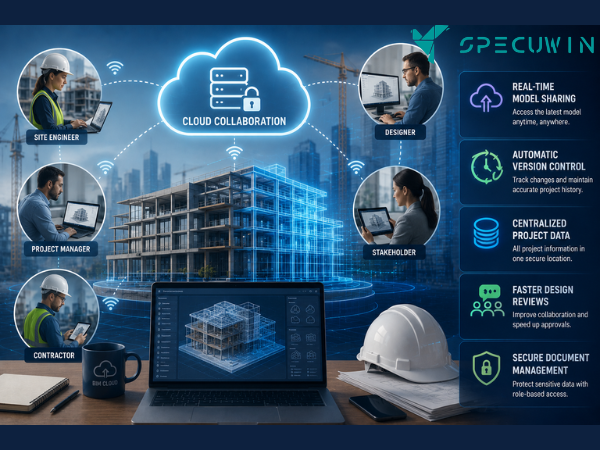
Cloud collaboration provides:
- Real-time model sharing
- Automatic version control
- Centralized project data
- Faster design reviews
- Secure document management
With everyone working from the same data source, communication improves, coordination becomes easier, and project delays caused by outdated information are significantly reduced.
Automation Is Improving BIM Productivity:-
Automation is helping BIM professionals eliminate repetitive tasks and focus on higher-value work.
Modern BIM software can automatically perform tasks such as:
- Sheet generation
- Quantity take-offs
- Clash reports
- Model validation
- Drawing updates
- Documentation
By automating these routine processes, organizations reduce human error while increasing productivity.
Automation also enables project teams to complete complex projects faster without compromising quality.
Emerging Technologies Supporting the Future of BIM:-
Several emerging technologies are accelerating BIM adoption across the construction industry.
These include:
- Internet of Things (IoT)
- Augmented Reality (AR)
- Virtual Reality (VR)
- Reality Capture
- Laser Scanning
- Generative Design
- Machine Learning
When combined with BIM, these technologies improve visualization, project coordination, and facility management while creating more intelligent and connected buildings.
Challenges in Adopting Future BIM Technologies:-
Although the Future of BIM offers significant opportunities, organizations may face several implementation challenges.
Common obstacles include:
- High technology investment
- Skills shortages
- Data security concerns
- Software interoperability
- Organizational resistance to change
Companies that invest in employee training, standardized workflows, and cloud-based collaboration platforms are better prepared to overcome these challenges.
Frequently Asked Questions:-
1. What is the Future of BIM?
A. The Future of BIM combines Artificial Intelligence, Digital Twins, Cloud Collaboration, and Automation to improve how buildings are designed, constructed, and managed.
2. How does AI improve BIM?
A. AI automates repetitive tasks, predicts project risks, improves clash detection, and helps optimize building designs.
3. What is a Digital Twin?
A. A Digital Twin is a real-time digital representation of a physical building that uses live data to monitor performance and support maintenance.
4. Why is Cloud Collaboration important for BIM?
A. Cloud Collaboration enables project teams to access the latest BIM models from anywhere, improving communication, coordination, and project efficiency.
Conclusion:-
The Future of BIM is transforming the construction industry through Artificial Intelligence, Digital Twins, Cloud Collaboration, and Automation. These technologies enable smarter decision-making, improve collaboration, automate repetitive tasks, and provide real-time insights into building performance. As digital construction continues to evolve, organizations that embrace these innovations will deliver projects more efficiently, reduce operational costs, and create more sustainable buildings. Investing in the Future of BIM today will help construction professionals stay competitive and prepared for the next generation of the built environment.
Read More On:-
For more information about engineering, architecture, and the building & construction sector, go through the posts related to the same topic on the Specuwin Blog Page.
Find out more accurately what we are going to take off in the course of applying leading new technologies and urban design at Specuwin.