

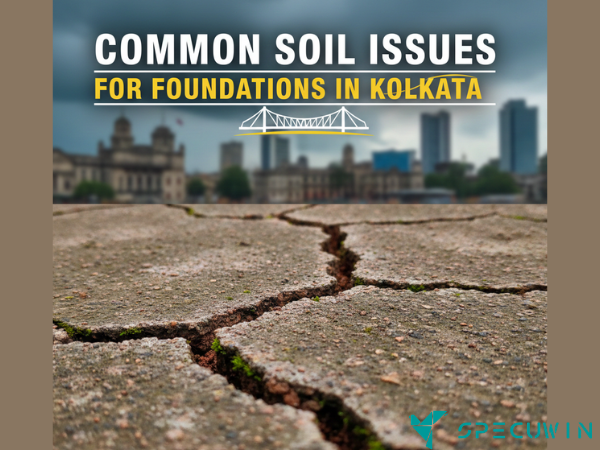
Building in the “City of Joy” brings unique engineering challenges, primarily due to the complex geological makeup beneath our feet. For any developer or homeowner, understanding the Soil Issues that plague the Gangetic delta is the first step toward a stable and lasting structure. Kolkata’s subsoil is notorious for its soft alluvial layers, which, if not properly managed, can lead to catastrophic structural failures.
In this guide, we will explore the most prevalent Soil Issues in the region and how modern engineering solutions can safeguard your foundation. Learn How BIM is transforming consultancy to better manage complex soil and foundation data during the design phase.

Understanding the Alluvial Profile and Related Soil Issues:-
The geography of Kolkata is characterized by a thick layer of soft clay and silty deposits. Geotechnically, the city is divided into two distinct formations: the “Normal Kolkata Deposit” and the “River Channel Deposit”. Both present significant Soil Issues for foundations.
The normal deposit consists of a thick, soft, compressible silty clay layer extending down to approximately 14 meters. Below this, you might find stiffer clay or silty sand, but that upper “squishy” layer is where most foundation problems begin. Without a proper geotechnical analysis, buildings remain highly vulnerable to tilting and irregular movement.
Differential Settlement: The Silent Threat:-
One of the most critical Soil Issues in Kolkata is differential settlement. This occurs when the soil beneath a building compresses unevenly. Because Kolkata’s soft clay is highly impermeable, it takes a very long time to consolidate.
As the water is slowly squeezed out of the clay over years, parts of the foundation may sink faster than others. This results in:
- Structural Cracking: Diagonal cracks in walls or “stair-step” cracks in masonry.
- Functional Problems: Doors and windows that suddenly stick or refuse to close properly.
- Tilting: In extreme cases, like the recent “Tilted Building” cases in Kolkata, faulty engineering leads to entire structures leaning dangerously.
If you notice cracks or shifting, consult this guide on the Top 5 signs your building needs a structural inspection.
Liquefaction Risks and Seismic Soil Issues:-
Kolkata falls under Seismic Zone III, making it moderately earthquake-prone. This introduces the risk of soil liquefaction, a phenomenon where saturated, loose silty sands lose their strength during an earthquake and behave like a liquid.
Specific areas near old river channels are particularly prone to these Soil Issues. During a tremor, the pore water pressure increases so rapidly that the soil can no longer support the weight of the building, leading to sudden sinking or total ground failure.

Managing Moisture and High Water Tables:-
The high water table in West Bengal exacerbates many Soil Issues. Soft clays are liable to shrink and swell with seasonal moisture changes. During the heavy monsoons, the soil becomes over-saturated, exerting hydrostatic pressure against foundation walls. Conversely, during dry summers, the clay can shrink, pulling away from the foundation and leaving it unsupported.
Discover the Role of technology in structural analysis and design to see how modern software simulates soil-structure interaction.
Engineering Solutions for Kolkata’s Soil Issues:-
To combat these challenges, structural engineers must move beyond traditional shallow footings.
- Deep Pile Foundations: For high-rises and heavy structures in Kolkata, pile foundations are essential. These long columns (often 10–60 meters) transfer the building’s weight past the soft clay layers down to stable soil or bedrock.
- Raft Foundations: For medium-sized buildings, a raft or “mat” foundation spreads the load over a large area, allowing the building to “float” on the soft soil and reducing the risk of differential settlement.
- Ground Improvement: Techniques like Prefabricated Vertical Drains (PVD) are used to accelerate the consolidation of soft clay by shortening the drainage path for water.
- Soil Stabilization: Using grouting or chemical stabilizers can help fill voids and strengthen loose sandy deposits.
For larger projects, read about the Structural engineering of high-rise buildings and the unique solutions used for deep foundations.

Conclusion:-
Navigating the Soil Issues in Kolkata requires a blend of local experience and rigorous technical testing. Never skip a professional soil test before starting construction; it is the only way to identify the specific challenges of your site. By choosing the right foundation type whether it be deep piling or a reinforced raft you ensure that your “City of Joy” project remains a safe and stable investment for generations.
FAQ’s:-
1. Why is soil testing so important in Kolkata specifically?
A. Kolkata sits on soft alluvial soil with high clay content. A soil test identifies the load-bearing capacity and detects risks like liquefaction or high compressibility that could lead to building tilt.
2. Can I use a simple shallow foundation for my home?
A. Shallow foundations are generally only suitable for very small, light structures on firm ground. Most areas in Kolkata require raft or pile foundations due to the unstable nature of the upper clay layers.
3. What are the signs that my building is suffering from Soil Issues?
A. Look for horizontal or diagonal cracks in walls, gaps around window frames, uneven floors, or doors that no longer fit their frames.
4. How does the monsoon affect foundations in Kolkata?
A. Heavy rain can saturate the clay, causing it to swell and exert pressure on walls. It can also lead to soil erosion or a rise in the water table, which weakens the foundation’s support.
5. Is Kolkata at risk of soil liquefaction during earthquakes?
A. Yes. Since Kolkata has silty sand layers and a high water table, certain areas are susceptible to liquefaction during seismic events, which can cause sudden ground failure.
Read More On:-
For more information about engineering, architecture, and the building & construction sector, go through the posts related to the same topic on the Specuwin Blog Page.
Find out more accurately what we are going to take off in the course of applying leading new technologies and urban design at Specuwin.