


Look, I’m going to be completely honest with you. I just got back from an inspection site, my boots are covered in dust, and my coffee went cold two hours ago. But we need to talk about your property. You see a solid wall; I see a ticking clock. Everyone obsesses over fresh paint, Italian marble, and sleek kitchen countertops. Meanwhile, the actual skeleton of the property the concrete, the rebar, the foundations—quietly fights against gravity, moisture, and time. If you want your property to last, you have to stop ignoring what’s underneath. That’s exactly where Structural Audits come into play. It is not just paperwork. It is a literal lifesaver for your investment.
The reality hit me hard a few years back during a routine inspection of an old apartment complex in the city. The homeowners association was furious about a minor basement leak. They just wanted a quick waterproofing patch to fix the cosmetic mess. But when I stepped into that damp, poorly lit basement, my stomach dropped. The concrete columns were actively spalling, shedding massive chunks like peeling skin because the internal steel rebar had rusted and expanded. They were standing on a metaphorical landmine. We immediately called for an emergency, comprehensive assessment. Had they waited another six months to investigate, the structural failure would have been catastrophic, likely forcing an expensive evacuation or worse. That day permanently rewrote how I view building maintenance.
Why Buildings Age Badly (And How to Stop It):-
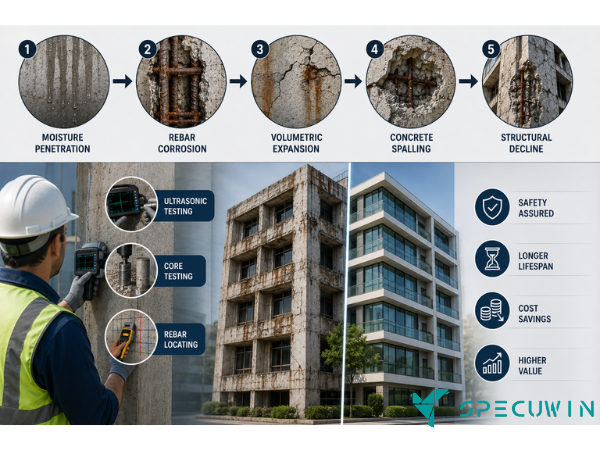
Structures do not just collapse out of nowhere. They decay in slow motion. Concrete absorbs carbon dioxide from the air over decades, a sneaky process called carbonation that destroys its internal alkalinity and leaves the embedded steel vulnerable to severe rust. Once that moisture creeps in, game over. If you don’t catch it early, you will eventually find yourself staring at the Top 5 signs your building needs a structural inspection before a major failure occurs.
Moisture Penetration ➔ Rebar Corrosion ➔ Volumetric Expansion ➔ Concrete Spalling ➔ Structural Decline
A proper engineering check-up acts like a medical MRI for your property. It tracks exactly how the building handles everyday stress.
- Engineers use ultrasonic pulse velocity tests to find hidden internal voids.
- Core drilling physically extracts concrete samples to test actual compressive strength.
- Rebar locators map out the hidden steel grid without breaking a single wall.
Ignoring these microscopic warning signs is a massive gamble. A building designed to stand firmly for sixty years can easily see its functional lifespan cut straight in half by simple, undetected water ingress or poor initial construction material choices. If you are dealing with older properties, you must understand the Common structural problems in old houses and how to fix them to prevent long-term degradation.
The Massive Financial Benefits of Early Detection:
Let’s talk money because I know that’s what keeps property owners up at night. Skipping an inspection to save a quick buck is incredibly foolish.
| Maintenance Strategy | Average Initial Cost | Disruption Level | Ultimate Extension of Building Life |
| Proactive Structural Audits | Very Low | None | 15 to 30 Years |
| Localized Structural Retrofitting | Medium | Moderate | 10 to 15 Years |
| Emergency Reconstruction Work | Extremely High | Severe (Evacuation) | Unpredictable / Variable |
Catching minor structural issues early changes everything. It transforms a potentially devastating multi-million-dollar structural nightmare into a routine, highly manageable weekend repair job. Property owners can discover excellent Cost saving tips that dont compromise structural integrity to protect both their wallet and their peace of mind.
Key Signs Your Property Needs Urgent Attention:
You do not need an engineering degree to spot the loudest cries for help. Walk around your property today and look closely for these red flags:
- Deep, diagonal cracks slicing through your load-bearing brickwork or concrete columns.
- Discolored, damp patches on ceilings that indicate deep water pooling.
- Misaligned window frames or doors that suddenly refuse to close properly.
- Visible chunks of concrete breaking off and exposing rusted iron bars underneath.
The Hidden Power of Structural Audits:-
When an independent engineer steps onto your property for a thorough check, they are not just looking for cracks. They are analyzing the entire structural system. They cross-reference everything with modern seismic codes to ensure the property can handle sudden environmental shocks.
Think of it as securing a premium insurance policy for your concrete. The detailed final report gives you a crystal-clear, step-by-step roadmap for your maintenance crew. It tells you exactly what needs patching right now, what can wait until next fiscal year, and how to allocate your budget effectively without wasting money on useless cosmetic fixes. You stop guessing and start engineering.
FAQ’s:-
1. What exactly is included in a structural audit?
A. It is a comprehensive engineering evaluation consisting of visual inspections, non-destructive testing (NDT), structural stability analysis, and a detailed health report of the building’s skeleton.
2. How often should a building undergo this audit?
A. Generally, buildings older than 15–20 years should be audited every 3 to 5 years. However, if your area experiences heavy seismic activity or severe weather events, you should increase that frequency.
3. Can minor cracks indicate a major structural issue?
A. Yes. While hairline plaster cracks are usually harmless cosmetic flaws, deep diagonal or horizontal cracks in columns, beams, and foundations indicate significant settlement or load stress.
4. How long does the entire inspection process take?
A. For a standard residential or commercial property, the on-site testing usually takes 2 to 5 days. The laboratory testing of samples and final engineering report generation takes another 2 weeks.
5. Does an audit help in increasing property value?
A. Absolutely. A certified engineering report proving your building is structurally sound acts as a major selling point, giving potential buyers immense confidence and justifying a higher market price.
Read More On:-
For more information about engineering, architecture, and the building & construction sector, go through the posts related to the same topic on the Specuwin Blog Page.
Find out more accurately what we are going to take off in the course of applying leading new technologies and urban design at Specuwin.