

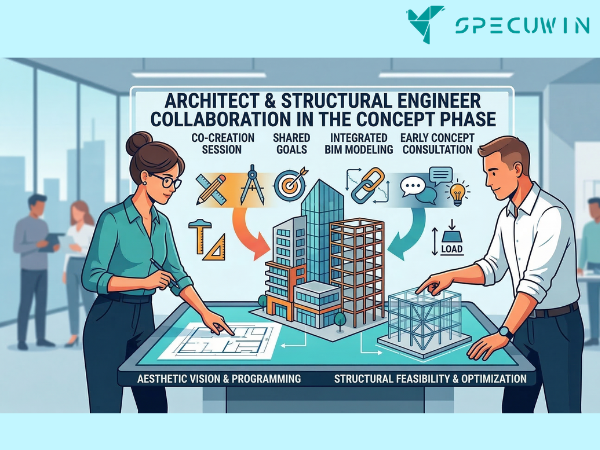
The concept phase is the most exciting part of any building project. It is where raw ideas take shape, boundaries are pushed, and the visual identity of a future landmark is born. However, a stunning architectural sketch is only a dream until the physics are figured out. This is exactly why bringing Structural Engineers into the fold from day one is so essential. Historically, the relationship has sometimes felt like a relay race one team designs, hands off the baton, and the other figures out how to make it stand up. Today, the most successful projects operate more like a symphony, requiring seamless harmony from the very first note.
Why Early Integration Matters for Structural Engineers:-
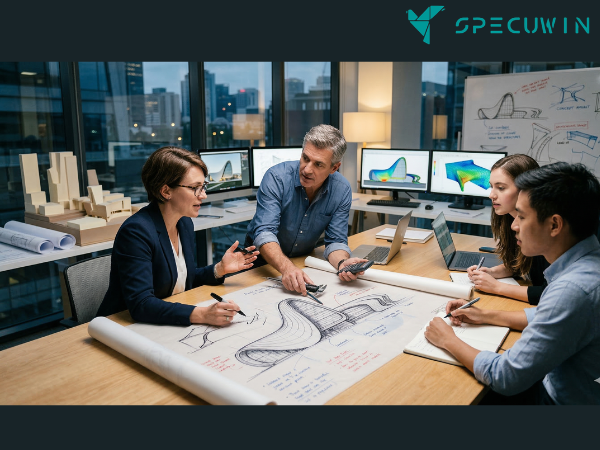
When the architectural team and the engineering experts sit at the same table during schematic design, the entire trajectory of the project shifts. Instead of viewing physics as a constraint, the design team can use it as an innovative tool. A sweeping cantilever or a massive glass facade isn’t just drawn; it is strategically planned.
This proactive approach prevents the dreaded late-stage redesign. Nothing drains a project’s budget or morale faster than realizing a beautiful concept is physically impossible or financially ruinous to build. By establishing open lines of communication early, both disciplines can identify load paths, grid layouts, and material efficiencies before the design is locked in. If you are curious about the foundational duties these professionals bring to the table, reading about What is the role of a structural engineer provides excellent context.
Fostering a Shared Vision with Structural Engineers:-
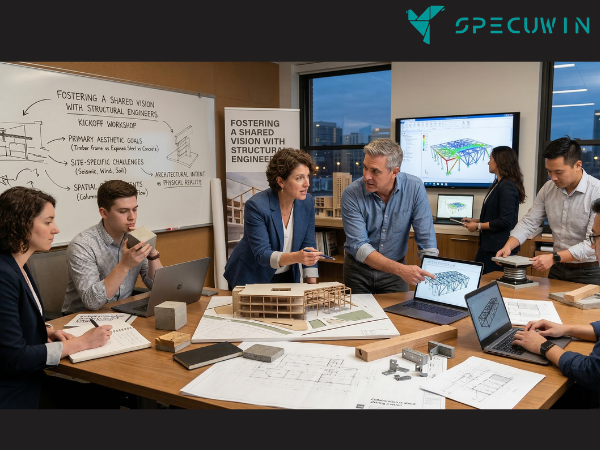
Collaboration isn’t just about sharing files; it’s about sharing a vision. The architectural intent whether it is an airy, biophilic open-concept office or a robust, functional industrial space must be deeply understood by the entire project team.
To achieve this, kickoff workshops are invaluable. These aren’t standard status meetings; they are creative brainstorms where architectural goals and physical realities are weighed equally. During these sessions, the team should discuss:
- The primary aesthetic goals: Is the goal exposed steel, seamless concrete, or a timber frame?
- Site-specific challenges: Are there seismic considerations, wind loads, or tricky soil conditions?
- Spatial requirements: Where can columns be placed without disrupting the flow of the building?
When the engineering team understands why a certain form is desired, they can offer creative physical solutions rather than simply saying “no” to a design.
Leveraging Technology for Structural Engineers:-
The AEC industry is undergoing a massive digital transformation, and modern tools are the ultimate bridge between disciplines. The days of passing flat, 2D drawings back and forth are rapidly fading.
Implementing a robust Building Information Modeling (BIM) workflow is arguably the single most effective way to enhance concept-phase collaboration. When both teams work within a shared, cloud-based environment like Autodesk Revit, changes are visible in real-time. Clash detection becomes an automated process rather than a manual headache. You can dive deeper into this shift by exploring How BIM (Building Information Modeling) is transforming consultancy.
Furthermore, generative design tools are changing how early concepts are tested. Algorithms can quickly generate dozens of framing options based on the architectural shell, optimizing for both material usage and spatial efficiency. To understand the software driving this evolution, check out The role of technology in structural analysis and design.
Expanding the Team: Contractors and Structural Engineers:-
While the architect-engineer relationship is the core focus of the concept phase, realizing that design requires looking ahead to the construction phase. Constructability should be a primary topic of discussion during early collaborations. A design might look fantastic on a screen and theoretically hold up to every safety standard, but if it is excessively complex to assemble on-site, it will cause major delays.
Bringing construction perspectives into the concept phase ensures that the materials chosen and the connections detailed are actually feasible for the builders. To see why this extended teamwork is so critical, read about Why collaboration between contractors and structural engineers is key to successful projects. By planning for assembly from the start perhaps by incorporating principles of Modular Construction or Design for Manufacture and Assembly (DfMA) the transition from concept to groundbreaking becomes incredibly smooth.
Sustainability and Structural Engineers:-
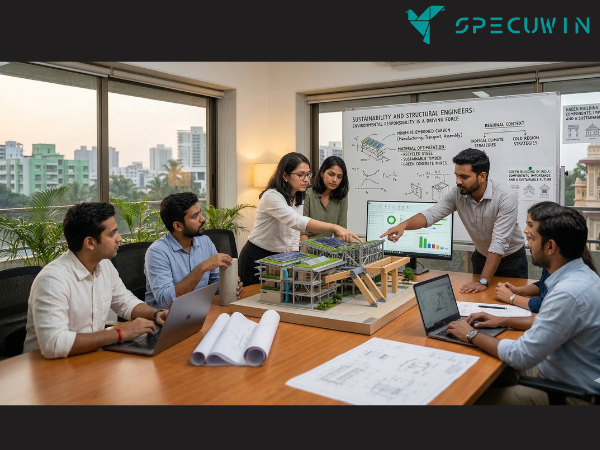
Modern building design is fundamentally tied to environmental responsibility. Sustainability is no longer an architectural afterthought; it is a driving force that requires intense physical analysis.
The embodied carbon of a building the emissions associated with manufacturing, transporting, and assembling materials—is heavily influenced by the engineering choices made during the concept phase. Optimizing a concrete mix, utilizing sustainable timber, or designing lighter frameworks directly reduces the environmental footprint.
Regional context is also vital here. Designing an eco-friendly high-rise in a tropical climate requires different strategies than building in a cold region. For those looking at rapidly developing markets, understanding localized sustainable practices is key. A great resource on this is the exploration of Green building in India components, importance, and a sustainable future.
Creating a Culture of Respect for Structural Engineers:-
Ultimately, tools and workflows only go so far if the interpersonal dynamics are flawed. The most successful concept phases are built on a foundation of mutual respect. Architects must value the safety, efficiency, and physical realities that the technical experts champion. Conversely, the technical experts must respect the artistic vision, user experience, and aesthetic goals the architects are striving to achieve.
When both sides view the other as a partner rather than an obstacle, the concept phase transforms from a battleground of compromises into a laboratory of innovation. By embracing shared technology, focusing on sustainable outcomes, and prioritizing open communication, project teams can design buildings that are not only breathtaking but also brilliantly built.
Frequently Asked Questions:-
1. Why is it important to have engineering professionals involved in the concept phase?
A. Involving technical experts early ensures that the architectural vision is physically feasible. It allows the team to identify potential load-bearing issues, optimize material usage, and avoid costly, time-consuming redesigns later in the project lifecycle.
2. How does BIM improve early-stage building design?
A. Building Information Modeling provides a shared, 3D digital environment where all disciplines can work simultaneously. It allows the team to visualize the physical framework alongside the architectural shell, enabling real-time problem-solving and automated clash detection before any physical work begins.
3. What is the biggest hurdle between architectural and technical teams?
A. The most common hurdle is the conflict between aesthetic desires and physical constraints. Without early communication, an architect might design a space that requires impossibly large supports, or an engineering team might propose a rigid framework that ruins the intended visual flow. Mutual compromise and early brainstorming are the solutions.
4. How does early collaboration impact a project’s budget?
A. It significantly protects the budget. Discovering a major physical flaw during the detailed design or construction phase leads to expensive rework. Aligning early allows the team to design efficiently, choosing cost-effective materials and constructible forms right from the start.
5. Can generative design tools replace human collaboration?
A. No. Generative design and AI are powerful tools that can rapidly test thousands of layout options, but they lack human intuition, aesthetic judgment, and the ability to negotiate complex project goals. They are best used to augment the creative partnership between the human design professionals.
Read More On:-
For more information about engineering, architecture, and the building & construction sector, go through the posts related to the same topic on the Specuwin Blog Page.
Find out more accurately what we are going to take off in the course of applying leading new technologies and urban design at Specuwin.