


We have all heard the saying, “You get what you pay for.” In the construction industry, this adage isn’t just a warning; it is a financial reality. When you are staring at a budget spreadsheet, the temptation to slash fees for design and engineering is overwhelming. However, opting for the lowest bidder often triggers a domino effect of unforeseen Costs.
While the upfront fee might look attractive, “cheap” drawings rarely account for the complexities of a real-world build. They often lack detail, ignore efficient load paths, or overcompensate with materials to mask a lack of calculation. The result? You end up paying for that “discount” ten times over during the construction phase.

1. The Construction Costs of Vague Documentation:-
The primary purpose of a structural drawing is to communicate instruction. When you pay a rock-bottom price, you often get a rock-bottom level of detail. “Cheap” engineers may provide generic details that aren’t specific to your site conditions.
When a contractor picks up a set of vague plans, they cannot build efficiently. They have to stop, send Requests for Information (RFIs), and wait for clarification. Every hour a crew stands idle waiting for an answer, your labor expenditure skyrockets. Furthermore, contractors often add “contingency pricing” to their bids when they see poor documentation, anticipating the headaches to come. To ensure you are hiring a professional who provides detailed, actionable plans, check out our guide on how to choose the right structural engineer for your project.
2. Inflated Material Costs Due to Over-Design:-
An inexperienced or low-fee engineer often does not have the time or skill to optimize a structure. Instead of calculating the precise beam depth or reinforcement required, they “play it safe” by significantly over-specifying materials.
While the building will stand up, your bank account might not. You might end up purchasing 20% more steel or concrete than was actually necessary. A quality engineer invests time to refine the design, ensuring Material selection impacts structural integrity efficiently without bloated quantities. That optimization saves you thousands in raw materials far more than the few hundred dollars you saved on the drawing fee.
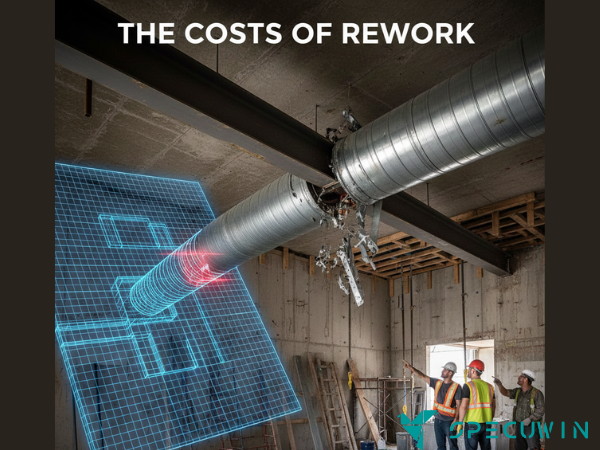
3. The Costs of Rework and On-Site Errors:-
The most painful expenses in construction occur when something has to be demolished and rebuilt. Low-quality drawings often contain clashes like a structural beam running right through where the HVAC duct is supposed to go.
If these clashes aren’t caught until construction begins, you are looking at change orders, schedule delays, and expensive rework. Digital tools are essential here; modern firms use Building Information Modeling (BIM) to coordinate these elements before breaking ground. Understanding the full scope of what a professional provides can help you spot red flags in cheap proposals. Read more about What is the role of a structural engineer to see the value they bring beyond just drawing lines.
4. Long-Term Maintenance and Repair Costs:-
A building designed on a shoestring budget often suffers from durability issues later in its lifecycle. If the engineer didn’t account for thermal expansion, soil settlement, or water drainage properly, the structure will degrade faster.
Cracking foundations, sagging floors, and water intrusion are common symptoms of poor initial design. Fixing these issues five years down the road is exponentially more expensive than designing them correctly from day one. If you suspect your current property was a victim of poor design, here are Top 5 signs your building needs a structural inspection.
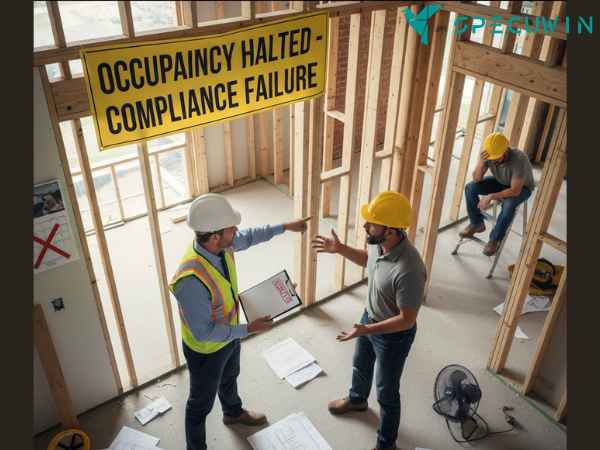
5. The Costs of Permitting and Compliance Failures:-
Cheap drawings frequently get rejected by city plan reviewers. They may miss critical code requirements or fail to address local zoning laws. Every time your plans are kicked back by the building department, your project timeline slips.
In severe cases, you might build something that fails a final inspection, forcing you to retrofit the structure to meet code. This is a nightmare scenario that halts occupancy and drains capital. For older properties, these compliance issues can be even trickier. Learn about Common structural problems in old houses and how to fix them.
The Real Costs of Quality:-
Ultimately, the fee you pay for structural drawings is a tiny fraction of the total project budget usually less than 1-2%. However, the quality of those drawings dictates the efficiency of the other 98% of your spending.
Investing in high-quality engineering is not an expense; it is an insurance policy against disaster, delays, and budget overruns. Don’t let the allure of a cheap initial price tag blind you to the massive financial risks hiding in the fine print.
FAQ’s:-
1. Why do structural drawing fees vary so much between engineers?
A. Fees usually reflect the level of detail, the technology used (like BIM vs. basic CAD), and the time invested in optimization. Lower fees often mean the engineer will spend less time refining the design, leading to heavier, more expensive material requirements for the build.
2. Can a contractor fix bad structural drawings on-site?
A. Technically, yes, but it is expensive. If a contractor has to redesign on the fly, they will charge premium rates for change orders and delays. It is much cheaper to solve problems on paper (or a computer screen) than with concrete and steel.
3. How do I know if a structural engineer is “too cheap”?
A. If a quote is significantly lower than the others (e.g., 30-50% less), it is a red flag. It likely means they are omitting site visits, coordination meetings, or detailed calculations. Always ask for a sample of their past work to see the level of detail they provide.
4. Do expensive drawings guarantee a cheaper construction process?
A. Generally, yes. Detailed, well-coordinated drawings allow contractors to bid accurately without adding “fear factor” contingency buffers. They also reduce the likelihood of expensive surprises and halts during construction.
5. What is the difference between a structural drawing and a structural report?
A. Drawings are the graphical instructions for construction (blueprints). A report is a written assessment of an existing structure’s condition.
Read More On:-
For more information about engineering, architecture, and the building & construction sector, go through the posts related to the same topic on the Specuwin Blog Page.
Find out more accurately what we are going to take off in the course of applying leading new technologies and urban design at Specuwin.