

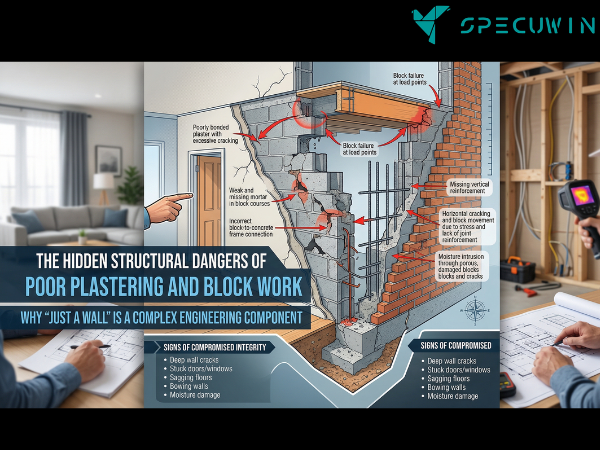
When we think of a building’s strength, our minds often jump to massive steel beams, thick concrete foundations, or the deep-rooted piles driven into the earth. We rarely look at the surface of a wall and consider it a safety feature. However, the integrity of a structure isn’t just about the skeleton; it’s about how the flesh the block work and plaster interacts with that frame. Neglecting the quality of these “finishing” elements can lead to significant Structural Dangers that remain hidden until it’s too late.
In this guide, we will peel back the layers of typical masonry construction to understand why “just a wall” is actually a complex engineering component, and how poor craftsmanship can compromise your entire investment. If you’re worried about the integrity of your home, start by identifying the Top 10 structural issues in residential buildings.
Understanding the Foundations: Why Block Work Isn’t Just “Stacking Bricks”:-
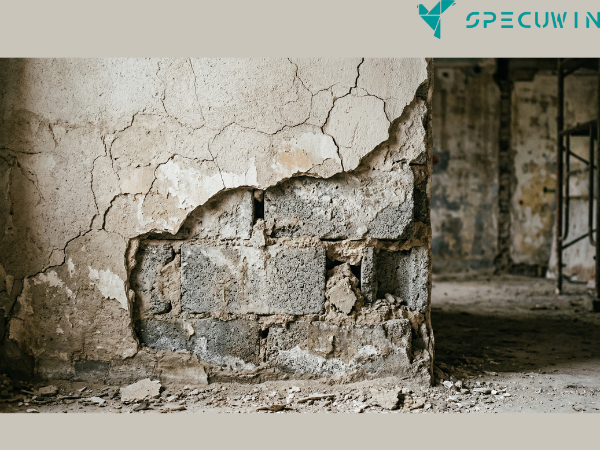
Many homeowners and even some developers view block work as a simple, repetitive task. In reality, the masonry wall is the primary distributor of loads in many residential and commercial buildings. When blocks are laid poorly, the structural path of gravity is interrupted.
The Science of Load Bearing:
Every block must sit perfectly level to ensure that the weight from the roof or the floor above is transferred vertically. If the mortar joints are uneven or the blocks are of poor quality, “point loading” occurs. This is one of the primary Structural Dangers in masonry; instead of the weight being spread across the entire surface of the block, it concentrates on a single point, leading to crushing and eventual wall failure.
Common Block Work Failures:
- Poor Mortar Consistency: Mortar that is too sandy or lacks enough cement will crumble over time, leaving the blocks to shift.
- Lack of Reinforcement: In areas prone to high winds or seismic activity, failing to include bed-joint reinforcement can lead to lateral collapse.
- Improper Bonding: The “staggering” of blocks isn’t just for aesthetics. Without a proper bond, vertical cracks can unzip an entire wall section.
The Critical Role of Plastering in Preventing Structural Dangers:-
If block work is the muscle of the wall, plaster is the skin. While often dismissed as a cosmetic finish, plaster serves as a protective barrier against the elements. When plastering is botched, it does more than just look ugly it invites decay into the very core of the building.
Moisture Infiltration: The Silent Killer:
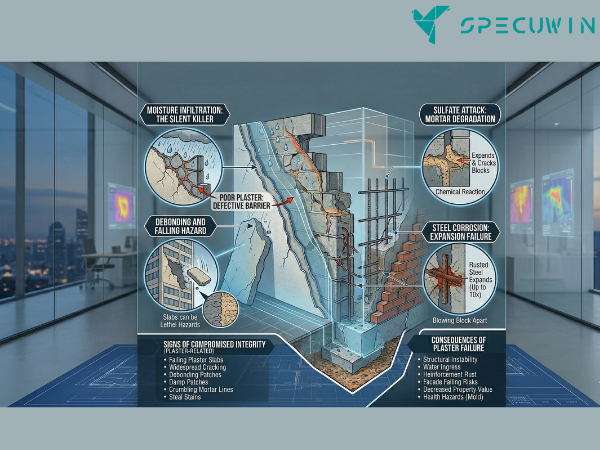
The most significant of the Structural Dangers associated with poor plastering is water ingress. Plaster is designed to be the first line of defense against rain and humidity. If the mix is incorrect or the application is too thin, water seeps through tiny hairline fractures. Once moisture reaches the block work, it begins a cycle of degradation:
- Sulfate Attack: Chemicals in the water react with the mortar, causing it to expand and crack the blocks.
- Steel Corrosion: If there is any reinforcement steel within the masonry, moisture causes it to rust. Rusted steel expands up to ten times its original size, blowing the concrete or block apart from the inside.
Debonding and Falling Hazards:
Poorly applied plaster often caused by failing to prep the surface or “hacking” the wall can result in debonding. On a high-rise building, a large slab of falling plaster isn’t just a maintenance issue; it’s a lethal hazard to anyone walking below.
Identifying Red Flags: How to Spot Structural Dangers Early:-
Early detection is the only way to prevent a minor repair from turning into a full-scale structural intervention. Here is what you should look for:
1. Horizontal Cracks in Mortar Joints:
While vertical cracks often indicate settling, horizontal cracks are a major red flag for Structural Dangers. They typically suggest that the wall is bowing or that the blocks are failing to handle the vertical load. Unsure if your cracks are serious? Check out our Top 5 signs your building needs a structural inspection.
2. Efflorescence and Damp Patches:
White, powdery substance on the walls (efflorescence) indicates that water is moving through the masonry. If your plaster is damp to the touch long after a rainstorm, the protective seal has failed, and the internal block work is likely saturated.
3. Hollow Sounds (Dragginess):
Tap on your walls. If you hear a hollow, “drum-like” sound, the plaster has separated from the block work. This lack of adhesion means the wall is no longer acting as a unified structural unit, increasing the risk of localized collapse during a minor tremor or impact.
The Intersection of Material Quality and Safety:-
You cannot build a high-quality wall with low-quality materials. One of the recurring Structural Dangers in modern construction is the use of “under-cured” blocks. To save time and money, some manufacturers sell blocks that haven’t reached their full compressive strength. When these are plastered over immediately, the blocks continue to shrink behind the plaster, causing massive “map cracking” that compromises the air-tightness and stability of the room. The longevity of your walls depends on what they are made of; learn more about the Impact of material selection on structural integrity.
Professional Oversight: Why Inspections Matter:-
To avoid these Structural Dangers, professional oversight is non-negotiable. A structural engineer doesn’t just look at the blueprints; they look at the execution on-site. They ensure that:
- The mix ratio for the mortar and plaster is strictly followed.
- Expansion joints are placed correctly to allow the building to “breathe” without cracking.
- The blocks meet the required Newton strength for the specific load of that building.
If you are buying an older property or noticed new cracks in your current home, getting a professional report is the first step toward safety.

Summary of Maintenance Tips:-
- Seal hairline cracks immediately: Don’t let water get a foothold.
- Check your gutters: Overflowing water is the fastest way to ruin external plaster.
- Avoid “DIY” structural changes: Never remove a block wall or hack away plaster without knowing if the wall is load-bearing.
Frequently Asked Questions:-
1. Can poor plastering actually cause a building to collapse?
A. While plaster itself isn’t a primary load-bearing material, its failure leads to the rapid decay of the blocks and steel underneath. Over time, this moisture-driven decay can lead to partial or total structural failure.
2. How do I know if a crack is just “settling” or a sign of Structural Dangers?
A. A general rule of thumb: if you can fit a coin into the crack, or if the crack is horizontal rather than vertical, it needs an immediate professional inspection.
3. Does the type of block (hollow vs. solid) change the risk?
A. Yes. Hollow blocks are more susceptible to internal water pooling if the plaster fails, which can lead to hidden internal mold and structural weakening that isn’t visible on the surface.
4. Why is “hacking” the wall important before plastering?
A. Hacking creates a rough surface that allows the plaster to “key” or grip into the block work. Without it, the plaster is just sitting on the surface and is prone to falling off, creating safety hazards.
5. How often should I inspect my external walls?
A. A thorough visual inspection should be done every year, especially after the rainy season, to ensure no new cracks have formed that could invite moisture in.
Read More On:-
For more information about engineering, architecture, and the building & construction sector, go through the posts related to the same topic on the Specuwin Blog Page.
Find out more accurately what we are going to take off in the course of applying leading new technologies and urban design at Specuwin.