

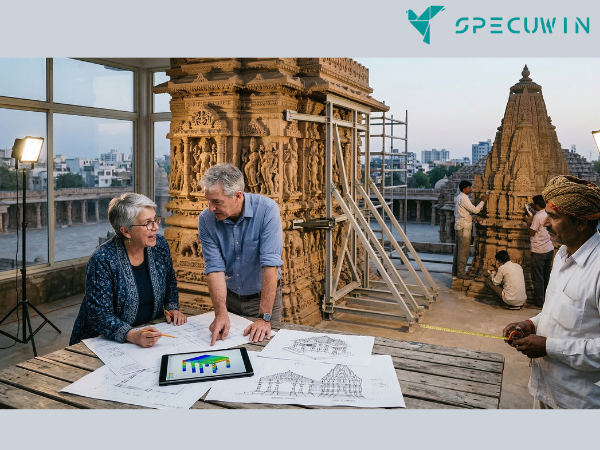
Ancient temples are more than just architectural marvels; they are the physical manifestations of a civilization’s soul, spiritual devotion, and artistic zenith. From the intricate carvings of Hampi to the soaring gopurams of Tamil Nadu, these structures have weathered centuries of monsoon rains, shifting earth, and the relentless passage of time. However, ensuring they stand for another millennium presents a complex puzzle for modern engineers.
Restoring these heritage sites requires a delicate balance between modern science and ancient wisdom. We aren’t just repairing buildings; we are performing “structural surgery” on history itself. This process reveals the Unique Structural Challenges inherent in working with non-standardized materials, forgotten masonry techniques, and the fragile nature of antiquity.
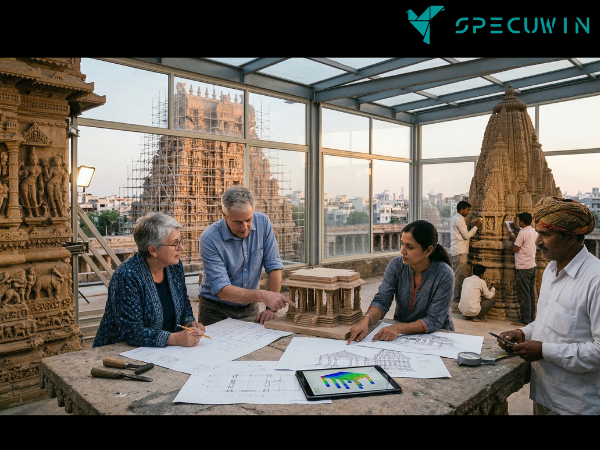
The Core of the Issue: Identifying Challenges in Heritage Sites:-
When dealing with a modern skyscraper, engineers have a predictable blueprint and standardized materials. In contrast, ancient temples present Unique Structural Challenges because every stone was hand-hewn and every foundation was laid based on local environmental observations rather than digital simulations.
Material Degradation over Millennia:
One of the most pressing Unique Structural Challenges is the natural chemical and physical breakdown of ancient materials. Unlike modern concrete, which has a known lifespan, the granite, sandstone, and lime mortar used in ancient temples react uniquely to environmental pollutants and biological growth (like lichen and pipal trees).
- Stone Decalcification: Acid rain and moisture can leach minerals from the stone, turning solid rock into a crumbly, porous mess.
- Corrosion of Internal Ties: Many medieval temples used iron clamps to hold stones together. When moisture seeps in, these clamps rust, expand, and crack the stone from the inside out a phenomenon known as “iron jacking.”
The Complexity of Ancient Stone Masonry:
The sheer weight and interlocking nature of dry stone masonry create Unique Structural Challenges during restoration. These structures often rely on gravity and friction rather than adhesive mortar. If one “key” stone shifts due to soil settlement, the entire equilibrium of the structure is jeopardized.
Advanced Solutions for Challenges: Non-Destructive Assessment:-
How do you look inside a thousand-year-old pillar without drilling a hole in it? This is where technology meets archaeology. Addressing the Unique Structural Challenges of restoration requires “seeing the unseen” through Non-Destructive Evaluation (NDE).
Ground Penetrating Radar (GPR) and Ultrasound:
To map internal voids or hidden cracks, engineers use GPR. This allows us to understand the thickness of walls and the state of the core which is often filled with loose rubble without removing a single decorative carving. Understanding these internal hidden voids is a critical step in overcoming the Unique Structural Challenges of structural stabilization.
Ultrasonic Pulse Velocity:
By sending sound waves through stone blocks, specialists can determine the density and integrity of the material. This helps in identifying whether a pillar is still capable of carrying its intended load or if it has become a hollow shell due to internal weathering.
Overcoming Unique Structural Challenges in Stone Masonry Restoration:-
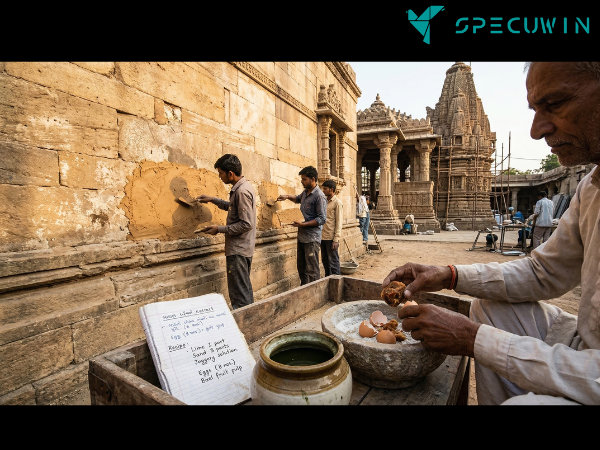
The philosophy of “like-for-like” is paramount. Using modern Portland cement on ancient lime-plastered walls is a recipe for disaster, as cement is too rigid and traps moisture, leading to further decay.
The Art of Lime Mortar Compatibility:
One of the Unique Structural Challenges is recreating the specific lime “recipes” used by ancient builders. These often included organic additives like jaggery, eggs, or herbal extracts to increase flexibility and breathability. Modern restorers must become part-chemists to match these ancient compositions exactly.
Seismic Retrofitting of Ancient Frames:
Many ancient temples are located in seismically active zones. Developing methods to strengthen these structures without altering their aesthetic appearance is one of the most difficult Unique Structural Challenges faced by the industry today. For more on how modern engineering tackles environmental threats, see our guide on Innovations in earthquake-resistant design to understand the principles of lateral stability.
The Role of Technology in Navigating Unique Structural Challenges:-
While we respect ancient methods, we use 21st-century tools to document them. Digital Twins and Building Information Modeling (BIM) have become indispensable.
Digital Documentation and 3D Laser Scanning:
By creating a “Digital Twin” of a temple, we can simulate how it will react to various stress factors. This helps engineers predict potential points of failure before they happen. This proactive approach is essential for managing the Unique Structural Challenges of high-traffic heritage sites.
Further Reading:
To better understand how these complex structural issues are documented and managed in the modern era, consider the following resources:
- Understanding the initial assessment: How to read a structural engineering report.
- Managing the site through tech: The impact of digital twins on facility management.
- Identifying general building fatigue: Top 5 signs your building needs a structural inspection.
Conclusion: Balancing the Past and the Future:-
Restoring an ancient temple is a marathon, not a sprint. It requires a profound respect for the original builders and a sophisticated understanding of the Unique Structural Challenges posed by time itself. By combining non-destructive testing, compatible material science, and digital modeling, we can ensure that these sacred spaces continue to inspire for generations to come.
The ultimate goal of overcoming these Unique Structural Challenges is not to make the temple look “new,” but to make it “whole” preserving the scars of history while securing the strength of the foundation.
Frequently Asked Questions:-
1. Why can’t we use modern cement for temple restoration?
A. Modern cement is much harder and less “breathable” than ancient lime mortar. Using it creates a moisture trap that can cause the original stone to flake and deteriorate rapidly.
2. What are the most common Unique Structural Challenges found in stone temples?
A. The most common issues include foundation settlement, biological growth (roots) prying stones apart, and the “iron jacking” caused by the rusting of internal metal connectors.
3. Is it possible to make an ancient temple earthquake-proof?
A. While we cannot make any building 100% “proof,” we use seismic retrofitting techniques to improve flexibility and energy dissipation, significantly increasing the chances of survival during a tremor.
4. How does moisture affect ancient stone masonry?
A. Moisture leads to the growth of vegetation, the crystallization of salts (which cracks the stone surface), and the chemical breakdown of the minerals holding the rock together.
5. How long does a typical restoration project take?
A. Due to the Unique Structural Challenges and the need for meticulous hand-work, a major temple restoration can take anywhere from three to ten years, depending on the scale and level of decay.
Read More On:-
For more information about engineering, architecture, and the building & construction sector, go through the posts related to the same topic on the Specuwin Blog Page.
Find out more accurately what we are going to take off in the course of applying leading new technologies and urban design at Specuwin.