

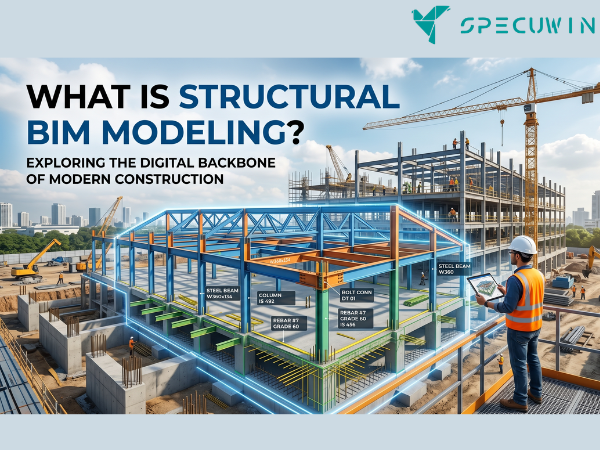
In the fast-paced world of Architecture, Engineering, and Construction (AEC), the days of static 2D blueprints are rapidly fading into the rearview mirror. Today, the industry relies on a much more dynamic and intelligent process to ensure buildings are safe, efficient, and cost-effective. At the heart of this digital revolution is Structural BIM Modeling.
But what exactly is it? Beyond the buzzwords, it is the digital representation of a building’s skeletal framework. It involves creating a data-rich, 3D mathematical model that houses every detail of a structure from the precise dimensions of steel beams to the specific reinforcement patterns within concrete slabs. This isn’t just about “drawing” in 3D; it’s about “building” in a virtual environment before a single shovel hits the dirt.
Why Structural BIM Modeling is a Game-Changer:-
The structural integrity of a building is non-negotiable. While an architect focuses on aesthetics and functionality, the structural engineer ensures the building can withstand the forces of nature, gravity, and time. Traditionally, this required a mountain of paperwork and manual calculations that were prone to human error.
By adopting Structural BIM Modeling, teams can visualize complex load paths and connections with surgical precision. This methodology allows for a “single source of truth,” where everyone from the lead engineer to the site contractor accesses the same updated information. For those new to the concept, understanding BIM for beginners is the first step in appreciating how these digital workflows are replacing traditional CAD methods.
Core Components of Structural BIM Modeling:-
When we talk about “the model,” we aren’t just talking about a pretty picture. A robust structural model consists of several layers of intelligence:
- Geometry: The physical dimensions of columns, beams, trusses, and foundations.
- Material Data: Information regarding the grade of steel, the compressive strength of concrete, and even the carbon footprint of the materials.
- Analytical Data: The “invisible” part of the model that tracks how loads move through the structure, essential for Structural analysis and design.
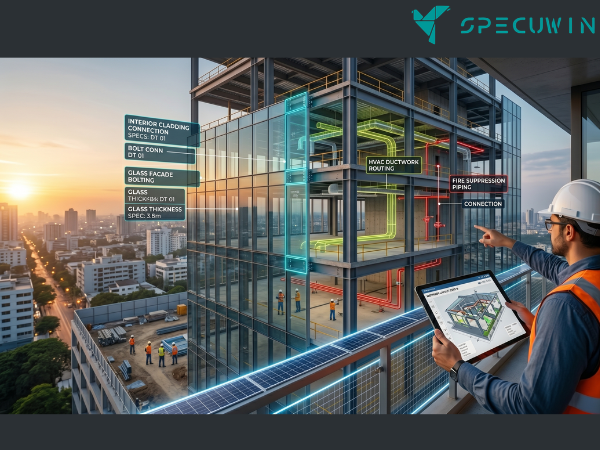
- Spatial Relationships: How the structural elements interact with the HVAC ducts, plumbing lines, and architectural finishes.

The Process of Structural BIM Modeling:-
Creating a high-quality model is a phased journey. It typically begins with the architectural model as a reference. The structural team then populates this space with load-bearing elements.
1. Conceptual Design and Schematics:
At this stage, the model helps determine the most efficient structural system. Should we use a steel frame or reinforced concrete? By using Structural BIM Modeling, engineers can quickly run “what-if” scenarios to find the most cost-effective solution without re-drawing everything from scratch.
2. Detailed Modeling and Reinforcement:
Once the system is chosen, the model is refined. This includes adding connections, base plates, and intricate rebar detailing. This level of detail is crucial for complex structures. For instance, in High-rise building design, the complexity of the core and outrigger systems makes BIM an absolute necessity rather than a luxury.
3. Clash Detection and Coordination:
One of the greatest headaches in construction is “field fixes” discovering a beam is blocking a massive HVAC duct after the beam has already been cast. Structural BIM Modeling uses automated clash detection to find these “hard” and “soft” clashes in the virtual world. Resolving a conflict on a screen costs pennies; resolving it on a construction site costs thousands of dollars and weeks of delay.
Benefits of Structural BIM Modeling for Stakeholders:-
The advantages of this technology ripple through every phase of the building lifecycle.
For Developers and Owners:
- Cost Predictability: Highly accurate “Material Take-Offs” (MTOs) mean that budget estimates are based on real-world quantities, not “guesstimates.”
- Faster Project Delivery: Streamlined coordination leads to fewer RFI’s (Request for Information) and change orders.
- Operational Excellence: The model can be handed over to facility managers as a Digital Twin, providing a manual for the building’s maintenance.
For Engineers and Architects:
- Enhanced Collaboration: BIM breaks down silos. When the architect moves a wall, the structural engineer immediately sees how it affects the load-bearing columns. This synergy is why collaboration between contractors and engineers is so vital to modern success.
- Accuracy: Integration with analysis software ensures that the physical model and the mathematical calculations are always in sync.
For Contractors:
- Prefabrication Opportunities: With precise 3D data, many components can be manufactured off-site. This is particularly useful for pre-engineered buildings, where components arrive ready to be bolted together.
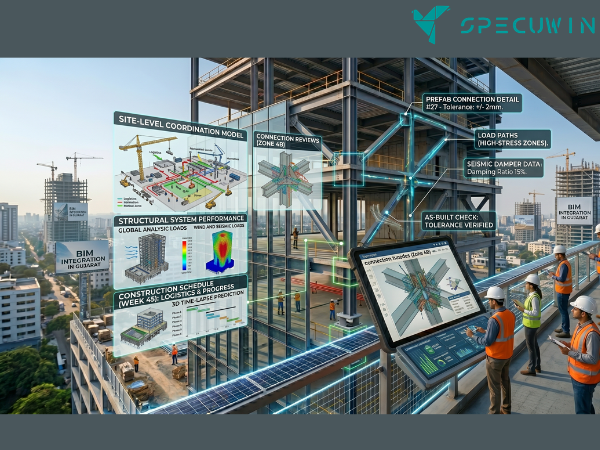
- Site Safety: Visualizing the construction sequence in 4D (Time) helps identify potential safety hazards before crews arrive on site.
Structural BIM Modeling in Specialized Projects:-
The versatility of BIM shines brightest when the stakes are high. Whether it’s ensuring a building can survive an earthquake or designing a bridge that spans miles, the model provides the necessary security.
Seismic and Resilience Design:
In earthquake-prone regions, Structural BIM Modeling allows engineers to simulate seismic events. By integrating data on innovations in earthquake-resistant design, models can test how dampers and base isolators will behave during a tremor.
Sustainability and Green Building:
Construction is a major contributor to carbon emissions. By using BIM to optimize material usage, we can reduce waste significantly. This aligns with the growing trend of green building in India and globally, where every ton of concrete saved counts toward a more sustainable future.
Challenges in Implementing Structural BIM Modeling:-
While the benefits are clear, the transition isn’t always seamless. It requires a shift in mindset and a commitment to new tools.
- Software Learning Curve: Moving from CAD to BIM requires significant training. It’s not just a software update; it’s a change in the entire design philosophy.
- Interoperability: Ensuring that different software used by different firms can “talk” to each other (OpenBIM) is an ongoing challenge.
- Upfront Costs: The initial investment in hardware and licenses can be high, though the long-term ROI usually far outweighs these costs.
The Future of Structural BIM Modeling: AI and Beyond:-
The next frontier of structural design is the integration of Artificial Intelligence. Imagine a system where the engineer sets the parameters height, load, material and the AI generates thousands of optimized structural configurations. This concept, known as generative design in structural engineering, is already beginning to reshape the industry.
We are also seeing the rise of 5D (Cost) and 6D (Sustainability) BIM, where the structural model tracks the price of steel in real-time and calculates the total embodied carbon of the project.
Conclusion:-
Structural BIM Modeling is no longer a futuristic concept it is the standard for any firm that wants to remain competitive and deliver safe, high-quality projects. It bridges the gap between imagination and reality, ensuring that the structures we build today are resilient enough for tomorrow.
Whether you are a student looking to become a BIM specialist or a firm owner considering BIM outsourcing, the message is clear: the future of construction is digital, collaborative, and data-driven.
Frequently Asked Questions:-
1. How does Structural BIM Modeling differ from Architectural BIM?
A. While Architectural BIM focuses on the aesthetics, space planning, and finishes of a building, Structural BIM focuses exclusively on the load-bearing elements (beams, columns, slabs) that keep the building upright.
2. Is Structural BIM Modeling only for large projects?
A. Not at all. While essential for skyscrapers, it is increasingly used for residential and small commercial projects to prevent costly errors and improve material efficiency.
3. What software is commonly used for this process?
A. Common tools include Autodesk Revit Structure, Tekla Structures, and Bentley RAM. These tools allow for both 3D modeling and integration with structural analysis software.
4. Can BIM help with existing building renovations?
A. Yes. Through “Scan-to-BIM” (using laser scanners), engineers can create an accurate structural model of an old building to plan for seismic retrofitting or additions.
5. Does using BIM increase the design fee?
A. The upfront design work may take more time, but the overall project cost usually decreases because of the massive reduction in onsite errors and material waste.
Read More On:-
For more information about engineering, architecture, and the building & construction sector, go through the posts related to the same topic on the Specuwin Blog Page.
Find out more accurately what we are going to take off in the course of applying leading new technologies and urban design at Specuwin.