

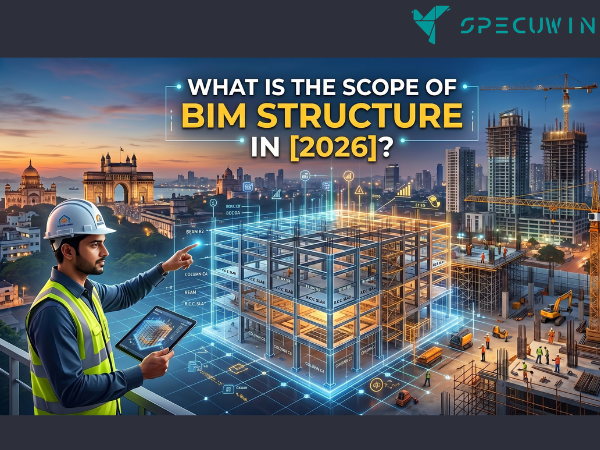
The Indian construction landscape is no longer about just bricks, mortar, and manual blueprints. As we move through 2026, the industry is witnessing a seismic shift toward digitalization. At the heart of this transformation lies Building Information Modeling, specifically the structural discipline. Understanding the BIM Structure in India is no longer optional for AEC (Architecture, Engineering, and Construction) professionals it is the definitive benchmark for modern engineering.
With the government’s aggressive push for “Smart Cities” and the rapid expansion of transit infrastructure like Metros and High-Speed Rail, the demand for precision is at an all-time high. This blog explores why 2026 is the “Golden Year” for structural BIM and how it is reshaping the way we build.
1. The Current Landscape of BIM Structure in India:-
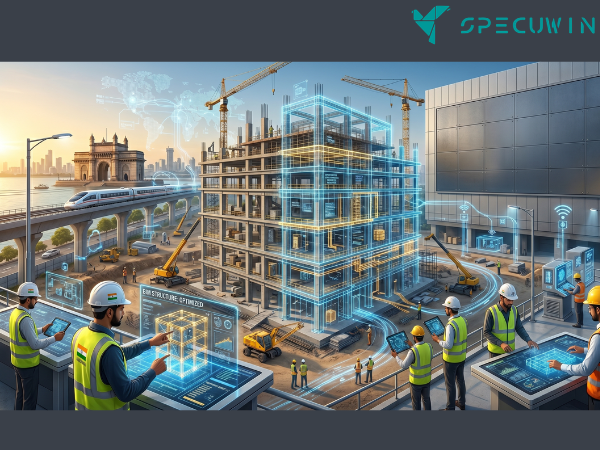
India has emerged as one of the fastest-growing markets for digital construction technologies. In 2026, the BIM Structure in India has moved beyond the “experimental” phase and is now a mandatory standard for large-scale public and private projects.
Historically, structural engineering relied on 2D CAD drawings, which often led to coordination errors and material wastage. Today, structural BIM allows engineers to create intelligent 3D models that contain not just geometry, but metadata material properties, load-bearing capacities, and scheduling data. This shift is critical for India, where project complexity is increasing and timelines are shrinking.
2. Government Mandates Driving BIM Structure in India:-
One of the biggest catalysts for the growth of BIM Structure in India is the proactive stance of various government bodies. From the Ministry of Housing and Urban Affairs (MoHUA) to the National Highway Authority of India (NHAI), there is a clear directive: use BIM or risk being left behind.
- Public Infrastructure: Mega-projects like the Delhi-Mumbai Industrial Corridor and various coastal road projects now require BIM for structural integrity and clash detection.
- Standardization: The adoption of ISO 19650 standards across Indian firms has made the BIM Structure in India more globally competitive, allowing Indian firms to handle international outsourcing work with ease. For those looking to understand how this transition began, navigating the Transition from CAD to BIM is a great starting point.
3. Structural Integrity and Seismic Resilience:-
India’s diverse geography, ranging from the Himalayan seismic zones to the cyclone-prone coastal regions, demands high-performance structural design. The BIM Structure in India plays a pivotal role in ensuring buildings can withstand natural disasters.
By using BIM, structural engineers can perform advanced simulations, such as Finite Element Analysis (FEA), directly within the model. This allows for:
- Seismic Testing: Simulating how a high-rise in Delhi or Guwahati will react to an earthquake.
- Wind Load Analysis: Crucial for the increasing number of skyscrapers in Mumbai and Bangalore.
- Retrofitting: Using BIM to strengthen older structures. You can learn more about how engineers are Reinforcing high-rises for earthquakes to see these principles in action.
4. Economic Impact: Efficiency and Cost Reduction:-
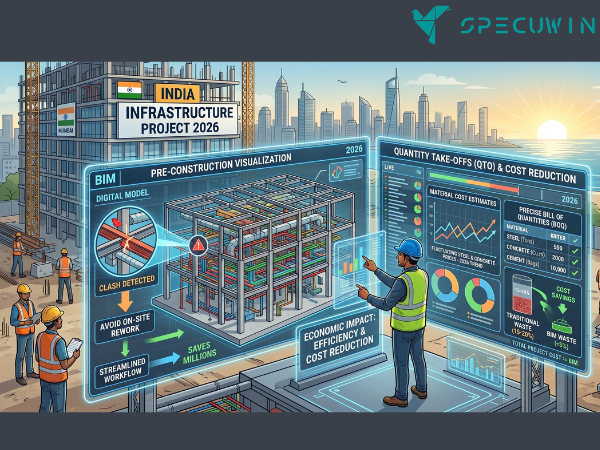
The primary reason developers are flocking to the BIM Structure in India is the bottom line. Construction in India has traditionally been plagued by cost overruns. BIM mitigates this through:
Pre-construction Visualization:
Before a single bag of cement is mixed, the entire structure is “built” digitally. This identifies “clashes” for example, a structural beam intersecting with a HVAC duct saving millions in on-site rework.
Quantity Take-offs (QTO):
BIM provides highly accurate material estimates. In 2026, with the fluctuating prices of steel and concrete, having a precise “Bill of Quantities” (BOQ) derived directly from the BIM Structure in India ensures that waste is kept below 5%, compared to the traditional 15-20%.
5. Technological Synergy: AI, IoT, and BIM Structure in India:-
In 2026, BIM does not exist in a vacuum. It is being integrated with cutting-edge tech to create “Live” structures.
- Digital Twins: Structural BIM models are now being converted into Digital Twins, which help in the long-term maintenance of the building. This has a Revolutionary impact on facility management.
- Generative Design: Structural engineers are using AI to generate thousands of design iterations to find the most efficient and sustainable structure. This evolution is changing the role of technology in structural analysis.
- Automation: From robotic total stations to AI-driven robotics in construction, the BIM Structure in India serves as the “brain” for these automated tools.
6. Career Opportunities in BIM Structure in India:-
If you are a civil engineer or an aspiring designer, the scope for your career is immense. The “BIM gap” the shortage of skilled professionals who can navigate structural modeling is a major challenge in 2026.
Roles such as BIM Structural Modeler, BIM Coordinator, and VDC (Virtual Design and Construction) Manager are among the highest-paying jobs in the Indian AEC sector. To capitalize on this, gaining the right skills is essential. Many are finding that BIM training is a smart gateway to a future-ready career.
Companies are no longer looking for just “Draftsmen”; they want “Information Managers” who understand the intricacies of BIM Structure in India. For tips on how to stand out, check out this guide on becoming an outstanding BIM specialist.
7. Sustainability and Green Buildings:-
India has committed to Net Zero targets, and the construction industry is a major contributor to carbon emissions. The BIM Structure in India allows for “Lean Construction.” By optimizing the amount of steel and concrete used, engineers can significantly reduce the “embodied carbon” of a building.
This alignment with green building components is making BIM-led projects more attractive to international investors who prioritize ESG (Environmental, Social, and Governance) scores.
8. Challenges Facing BIM Structure in India:-
Despite the massive scope, the journey isn’t without hurdles.
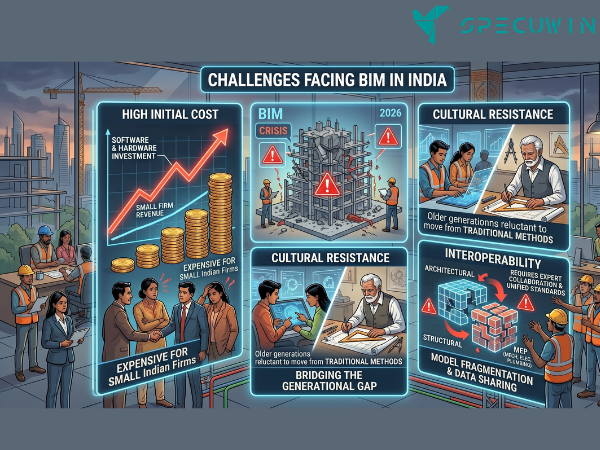
- High Initial Cost: The software licenses and hardware requirements for high-end structural BIM can be expensive for small-scale Indian firms.
- Cultural Resistance: Older generations of engineers are sometimes hesitant to move away from traditional methods.
- Interoperability: Ensuring that the structural model works seamlessly with the architectural and MEP (Mechanical, Electrical, Plumbing) models remains a challenge that requires expert collaboration between contractors and engineers.
9. The Future: Beyond 2026:-
The scope of BIM Structure in India will only expand. We are looking at a future where 4D (Time), 5D (Cost), and 6D (Sustainability) BIM become the baseline for every residential apartment and commercial complex. As we look at the future of structural engineering trends, it’s clear that BIM is the foundation upon which all other innovations will be built.
Conclusion:-
The BIM Structure in India in 2026 represents a bridge between India’s traditional engineering excellence and its digital future. Whether it’s through reducing costs, ensuring seismic safety, or opening new career pathways, the impact is undeniable. For firms and individuals alike, the message is clear: embrace the digital twin of the world, or be left in the dust of the old one.
FAQ’s:-
1. Is BIM mandatory for all construction projects in India in 2026?
A. While not mandatory for small private residential houses, it is increasingly required for all large-scale government infrastructure, smart city projects, and high-rise commercial developments.
2. How does BIM Structure in India help in reducing project costs?
A. It reduces costs by identifying design conflicts (clash detection) before construction starts, providing accurate material quantities to prevent over-ordering, and optimizing structural designs to use fewer materials.
3. What software is commonly used for BIM Structure in India?
A. The most popular tools include Autodesk Revit Structure, Tekla Structures, Bentley OpenBuildings, and various analysis tools like STAAD.Pro and ETABS which integrate with BIM workflows.
4. Can I transition from a traditional Structural Engineer to a BIM Specialist?
A. Yes. In fact, engineers with a strong foundation in structural principles are the best candidates for BIM roles. Specialized BIM training is the most efficient way to make this transition.
5. What is the average salary for a BIM Structural professional in India?
A. In 2026, entry-level BIM modelers can expect higher starting salaries than traditional CAD drafters, with experienced BIM Managers in Tier-1 cities like Mumbai, Bangalore, and Gurgaon commanding premium packages.
Read More On:-
For more information about engineering, architecture, and the building & construction sector, go through the posts related to the same topic on the Specuwin Blog Page.
Find out more accurately what we are going to take off in the course of applying leading new technologies and urban design at Specuwin.