

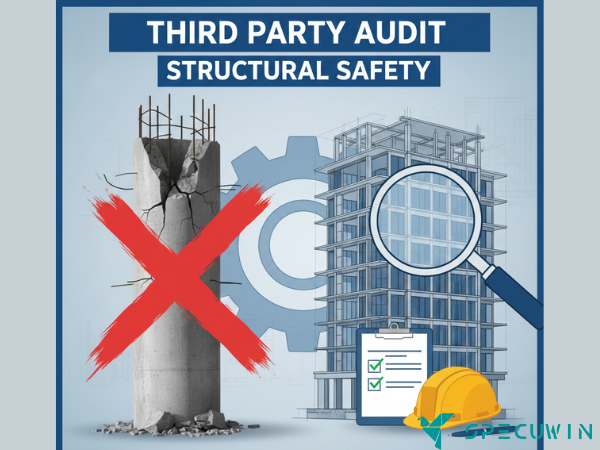
Building a structure whether it’s a commercial high-rise or a residential complex is a massive undertaking involving hundreds of moving parts. We rely heavily on contractors, architects, and internal teams to get the job done right. But let’s face it: human error happens, deadlines get tight, and sometimes, crucial details slip through the cracks. This is where the concept of a Third Party Audit becomes not just a safety net, but a necessity.
In the fast-paced world of construction and property management, it can be difficult to remain objective about your own project. You might be too close to the work to spot a hairline fracture in the logic of a design or a subtle execution error on-site. A Third Party Audit brings a fresh, unbiased pair of eyes to the table, ensuring that the structural integrity of your building isn’t just a promise, but a verified fact.
In this guide, we will explore why external verification is vital, how it saves money in the long run, and why stakeholders are increasingly mandating a Third Party Audit before signing off on major projects.
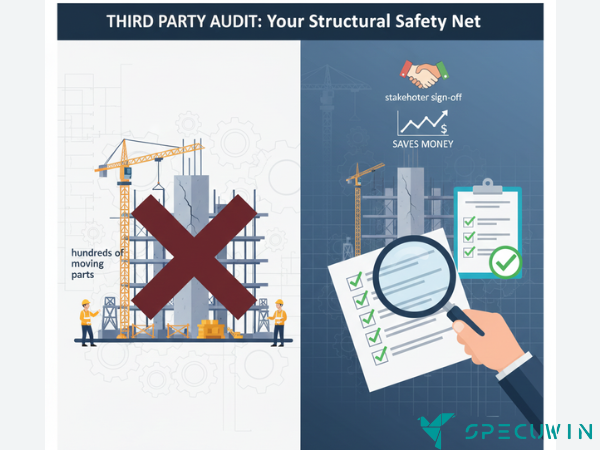
What Exactly is a Third Party Audit in Construction?:-
Before diving into the benefits, let’s clarify what we are talking about. A Third Party Audit is an independent assessment of a building’s structural design, construction quality, and adherence to safety codes, conducted by an entity that has no financial stake in the construction process itself.
Unlike internal inspections, where there might be pressure to overlook “minor” issues to keep the project on schedule, an external auditor has only one loyalty: to the truth and the standards of engineering. This audit verifies that the building stands up to the intended loads, seismic requirements, and material quality standards. It serves as the ultimate quality assurance checkpoint.
Why Internal Checks Aren’t Enough: The Case for a Third Party Audit:-
You might be asking, “My contractor has a quality control team, so why do I need an external one?” It’s a valid question. Internal teams are essential, but they operate with inherent biases. They know the history of the project, they know the budget constraints, and they know the pressure to deliver.
A Third Party Audit eliminates this conflict of interest. The auditor doesn’t care if fixing a column delays the project by two days; they care if that column will fail ten years from now. This objective approach is critical for identifying latent defects that internal teams might unintentionally glaze over due to familiarity or fatigue.
Furthermore, construction is becoming increasingly complex. With the integration of new technologies and materials, having a specialized expert review the work ensures that modern standards are met. This is similar to why you might seek a second opinion for a serious medical diagnosis it’s about certainty. To understand the foundational aspects they will be looking for, it helps to know What is structural engineering in its broader context.
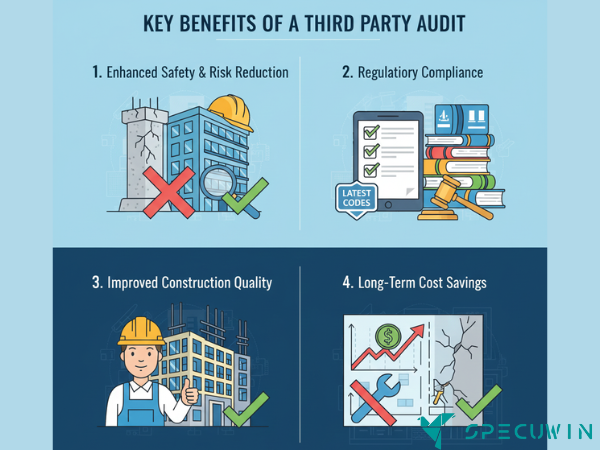
Key Benefits of Conducting a Third Party Audit:-
Investing in an external review might seem like an added expense, but the return on investment comes in the form of risk mitigation and asset protection.
1. Enhanced Safety and Risk Reduction:-
The primary goal is safety. Structural failures can be catastrophic, leading to loss of life and massive legal liabilities. An audit identifies weaknesses before they become failures. If you are wondering what kind of red flags an auditor looks for, you can learn more about the Top 10signs your building needs a structural inspection.
2. Regulatory Compliance:-
Building codes change. What was standard five years ago might be outdated today. An independent auditor ensures your project complies with the latest local and international codes, saving you from costly fines or forced retrofitting later.
3. Improved Construction Quality:-
When contractors know a Third Party Audit is scheduled, the quality of work naturally improves. It acts as a psychological accountability tool. Workmanship becomes tighter, and shortcuts are taken less frequently.
4. Long-Term Cost Savings:-
Fixing a structural error during the design or early construction phase costs pennies on the dollar compared to fixing it after the building is finished. The audit acts as proactive financial protection.
When Should You Schedule a Third Party Audit?:-
While an audit is valuable at any stage, there are specific milestones where it becomes critical.
- During Design Phase: To verify calculations and ensure the blueprints are structurally sound before ground is even broken.
- During Construction: To ensure the physical execution matches the approved drawings.
- Pre-Purchase of Existing Assets: If you are buying an older property, you need to know what lies beneath the paint. Old buildings have unique challenges; understanding Common structural problems in old houses and how to fix them can give you a baseline, but an audit gives you the specific reality of that asset.
- Post-Disaster: After an earthquake or flood, an unbiased assessment is mandatory to declare a building safe for re-entry.
How Technology Elevates the Third Party Audit Process:-
The days of an auditor showing up with just a clipboard and a flashlight are fading. Modern audits are tech-driven. Auditors now utilize drones for facade inspections, ground-penetrating radar to check concrete reinforcement, and specialized software to model stress loads.
This technological integration allows for a deeper, non-destructive analysis. For example, understanding The role of technology in structural analysis and design highlights how digital twins and simulation tools allow auditors to predict how a building will behave decades into the future, rather than just assessing how it looks today.
Choosing the Right Partner for Your Third Party Audit:-
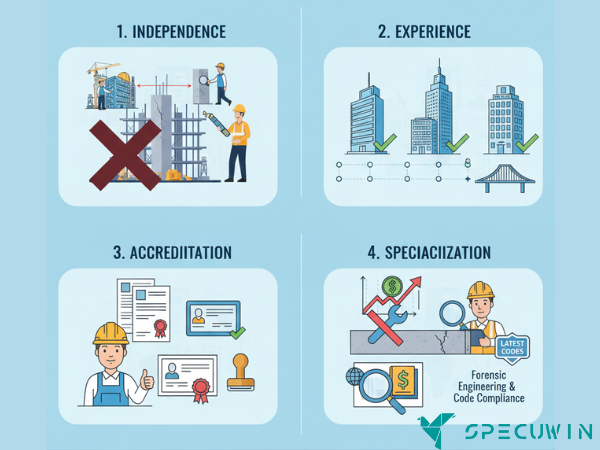
Not all engineering firms are equipped to handle high-level audits. You need a partner with specific experience in forensic engineering and code compliance.
When selecting a firm, look for:
- Independence: They must have no ties to your design or construction teams.
- Experience: Have they audited similar structures?
- accreditation: Are they licensed and certified in the specific jurisdiction?
This selection process is similar to the general rules for hiring engineering talent. For a deeper dive on vetting professionals, read our guide on How to choose the right structural engineer for your project.
The Future of Structural Integrity:-
As our buildings get taller and our infrastructure becomes more complex, the margin for error shrinks. We are moving toward a future where transparency is the most valuable currency in construction. A Third Party Audit provides that transparency.
It bridges the gap between the “perfect world” of architectural drawings and the “real world” of construction sites. It assures investors, tenants, and owners that the structure beneath their feet is as solid as the paperwork says it is.
Conclusion:-
In the AEC (Architecture, Engineering, and Construction) industry, trust is good, but verification is better. A Third Party Audit is not an accusation of incompetence against your current team; it is a standard of excellence that protects everyone involved. From ensuring regulatory compliance to preventing disastrous failures, the value of an unbiased perspective cannot be overstated. By prioritizing these independent reviews, you are not just building a structure; you are building a legacy of safety and reliability.
FAQ’s:-
1. Is a Third Party Audit mandatory by law?
A. It depends on the location and the scale of the project. In many jurisdictions, high-rise buildings and public infrastructure projects require independent verification by law. Even when not legally mandated, most insurance companies and financial institutions require a Third Party Audit before issuing coverage or loans.
2. How does a Third Party Audit differ from a standard building inspection?
A. A standard inspection often looks at surface-level functionality (HVAC, plumbing, general condition). A Third Party Audit focused on structure dives deep into the engineering calculations, load-bearing capacities, material strength, and seismic resistance. It is much more technical and mathematical in nature.
3. Will an audit delay my construction timeline?
A. If planned correctly, no. A Third Party Audit should run concurrently with the design and construction phases. While finding a major flaw might cause a temporary halt for rectification, this actually prevents much longer delays (and legal battles) that would occur if the flaw caused a failure after completion.
4. Can I use the same engineering firm that designed the building to audit it?
A. No. The definition of a Third Party Audit requires total independence. The auditing firm cannot have a financial or professional relationship with the design or construction team to ensure there is no conflict of interest or bias in the report.
5. What happens if the audit finds a structural defect?
A. The auditor will document the finding and classify its severity. They will then provide a report to the owner and the original project engineers. Typically, the original team will propose a remediation plan, which the auditor must review and approve to ensure the safety concern is fully resolved.
Read More On:-
For more information about engineering, architecture, and the building & construction sector, go through the posts related to the same topic on the Specuwin Blog Page.
Find out more accurately what we are going to take off in the course of applying leading new technologies and urban design at Specuwin.