

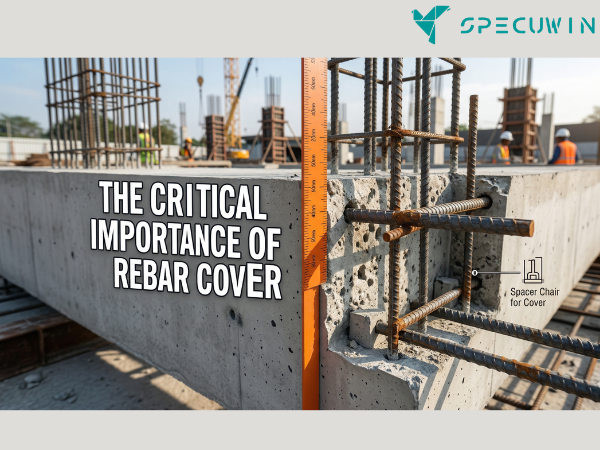
In the world of reinforced concrete construction, beauty is often only skin deep, but strength is buried deep within. At the heart of almost every modern structure lies a partnership between concrete and steel. While concrete provides incredible compressive strength, steel reinforcement (rebar) provides the necessary tensile strength to keep buildings from snapping under pressure. However, this partnership is fragile if the steel isn’t protected. This is where the importance of rebar cover becomes the most critical factor in a project’s lifespan.
Rebar cover, or concrete cover, is the least distance between the surface of embedded reinforcement and the outer surface of the concrete. It might seem like a minor technical detail on a blueprint, but it is the primary line of defense against structural failure.
Understanding the Importance of Rebar Cover in Reinforced Concrete:-
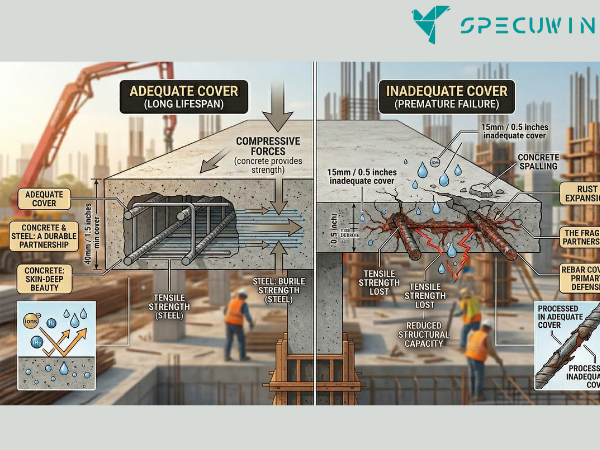
Concrete is naturally a porous material. Even though it looks solid, it contains microscopic pores that can allow water, chlorides, and carbon dioxide to seep in over time. The importance of rebar cover lies in its ability to act as a physical and chemical barrier.
When rebar is placed too close to the surface, it becomes vulnerable to environmental “attackers.” When steel rusts, it expands to nearly three to four times its original volume. This internal pressure causes the surrounding concrete to crack and flake away a process known as spalling. Once spalling begins, the structural integrity of the entire element is compromised. To ensure that your site inspections are catching these depth errors, it is essential to Choose the right structural engineer for your project who understands the local environmental hazards.
The Role of Passivation:
Concrete is naturally alkaline (high pH). This alkalinity creates a “passive” layer of ferric oxide around the steel rebar, which prevents it from rusting. The importance of rebar cover is to maintain this alkaline environment. If the cover is too thin, carbonation from the atmosphere reaches the steel faster, lowering the pH and “turning off” the protective layer, leading to rapid corrosion.
Why Environmental Factors Heighten the Importance of Rebar Cover:-
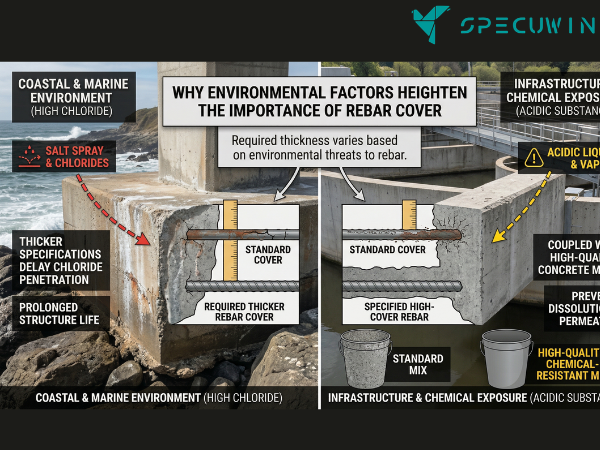
Not all environments are created equal, and therefore, the required thickness of concrete cover varies. A residential beam in a dry, indoor climate doesn’t face the same threats as a bridge footing in a coastal area.
1. Coastal and Marine Environments:
In areas near the ocean, salt spray carries chlorides. These ions are incredibly aggressive and can penetrate concrete quickly. In these settings, the importance of rebar cover is emphasized through thicker specifications to delay the time it takes for chlorides to reach the steel.
2. Infrastructure and Chemical Exposure:
For structures like sewage treatment plants or chemical warehouses, the concrete is exposed to acidic substances. Here, the importance of rebar cover is coupled with high-quality concrete mixes to ensure the “skin” of the building doesn’t dissolve or permeate too easily.
Structural Safety and the Importance of Rebar Cover:-
Beyond just preventing rust, there are mechanical reasons why concrete cover is non-negotiable.
Fire Resistance and the Importance of Rebar Cover:
Steel loses its strength rapidly when exposed to high heat. During a fire, the concrete cover acts as an insulator. The importance of rebar cover in fire safety is paramount; a thicker cover gives occupants more time to evacuate before the steel softens and the floors or columns collapse.
Bond Strength:
For a reinforced concrete beam to work, the steel and concrete must “grip” each other. This is called bond strength. If the cover is too thin, the concrete can split along the length of the bar, causing the steel to slip. Understanding the importance of rebar cover ensures that there is enough surrounding mass to “hold onto” the rebar under heavy loads.
Common Mistakes That Negate the Importance of Rebar Cover:-
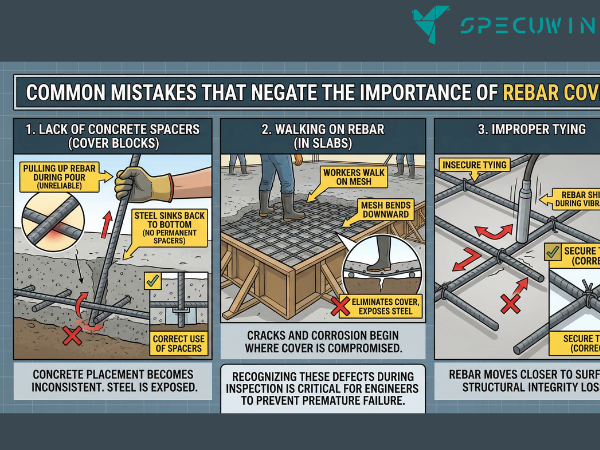
Despite its known value, errors regarding rebar cover are among the most common site defects.
- Lack of Concrete Spacers (Cover Blocks): Often, workers might “pull up” the rebar while pouring concrete rather than using permanent spacers. This is unreliable and often leads to the steel sinking back to the bottom.
- Walking on Rebar: In slabs, workers walking on the mesh can bend it downward, pushing it against the formwork and eliminating the cover.
- Improper Tying: If rebar isn’t tied securely, it can shift during the vibration of the concrete, moving closer to the surface than intended.
By recognizing the importance of rebar cover during the inspection phase, engineers can prevent these “hidden” errors that only show up as cracks ten years later. When builders ignore the importance of rebar cover, they often fall victim to the Top 10 structural issues in residential buildings, where moisture ingress leads to premature concrete spalling.
Maintenance and the Long-Term Importance of Rebar Cover:-
If you are managing an older building and notice “rust bleeding” or small cracks along the lines of the reinforcement, it is a sign that the original cover was insufficient or has been compromised. In such cases, structural repairs involve removing the damaged concrete, cleaning the rebar, and applying a specialized repair mortar to restore the importance of rebar cover protection.
For those in the AEC industry, staying updated on these structural nuances is vital for a future-ready career. Learning how to design for durability is just as important as designing for aesthetics. Maintaining the importance of rebar cover is a pillar of creatingSustainable structures, as it prevents the carbon-heavy process of early structural demolition and reconstruction
FAQ’s:
1. What is the standard thickness for rebar cover?
A. The thickness depends on the element and exposure. Typically, it ranges from 20mm for internal slabs to 75mm for foundations in contact with soil.
2. Can I use stones or wood as spacers to maintain cover?
A. No. Wood rots and stones can create weak points. Always use factory-made concrete or plastic “cover blocks” that match the strength of your pour.
3. Does the importance of rebar cover change with different types of steel?
A. Even with galvanized or epoxy-coated rebar, the cover remains essential for bond strength and fire protection, though it provides an extra layer of corrosion resistance.
4. How can I check the cover after the concrete has hardened?
A. Engineers use a “cover meter” or “pachometer,” which is a handheld electromagnetic device that detects the depth of the metal without damaging the concrete.
5. What happens if the cover is too thick?
A. Excessive cover can lead to wider surface cracks (tension cracks) because the reinforcement is too far from the surface to “control” the cracking. Balance is key.
Read More On:-
For more information about engineering, architecture, and the building & construction sector, go through the posts related to the same topic on the Specuwin Blog Page.
Find out more accurately what we are going to take off in the course of applying leading new technologies and urban design at Specuwin.