

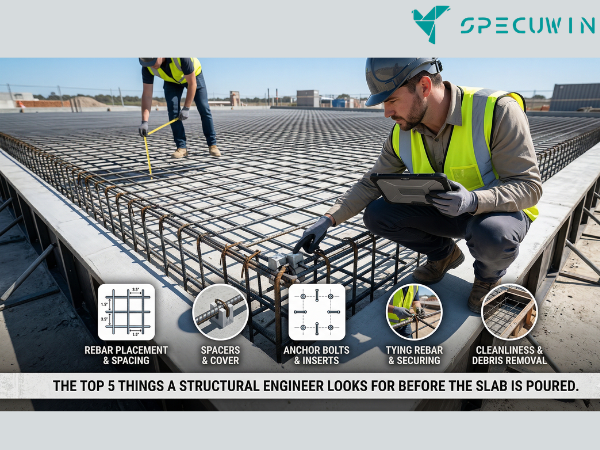
The pouring of a concrete slab is a point of no return in the construction process. Once that truck pulls up and the wet concrete begins to flow, the skeleton of your building is effectively sealed. For a Structural Engineer, the hours leading up to this moment are some of the most critical in the entire project lifecycle.
A Structural Engineer doesn’t just glance at the site to see if it “looks right.” They perform a rigorous, methodical inspection to ensure that the hidden components the steel, the soil, and the geometry are perfectly aligned with the design intent. If a mistake is buried under tons of concrete, it becomes a permanent, costly, and potentially dangerous defect.
In this guide, we will take a deep dive into the five non-negotiable elements a Structural Engineer inspects before giving the green light to pour.
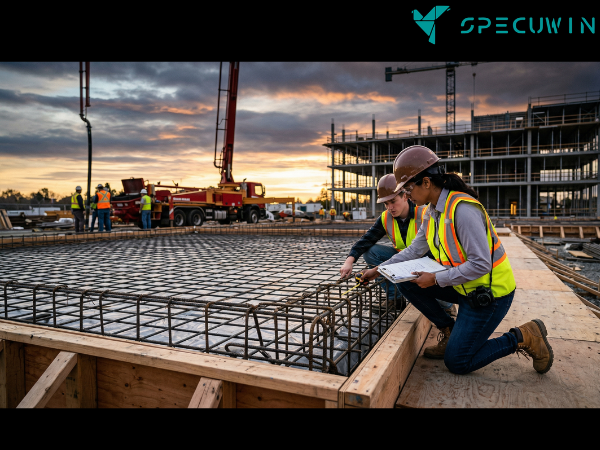
1. Soil Condition and Subgrade Compaction:-
Before a single piece of rebar is laid, a Structural Engineer focuses on the ground itself. The slab is only as stable as the earth beneath it.
The engineer checks for:
- Uniformity: Are there soft spots or areas of uncompacted fill?
- Moisture Content: Is the soil too dry (which can lead to swelling later) or too saturated (which leads to sinking)?
- Vapor Barriers: In residential or commercial slabs, a high-quality moisture barrier must be properly lapped and taped to prevent rising dampness.
If the soil isn’t prepared correctly, the slab will eventually crack or settle unevenly. This is why many projects require professional verification early on. For instance, The importance of soil testing in structural engineering cannot be overstated, as it dictates the entire foundation strategy.
2. Precision in Rebar Placement and Splicing:-
The “bones” of your concrete slab are made of steel. While concrete is excellent at resisting compression (pushing forces), it is naturally weak in tension (pulling forces). The steel reinforcement or rebar provides that necessary tensile strength.
When a Structural Engineer walks the site, they are looking for:
- Size and Grade: Ensuring the contractor used the specific diameter of steel specified in the blueprints.
- Spacing: Using a tape measure to verify that the grid is consistent. If bars are too far apart, the slab loses its structural integrity.
- Lap Splices: Steel bars aren’t infinite in length. Where two bars meet, they must overlap by a specific distance (calculated by the Structural Engineer) to ensure the load is transferred from one bar to the next without a break in strength.
3. Maintaining “Concrete Cover” with Chairs and Bolsters:-
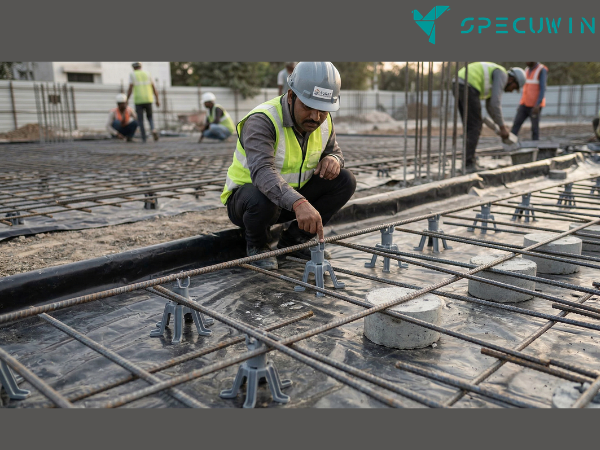
One of the most common mistakes in construction is laying rebar directly on the ground. If steel touches the dirt, it will rust. Rust expands, causing the concrete to “spall” or break apart from the inside out.
To prevent this, a Structural Engineer checks that the steel is “chaired up.” These small plastic or concrete supports (called chairs) hold the rebar at the exact midpoint of the slab’s thickness. If you see rebar laying on the vapor barrier right before a pour, the project is headed for a Top 10 structural issue in residential buildings. The steel must be suspended so that concrete can flow completely around it, encasing it in a protective, alkaline environment.
4. Integrity of Formwork and Penetrations:-
The formwork is the “mold” that holds the liquid concrete in shape. A Structural Engineer inspects the bracing of these forms to ensure they won’t “blow out” under the immense hydraulic pressure of the wet concrete.
Additionally, they look at “penetrations” the pipes, conduits, and sleeves for plumbing and electrical work.
- Edge Reinforcement: Are there extra bars around floor drains or large pipe clusters?
- Sleeving: Are pipes protected so they don’t crack when the concrete shrinks during the curing process?
The engineer ensures that these utilities don’t compromise the structural path of the slab. Understanding The role of a structural engineer in this phase ensures that the building’s “veins” (utilities) don’t weaken its “bones” (structure).
5. Cleanliness and Debris Removal:-
It sounds simple, but a Structural Engineer pays close attention to how clean the “form” is. Before the pour, the area inside the forms should be free of:
- Sawdust and wood scraps.
- Loose tie-wire clippings.
- Standing water or mud.
Any organic material trapped in the concrete will eventually rot, leaving a void or a “soft spot” in the slab. A clean site is the hallmark of a professional contractor and is a primary indicator of the final quality of the project.
Why the Pre-Pour Inspection Matters:-
Skipping the inspection by a Structural Engineer is a gamble with the building’s future. From high-rise developments to simple home extensions, the slab is the literal foundation of your investment.
If you are dealing with complex builds, such as structural engineering of high-rise buildings , the tolerances are even tighter. A single misplaced bar can lead to structural failure under wind or seismic loads.
By having a Structural Engineer perform a pre-pour walkthrough, you are buying peace of mind. You are ensuring that the materials you paid for are installed as designed, and that your building will stand the test of time, weather, and wear.
The Evolution of Slab Design:-
In modern construction, we are seeing a shift from traditional methods to more advanced technologies. Today, a Structural Engineer might use digital tools to verify their inspections. This is part of the broader Future of structural engineering trends and innovations .
From Building Information Modeling (BIM) to real-time sensors that monitor concrete curing, the industry is becoming more precise. However, the fundamental “eyes-on” check of the five elements listed above remains the gold standard for safety and quality.

Conclusion: Trust the Process:-
Construction is a collaborative effort. While the contractor handles the physical labor, the Structural Engineer acts as the guardian of the design. By focusing on soil, steel, cover, forms, and cleanliness, they ensure that the transition from “plans on paper” to “structure in the ground” is flawless.
Before you let the concrete trucks start their engines, make sure your Structural Engineer has signed off. It’s the most important hour you’ll spend on your project.
FAQ’s:-
1. Why can’t I just use mesh instead of rebar for my slab?
A. While mesh is fine for light walkways, a Structural Engineer usually specifies rebar for structural slabs because it offers superior load-bearing capacity and better control over shrinkage cracks in larger surface areas.
2. What happens if it rains right after the Structural Engineer finishes the inspection?
A. If heavy rain occurs, the Structural Engineer may need to re-inspect. Excess water can wash out the subgrade or leave silt on the rebar, which prevents the concrete from bonding properly to the steel.
3. How long does a Structural Engineer need for a pre-pour inspection?
A. For a standard residential slab, it usually takes 1–2 hours. For complex commercial projects, it may take a full day to verify every single tension cable or reinforcement detail.
4. Does the Structural Engineer also check the concrete mix?
A. Yes, the Structural Engineer specifies the “strength” of the concrete (measured in PSI or MPa). During the pour, they or a third-party lab will often take “slump tests” and cylinders to verify the mix matches the design.
5. What is the most common reason a Structural Engineer fails a pre-pour inspection?
A. Usually, it’s “low steel.” If the rebar has been stepped on and pushed to the bottom of the form, it won’t provide the necessary strength. The contractor must pull the steel back up onto chairs before the pour can begin.
Read More On:-
For more information about engineering, architecture, and the building & construction sector, go through the posts related to the same topic on the Specuwin Blog Page.
Find out more accurately what we are going to take off in the course of applying leading new technologies and urban design at Specuwin.