

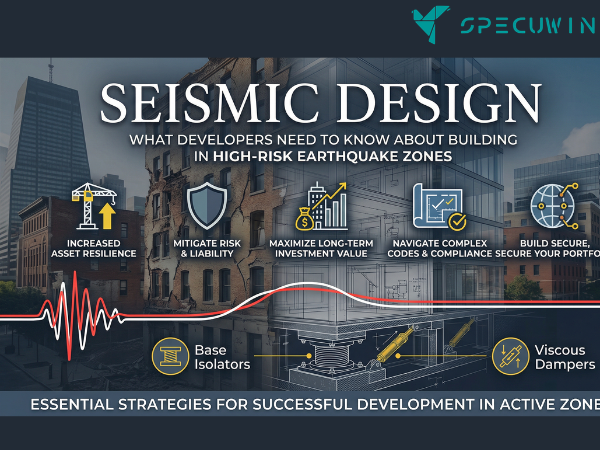
The skyline of a modern city is a testament to human ambition, but in many parts of the world, that ambition must be tempered by the raw power of the earth itself. For developers, building in high-risk seismic zones isn’t just a matter of regulatory compliance; it is a fundamental commitment to resilience, safety, and long-term asset protection.
Seismic Design has evolved from a niche engineering requirement into a core pillar of modern real estate development. As urban centers expand into geographically volatile areas, understanding how to balance the cost of construction with the necessity of earthquake resistance is the difference between a thriving project and a catastrophic liability. This guide explores the essential components of building for stability in the face of nature’s most unpredictable force.
The Fundamentals: Why Seismic Design is Non-Negotiable:-
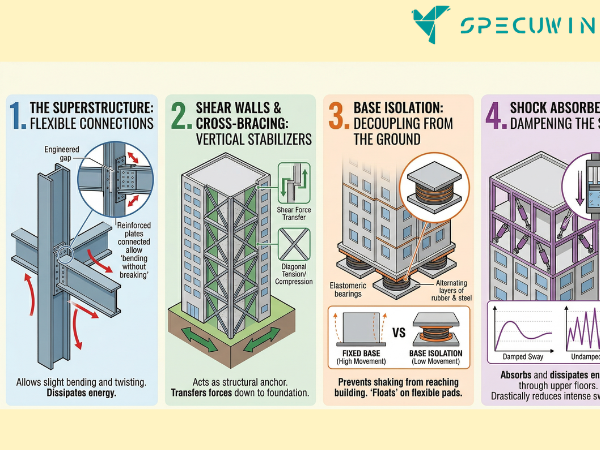
When we talk about building in high-risk zones, the primary goal of Seismic Design is to ensure that a structure can withstand the lateral forces exerted during an earthquake. Unlike vertical loads (gravity), seismic loads are dynamic and unpredictable. They push and pull a building in multiple directions, testing the flexibility and strength of every joint, beam, and column.
For a developer, the stakes are multi-layered:
- Life Safety: Ensuring occupants can evacuate safely.
- Asset Protection: Minimizing structural damage to avoid total loss.
- Functional Continuity: Allowing the building to remain operational or be quickly repaired after an event.
Investing in robust engineering at the outset is far more cost-effective than the alternative. To understand how we reached these modern standards, it is helpful to look atThe secrets of earthquake-resistant design: what you need to know to see how fundamental principles have shifted over the decades.
Site Selection and Soil: The Foundation of Seismic Design:-
Before a single brick is laid, the ground itself must be interrogated. Not all land is created equal when it comes to seismic activity. One of the most dangerous phenomena during an earthquake is liquefaction, where saturated soil loses its strength and behaves like a liquid, causing even the most well-built structures to tilt or sink.
Developers must prioritize geotechnical investigations. This is where The importance of soil testing in structural engineering becomes the most critical step in the pre-construction phase. Engineers use this data to determine the “Site Class,” which dictates the specific Seismic Design parameters the architects and engineers must follow.
Core Strategies in Modern Seismic Design:-
Modern engineering offers several strategies to mitigate the impact of seismic waves. Depending on the height, use, and budget of the project, developers may choose from several sophisticated approaches.
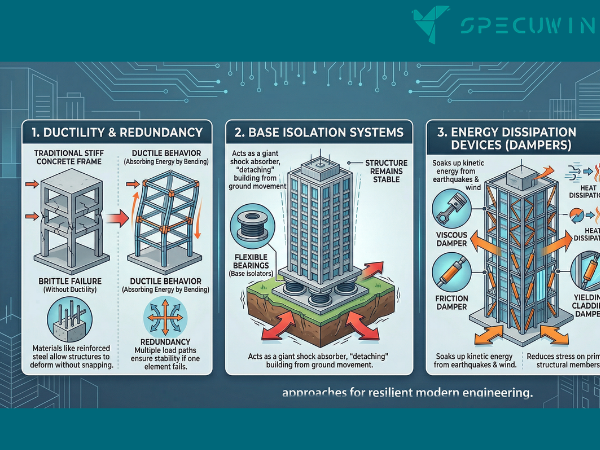
1. Ductility and Redundancy:
A building should not be brittle. In Seismic Design, “ductility” refers to a structure’s ability to undergo large deformations without collapsing. By using materials like reinforced steel, the building can absorb energy by bending rather than snapping. Redundancy ensures that if one structural element fails, others are in place to carry the load.
2. Base Isolation Systems:
Think of base isolation as a giant shock absorber for a building. By placing flexible bearings or pads between the foundation and the structure, the building is effectively “detached” from the ground’s movement. When the earth shakes, the foundation moves, but the building stays relatively still.
3. Energy Dissipation Devices (Dampers):
Similar to the dampers on a car, these devices are integrated into the building’s frame to soak up the kinetic energy produced by an earthquake. They convert motion into heat, reducing the stress on the primary structural members. This is a common feature in Structural engineering of high-rise buildings: challenges and solutions where wind and seismic forces are both major factors.
The Role of BIM in Enhancing Seismic Design:-
In the past, seismic planning was done through 2D drawings and manual calculations. Today, Building Information Modeling (BIM) has revolutionized the field. By creating a digital twin of the project, engineers can run advanced simulations to see exactly how a structure will react to different earthquake magnitudes.
For developers, this means fewer surprises. BIM allows for the optimization of material use while ensuring the highest safety standards. If you are new to this technology, exploring BIM for beginners: a guide to getting started in building information modeling can provide clarity on how these digital tools protect physical assets.
Seismic Design for Existing Structures: Retrofitting:-
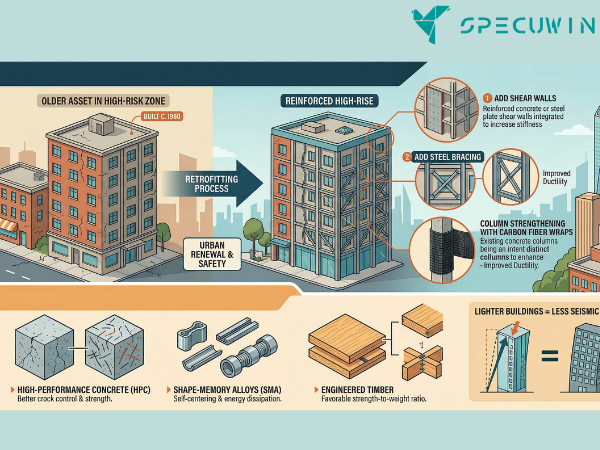
Not every project is a new build. Developers often acquire older assets in high-risk zones that were built before modern codes were established. In these cases, the focus shifts to Seismic Design through retrofitting.
Retrofitting can involve adding shear walls, steel bracing, or carbon fiber wraps to existing columns. It is an essential part of urban renewal in seismic zones. Understanding seismic retrofitting: how we reinforced a high-rise for earthquakes provides a roadmap for how developers can breathe new life and safety into older properties.
Material Innovation in Seismic Design:-
While concrete and steel remain the “big two,” the industry is seeing a surge in “smart” materials. High-performance concrete, shape-memory alloys, and even engineered timber are making their way into Seismic Design conversations. These materials offer better strength-to-weight ratios, which is crucial because a lighter building attracts less seismic force.
Economic Benefits of Superior Seismic Design:-
It is easy to view seismic requirements as an added cost, but savvy developers see them as value-add features.
- Reduced Insurance Premiums: Buildings with proven seismic resilience often qualify for lower insurance rates.
- Tenant Attraction: Corporate tenants increasingly perform due diligence on the seismic safety of their office spaces to ensure business continuity.
- Future-Proofing: As building codes become stricter, a project designed to exceed current standards will hold its value longer and avoid costly future upgrades.
Conclusion: Leading with Resilience
Building in high-risk earthquake zones is a high-stakes endeavor that requires a collaborative approach. It starts with choosing the right experts knowing what is the role of a structural engineer is vital for any developer looking to assemble a dream team.
By integrating Seismic Design into the very DNA of a project from soil analysis to BIM simulation and material selection developers can create structures that don’t just stand, but thrive in the face of adversity. In the end, the goal of Seismic Design is to ensure that when the earth moves, your investment doesn’t.
FAQ’s:-
1. Is Seismic Design only required for high-rise buildings?
A. No. While the requirements are more complex for skyscrapers, Seismic Design is essential for all structures in high-risk zones, including residential homes and low-rise commercial units, as they are all susceptible to ground motion.
2. How much does Seismic Design add to the total construction cost?
A. Typically, incorporating advanced seismic features adds between 1% to 5% to the total construction cost. However, this is significantly less than the cost of repairs or the total loss of a building following an earthquake.
3. Can a building be 100% “earthquake-proof”?
A. Technically, no. Engineers prefer the term “earthquake-resistant.” The goal is to prevent collapse and protect lives. While a building can be designed to remain functional after a major quake, no structure is entirely immune to nature’s extremes.
4. How does Seismic Design differ from wind load design?
A. Wind loads act primarily on the exterior surface of a building, while seismic loads are generated by the mass of the building itself as it is shaken. While some solutions work for both, Seismic Design requires specific focus on ductility and foundation-soil interaction.
5. What is the first step for a developer in a high-risk zone?
A. The first step is a comprehensive geotechnical report. You must understand the soil conditions and the proximity to fault lines before the Seismic Design process can begin.
Read More On:-
For more information about engineering, architecture, and the building & construction sector, go through the posts related to the same topic on the Specuwin Blog Page.
Find out more accurately what we are going to take off in the course of applying leading new technologies and urban design at Specuwin.