

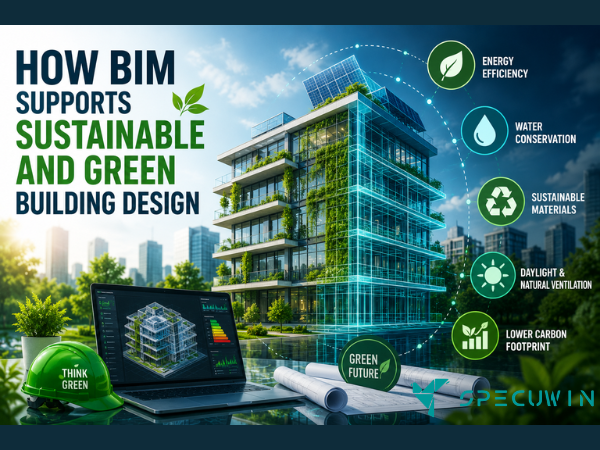
Sustainability has become a top priority in the Architecture, Engineering, and Construction (AEC) industry. Governments, developers, and building owners are increasingly demanding structures that consume less energy, produce fewer carbon emissions, and minimize environmental impact. Achieving these goals requires more than selecting eco-friendly materials—it requires smarter planning and informed decision-making from the earliest design stages. This is where BIM Sustainable Building Design plays a crucial role.
Building Information Modeling (BIM) enables project teams to create intelligent digital models that simulate building performance before construction begins. From energy analysis and daylight studies to material optimization and lifecycle assessment, BIM provides valuable insights that help architects and engineers design greener buildings while reducing waste and project costs.
According to industry studies, buildings account for nearly 40% of global energy-related carbon emissions, making sustainable design more important than ever. BIM helps address this challenge by supporting environmentally responsible decisions throughout the building lifecycle.
In this article, we’ll explore how BIM Sustainable Building Design contributes to greener construction and why it has become an essential tool for modern building projects.
What Is BIM Sustainable Building Design?
BIM Sustainable Building Design refers to using Building Information Modeling to design, analyze, construct, and manage environmentally responsible buildings.
Unlike traditional design methods, BIM integrates building geometry with intelligent data, allowing project teams to evaluate sustainability factors before construction begins.
These include:
- Energy performance
- Material quantities
- Carbon emissions
- Daylight availability
- Water consumption
- Indoor environmental quality
- Building lifecycle costs
By analyzing these factors early, designers can make better decisions that improve both environmental and financial performance.
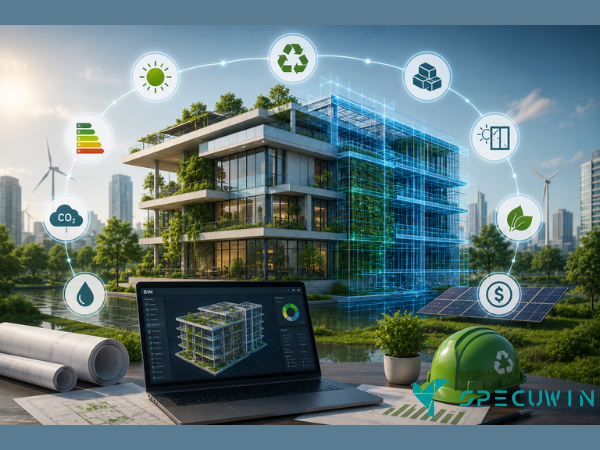
Why Sustainability Matters in Construction:-
The construction industry consumes enormous amounts of natural resources while generating significant waste and greenhouse gas emissions.
Common environmental challenges include:
- High energy consumption
- Material waste
- Carbon emissions
- Water usage
- Construction pollution
Governments worldwide are introducing stricter green building regulations and sustainability certifications such as LEED and BREEAM. BIM helps project teams meet these requirements by providing accurate digital information throughout the project lifecycle.
Energy Performance Analysis with BIM:-
One of the biggest advantages of BIM Sustainable Building Design is the ability to analyze building energy performance before construction.
BIM software can simulate:
- Heating and cooling loads
- Building orientation
- Solar heat gain
- Natural ventilation
- Lighting performance
- HVAC efficiency
These simulations help architects optimize building designs for lower energy consumption without compromising occupant comfort.
As a result, buildings become more energy-efficient and less expensive to operate.
Reducing Material Waste:-
Material waste is a major contributor to construction costs and environmental impact.
Traditional construction often involves inaccurate quantity estimates that lead to excess material purchases.
With BIM, project teams can generate precise quantity take-offs directly from the digital model.
This improves:
- Material planning
- Procurement accuracy
- Inventory management
- Waste reduction
By ordering only the required materials, projects minimize landfill waste while reducing overall costs.
Supporting Low-Carbon Material Selection:-
Choosing sustainable construction materials is another important aspect of BIM Sustainable Building Design.
BIM allows designers to compare different materials based on:
- Embodied carbon
- Durability
- Recyclability
- Maintenance requirements
- Environmental certifications
For example, teams can evaluate alternatives such as recycled steel, low-carbon concrete, or cross-laminated timber (CLT) to reduce the building’s overall carbon footprint.
These informed decisions contribute to more sustainable construction practices.
Improving Daylighting and Indoor Comfort:-
Natural lighting reduces electricity consumption while improving occupant well-being.
Using BIM, architects can study:
- Window placement
- Building orientation
- Sunlight penetration
- Shading devices
- Glare control
These analyses help maximize daylight without causing excessive heat gain, creating healthier and more comfortable indoor environments.
Better indoor environmental quality also improves workplace productivity and occupant satisfaction.
Water Efficiency Through BIM:-
Water conservation is becoming increasingly important in sustainable construction.
BIM supports water-efficient design by helping engineers plan:
- Rainwater harvesting systems
- Greywater recycling
- Efficient plumbing layouts
- Water-saving fixtures
- Landscape irrigation systems
By integrating these systems into the BIM model, project teams can reduce water consumption throughout the building’s lifecycle.
Lifecycle Assessment and Facility Management:-
Sustainability extends beyond construction. Buildings must operate efficiently for decades.
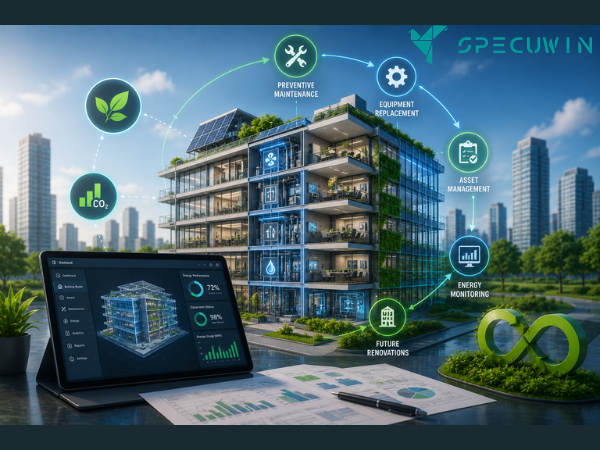
BIM Sustainable Building Design supports lifecycle management by providing accurate digital information for:
- Preventive maintenance
- Equipment replacement
- Asset management
- Energy monitoring
- Future renovations
Facility managers can use BIM models to optimize building performance while extending the lifespan of building systems.
This reduces both operating costs and environmental impact over time.
Collaboration Improves Sustainable Outcomes:-
Sustainable buildings require close collaboration between architects, structural engineers, MEP consultants, contractors, and owners.
BIM provides a shared digital platform where all stakeholders can access updated project information.
This collaborative environment helps teams:
- Resolve design conflicts early
- Coordinate sustainable strategies
- Improve communication
- Make informed design decisions
Better collaboration leads to more successful green building projects.
Benefits of BIM Sustainable Building Design:-
Organizations implementing BIM Sustainable Building Design experience numerous advantages.
| Benefit | Impact |
|---|---|
| Energy Efficiency | Lower operational costs |
| Material Optimization | Reduced construction waste |
| Carbon Reduction | Lower environmental impact |
| Better Collaboration | Improved project coordination |
| Accurate Quantity Take-offs | Reduced material overordering |
| Lifecycle Management | Longer building lifespan |
| Green Certification Support | Easier LEED and BREEAM compliance |
These benefits contribute to more environmentally responsible and economically viable construction projects.
Best Practices for Sustainable BIM Projects:-
To maximize sustainability, organizations should:
- Integrate BIM early in the design process.
- Perform energy simulations before construction.
- Select environmentally certified materials.
- Coordinate all disciplines using BIM.
- Monitor lifecycle performance.
- Use cloud collaboration for better information sharing.
- Follow recognized sustainability standards and BIM best practices.
These strategies help project teams deliver greener, more efficient buildings.
Frequently Asked Questions:-
1. What is BIM Sustainable Building Design?
A. BIM Sustainable Building Design uses Building Information Modeling to improve energy efficiency, reduce waste, optimize materials, and support environmentally responsible construction.
2. How does BIM improve sustainability?
A. BIM enables energy analysis, accurate quantity estimation, carbon assessment, material optimization, and lifecycle management before construction begins.
3. Can BIM help achieve green building certifications?
A. Yes. BIM supports certifications such as LEED and BREEAM by providing accurate building performance data and improving project documentation.
4. Does BIM reduce construction waste?
A. Yes. Accurate quantity take-offs and better coordination significantly reduce material waste and unnecessary procurement.
Conclusion
BIM Sustainable Building Design is transforming how environmentally responsible buildings are planned, constructed, and managed. By enabling energy analysis, material optimization, carbon reduction, and lifecycle management, BIM empowers project teams to make smarter decisions that benefit both the environment and project budgets. As sustainability becomes a central focus of the construction industry, BIM will continue to play a vital role in delivering greener, more efficient, and higher-performing buildings. Organizations that embrace BIM today are better positioned to meet future environmental regulations while creating healthier and more sustainable built environments.
Read More On:-
For more information about engineering, architecture, and the building & construction sector, go through the posts related to the same topic on the Specuwin Blog Page.
Find out more accurately what we are going to take off in the course of applying leading new technologies and urban design at Specuwin.