

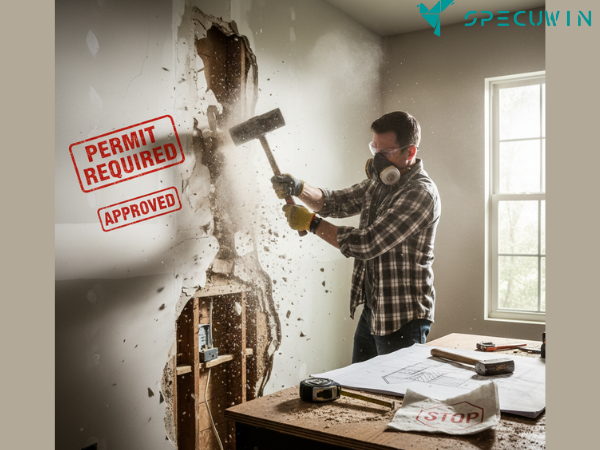
There is something undeniably satisfying about taking a sledgehammer to an ugly wall or sketching out plans for a dream deck on a napkin. We live in the golden age of DIY; with a few YouTube tutorials and a trip to the hardware store, it feels like we can build anything. But while painting cabinets or swapping out light fixtures are weekend warrior territory, messing with the bones of your house is a different beast entirely.
Before you swing that sledgehammer, there is one crucial piece of paper you need to think about: the Structural Permit.
I know, I know. “Permit” is a dirty word in the DIY world. It sounds like bureaucracy, waiting periods, and extra fees. But skipping a Structural Permit isn’t just about bending the rules it’s about risking the safety of your home and your family. In this guide, we’re going to walk through the specific renovations that trigger this requirement and explain why getting that stamp of approval is the best investment you’ll make.
What Exactly Is a Structural Permit?:-
To put it simply, a Structural Permit is formal permission from your local municipality to make changes to the load-bearing elements of your property. It’s not just a receipt for a fee; it is a verification process. It ensures that the changes you are planning won’t cause your roof to sag, your floors to bounce, or your balcony to collapse.
When you apply for a Structural Permit, a professional reviews your plans to ensure they meet local building codes and safety standards. This often involves calculations regarding weight loads, materials, and soil stability.
Common DIY Projects That Trigger a Structural Permit:-
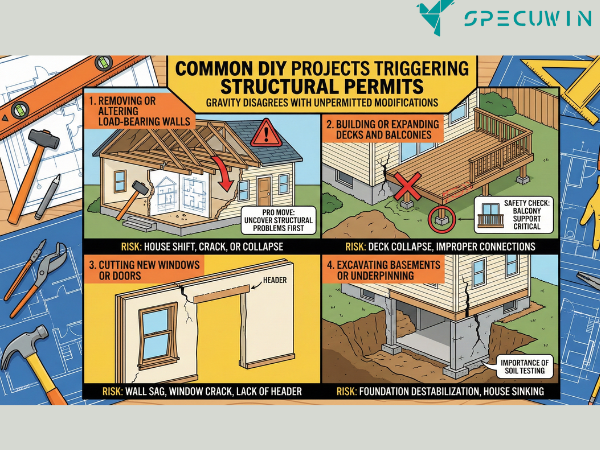
Many homeowners assume that if they own the house, they can do whatever they want inside of it. Unfortunately, gravity disagrees. Here are the most common “weekend projects” that actually require a full Structural Permit.
1. Removing or Altering Load-Bearing Walls:
This is the classic HGTV move: “Let’s take down this wall to create an open-concept living space!” It looks easy on TV, but in reality, that wall might be holding up your second floor or your roof.
- Why it needs a permit: If you remove a load-bearing wall without properly redistributing the weight (usually with a beam), your house will eventually shift, crack, or collapse.
- The Pro Move: Before you start demolition, you need to understand what you are dealing with. In older properties, it can be tricky to tell which walls are structural.
- If you are working on a fixer-upper, check out our guide on Common Structural Problems in Old Houses and How to Fix Them to understand what you might find behind the drywall.
2. Building or Expanding Decks and Balconies:
Building a deck seems like a straightforward carpentry project, but it is actually a complex structural engineering challenge. You are creating a platform that must hold thousands of pounds of people, furniture, and potentially snow, often attached to the side of your house.
- Why it needs a permit: Improperly attached ledgers (the board connecting the deck to the house) are a leading cause of deck collapse. A Structural Permit ensures your footings are deep enough and your connections are secure.
- The Safety Check: Balconies are even more critical because they lack the support columns of a ground-level deck.
- Before you buy lumber, read about Balcony Safety: Structural Considerations for Residential Decks to see why professional input is non-negotiable here.
3. Cutting New Windows or Doors:
Want to add a sliding glass door to the backyard or a new window in the kitchen? You are cutting a hole in the “skin” of your house.
- Why it needs a permit: The studs you cut to make that hole were carrying weight. You need to install a “header” (a horizontal beam) to bridge that gap and transfer the weight around the new opening. If the header is too small, the window will crack, and the wall will sag.
4. Excavating Basements or Underpinning:
Turning a crawlspace into a basement or lowering a basement floor to get higher ceilings is a massive trend. It is also one of the most dangerous DIY projects to attempt without oversight.
- Why it needs a permit: You are messing with the foundation that holds up the entire house. Digging too close to the footings can destabilize the soil and cause the house to sink.
- Foundation work requires precise analysis. You can learn more about the broader implications of foundation integrity in our article on The Importance of Soil Testing in Structural Engineering.
The Hidden Dangers of Ignoring the Structural Permit:-
Maybe you are thinking, “Who’s going to know? It’s inside my house.” The temptation to fly under the radar is real, but the consequences of skipping a Structural Permit are severe.
1. Resale Nightmares:
When you sell your home, savvy buyers will ask for permits for any obvious renovations. If you can’t produce a Structural Permit for that open-concept kitchen or that new deck, the deal can fall apart. Home inspectors are trained to spot “unpermitted work” like sagging headers or uneven floors.
2. Insurance Denials:
If a pipe bursts, your insurance covers it. But if your unpermitted DIY roof modification collapses during a storm, your insurance company can deny the claim entirely. They are insuring the house as it was built to code, not the version you hacked together on a Saturday.
3. Genuine Safety Risks:
This is the part that matters most. Structural codes aren’t arbitrary; they are written in blood. They exist because buildings have failed in the past. Ignoring the need for a Structural Permit puts your family at risk of injury from structural failure.
How to Obtain a Structural Permit for Your Renovation:-
Getting a permit doesn’t have to be a nightmare. It just requires a specific workflow.
- Draft Your Plans: You can’t just describe your idea to the city clerk. You need scale drawings showing the existing structure and the proposed changes.
- Hire a Pro for Calculations: Even if you are doing the labor yourself, you likely need a structural engineer to sign off on the plans. They calculate the loads and tell you exactly what size beams or footings you need.
- Submit and Wait: Submit your stamped plans to the local building department. They will review them and issue the Structural Permit.
- Inspections: The city will send an inspector at key stages (e.g., before you close up the wall) to verify you followed the plan.
If you are unsure who to trust with your home’s safety, it is vital to vet your professionals carefully.
- Check out our guide on How to Choose the Right Structural Engineer for Your Project.

Conclusion: The Structural Permit is Your Safety Net:-
Renovating your home is an exciting journey. It’s about creating a space that reflects your personality and meets your needs. But that dream home needs to stand up literally.
The Structural Permit isn’t a barrier to your creativity; it’s the safety net that ensures your hard work lasts for generations. So, before you grab the sledgehammer, grab the phone and call a professional. Your future self (and your home’s foundation) will thank you.
FAQ’s:-
1. Do I need a structural permit for a bathroom remodel?
A. Generally, no, if you are just replacing fixtures (toilet, tub, sink) and tiles. However, if you plan to move a wall, enlarge a window, or install a heavy oversized tub that requires reinforcing the floor joists, you will likely need a Structural Permit.
2. Can I draw the plans for a structural permit myself?
A. Some municipalities allow homeowners to draw their own plans for minor work, but they must still meet strict code requirements. For anything involving load-bearing walls or foundations, most building departments require plans stamped by a licensed structural engineer or architect.
3. What happens if I get caught renovating without a structural permit?
A. The city can issue a “Stop Work” order immediately. You may be fined (often double the original permit fee) and required to tear down the work you’ve already done to expose the structural elements for inspection. In extreme cases, you may have to rebuild everything to code at a significant cost.
4. How much does a structural permit cost?
A. The cost varies wildly by location and project scope. It can range from a few hundred dollars for a simple deck to several thousand for a major addition. This fee usually covers the administrative review and the required site inspections.
5. How long does it take to get a structural permit approved?
A. This depends on your local building department’s workload. Simple “over-the-counter” permits might take a few days, but complex structural reviews can take 2 to 6 weeks. Always factor this waiting period into your project timeline.
Read More On:-
For more information about engineering, architecture, and the building & construction sector, go through the posts related to the same topic on the Specuwin Blog Page.
Find out more accurately what we are going to take off in the course of applying leading new technologies and urban design at Specuwin.