

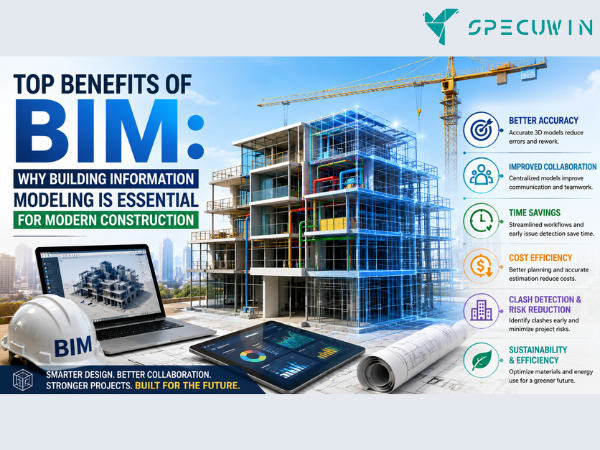
The Benefits of BIM have made Building Information Modeling one of the most valuable technologies in the Architecture, Engineering, and Construction (AEC) industry. As construction projects become more complex, traditional design methods often lead to communication gaps, design conflicts, and costly delays. BIM solves these challenges by creating a shared digital environment where every stakeholder works with accurate, up-to-date project information.
Whether you’re an architect, structural engineer, contractor, or project owner, understanding the benefits of BIM can help you improve project quality, reduce costs, and streamline workflows. Moreover, BIM supports every stage of a building’s lifecycle, making it a long-term investment rather than just a design tool.
In this article, we’ll explore the top benefits of BIM and explain why it has become the industry standard for modern construction.
What Are the Benefits of BIM?
The Benefits of BIM extend far beyond creating 3D models. BIM combines design, data, collaboration, scheduling, and cost management into a single digital workflow.
Instead of relying on separate drawings and manual updates, project teams use a centralized model that automatically reflects design changes across every discipline.
As a result, BIM improves decision-making throughout the entire project lifecycle.
Some of the most significant benefits include:
- Better collaboration
- Improved visualization
- Reduced design errors
- Accurate quantity estimation
- Faster project delivery
- Better cost control
- Improved facility management
Consequently, BIM enables smarter, faster, and more efficient construction projects.
1. Improved Collaboration Across Teams:-
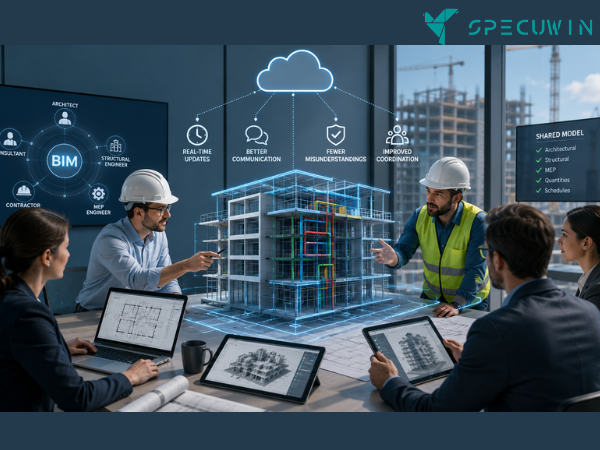
One of the biggest Benefits of BIM is enhanced collaboration.
Construction projects involve multiple professionals, including architects, structural engineers, MEP engineers, contractors, and consultants. Without a shared platform, communication often becomes fragmented.
BIM allows every stakeholder to work from the same digital model.
This provides:
- Real-time updates
- Better communication
- Fewer misunderstandings
- Improved coordination
Furthermore, cloud-based collaboration ensures that everyone has access to the latest project information regardless of their location.
2. Better Design Visualization:-
Traditional 2D drawings can be difficult for clients and non-technical stakeholders to understand.
BIM solves this issue through intelligent 3D visualization.
Instead of imagining how a building will look, stakeholders can explore a realistic digital model before construction begins.
This helps with:
- Design reviews
- Client presentations
- Material selection
- Space planning
- Decision-making
Therefore, visualization improves confidence while reducing design revisions later in the project.
3. Reduced Design Errors and Rework:-
Design conflicts are one of the leading causes of project delays and budget overruns.
Fortunately, BIM minimizes these issues through model coordination and clash detection.
For example, BIM software can identify:
- Pipes intersecting structural beams
- HVAC ducts conflicting with ceilings
- Electrical conduits blocking maintenance access
These problems are resolved before construction starts.
As a result, project teams avoid expensive on-site modifications and unnecessary delays.
4. Accurate Quantity Take-Offs and Cost Estimation:-
Estimating construction costs manually can be time-consuming and prone to errors.
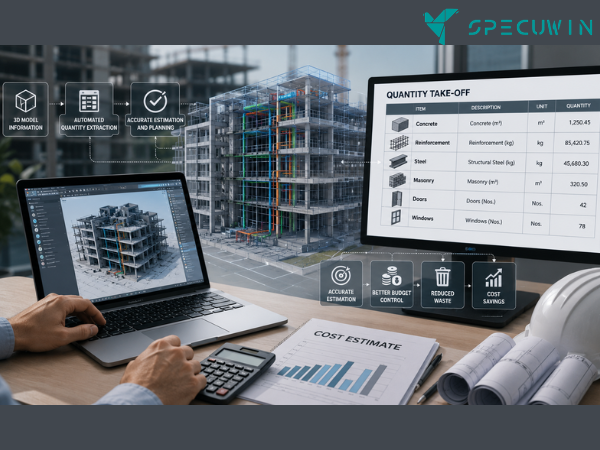
One of the most valuable Benefits of BIM is automated quantity extraction.
Because every model element contains detailed information, BIM software can instantly generate:
- Material quantities
- Reinforcement schedules
- Concrete volumes
- Steel tonnage
- Door and window schedules
Consequently, estimators produce more accurate budgets and reduce material waste.
5. Faster Project Delivery:-
Time is one of the most critical factors in construction.
BIM accelerates project delivery by improving coordination and eliminating repetitive work.
Key advantages include:
- Faster design revisions
- Automated documentation
- Better communication
- Reduced approval cycles
- Improved planning
Additionally, 4D BIM connects the project schedule with the digital model, allowing teams to visualize each construction phase before work begins.
6. Improved Cost Control:-
Cost overruns can significantly impact project success.
Fortunately, BIM provides greater financial control throughout the project lifecycle.
Because design changes are updated automatically, project managers can quickly evaluate their impact on cost and schedule.
This helps organizations:
- Reduce waste
- Optimize resources
- Prevent unnecessary expenses
- Improve budgeting accuracy
Ultimately, BIM helps deliver projects within budget.
7. Better Construction Planning:-
Planning construction activities manually often leads to scheduling conflicts.
The Benefits of BIM include advanced construction planning through digital simulation.
Using 4D BIM, project managers can:
- Visualize construction sequences
- Identify scheduling conflicts
- Improve site logistics
- Optimize workforce allocation
Consequently, construction becomes more organized and predictable.
8. Improved Facility Management:-
BIM continues delivering value long after construction is complete.
Building owners use BIM models to manage:
- Maintenance schedules
- Equipment information
- Asset tracking
- Space management
- Future renovations
Instead of searching through paper documents, facility managers access all building information from a single digital model.
Therefore, maintenance becomes faster and more efficient.
9. Better Sustainability and Environmental Performance:-
Sustainability has become a priority in modern construction.
BIM supports environmentally responsible design by helping teams:
- Reduce material waste
- Optimize energy performance
- Improve daylight analysis
- Evaluate carbon footprints
- Select sustainable materials
As a result, projects become more environmentally friendly while reducing operational costs.
10. Improved Client Satisfaction:-
Clients expect projects to be delivered on time, within budget, and according to specifications.
The Benefits of BIM help achieve these goals through greater transparency and collaboration.
Clients receive:
- Better project visualization
- More accurate cost estimates
- Faster decision-making
- Fewer construction surprises
- Higher-quality outcomes
This leads to stronger client relationships and greater confidence throughout the project.
Summary of the Benefits of BIM:-
| Benefit | Impact |
|---|---|
| Improved Collaboration | Better teamwork and communication |
| Better Visualization | Easier design understanding |
| Clash Detection | Fewer construction errors |
| Accurate Cost Estimation | Better budgeting |
| Faster Project Delivery | Reduced delays |
| Better Scheduling | Improved planning |
| Facility Management | Easier building maintenance |
| Sustainability | Reduced environmental impact |
| Improved Quality | Better construction outcomes |
Frequently Asked Questions:-
1. What are the main benefits of BIM?
A. The main benefits of BIM include improved collaboration, reduced errors, better visualization, accurate cost estimation, faster project delivery, and improved facility management.
2. Why is BIM important in construction?
A. BIM improves communication, increases efficiency, reduces rework, and helps deliver higher-quality projects while controlling costs.
3. Does BIM reduce construction costs?
A. Yes. BIM minimizes design conflicts, reduces material waste, improves planning, and enables more accurate budgeting.
4. Can small firms benefit from BIM?
A. Absolutely. Small architectural and engineering firms can improve productivity, reduce errors, and compete more effectively by adopting BIM.
Conclusion:-
The Benefits of BIM extend across every phase of a construction project, from initial planning to long-term facility management. By improving collaboration, reducing design conflicts, enhancing visualization, and optimizing costs, BIM has become an essential tool for modern construction professionals.
As digital technologies continue to reshape the AEC industry, organizations that embrace BIM will gain a competitive advantage through better project delivery, increased efficiency, and higher client satisfaction. Whether you’re starting your first BIM project or expanding your digital capabilities, investing in BIM is a smart decision for the future of construction.
Read More On:-
For more information about engineering, architecture, and the building & construction sector, go through the posts related to the same topic on the Specuwin Blog Page.
Find out more accurately what we are going to take off in the course of applying leading new technologies and urban design at Specuwin.