

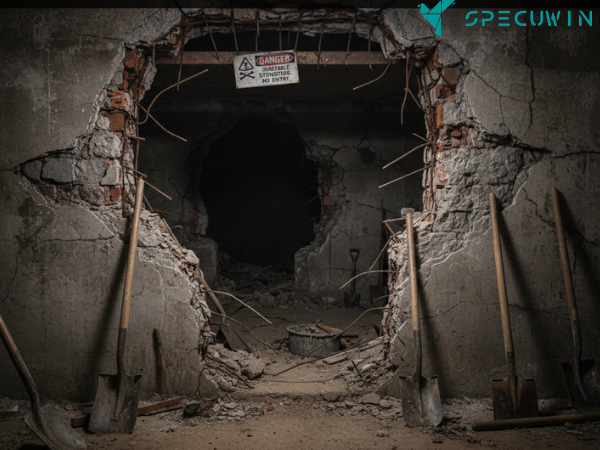
We all crave a little more space. Maybe you’ve been dreaming of a cozy home theater, a private gym, or just a quiet home office away from the chaos of the living room. It’s natural to look down at that dusty, cramped basement and imagine the possibilities. “If we just dug down a few feet,” you think, “we could double our living space.” It seems simple enough it’s just dirt, right?
Unfortunately, this line of thinking is where many homeowners unknowingly walk into a trap. While the idea of expanding your home’s footprint without changing its exterior is appealing, the reality of digging beneath an existing structure is incredibly complex. There are Hidden Dangers lurking in the soil that can turn a renovation dream into a structural nightmare.
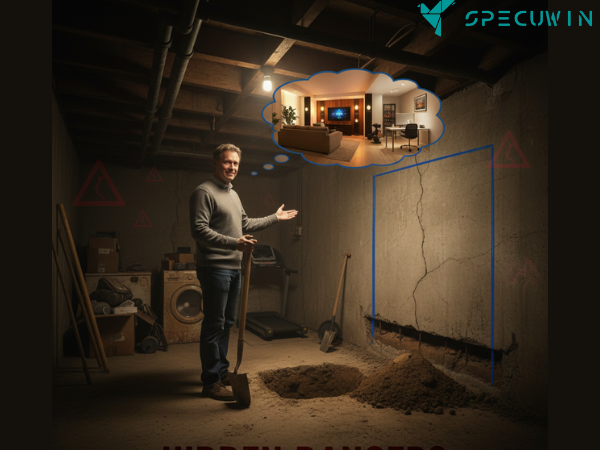
The Hidden Dangers to Your Home’s Structural Integrity:-
When you start removing earth from beneath a house, you aren’t just moving dirt; you are messing with the physics that keeps your roof over your head. Your home’s foundation was designed to sit on a specific level of soil. When you excavate without professional engineering oversight, you risk undermining the footings the very “feet” your house stands on.
One of the most immediate risks is differential settlement. This happens when the soil beneath the foundation shifts unevenly. You might not notice it instantly, but over weeks or months, the stress accumulates. Suddenly, you aren’t just dealing with a basement project; you are facing severe structural failure. This is often where owners start seeing cracks in the drywall or sticking doors. If you own an older property, these risks are amplified.
Read more on:- Common structural problems in old houses and how to fix them
Environmental Hidden Dangers: Soil Stability and Water Tables:-
It is easy to forget that the ground isn’t just a solid block of inert material. It’s dynamic. It expands when wet, shrinks when dry, and exerts massive pressure on your basement walls. Unauthorized excavations often skip the critical step of analyzing what kind of ground you are digging into.
For instance, if you dig below the water table without proper waterproofing and drainage plans (which are standard in permitted projects), you are essentially inviting a flood. But beyond water, the soil itself matters. Sandy soils can collapse without warning, while clay soils can heave with tremendous force. Ignoring the composition of the earth you are building on is a recipe for disaster.
Read more on:-Why soil testing is critical in structural engineering

The Hidden Dangers of Legal and Financial Ruin:-
Let’s step away from the physical cracks for a moment and talk about the cracks in your wallet. Unauthorized work is, by definition, unpermitted. You might think you are saving time and money by skipping the bureaucracy, but local councils and municipalities take excavation very seriously.
If a neighbor reports you or worse, if a structural failure occurs you could be slapped with a “Stop Work” order immediately. But the financial Hidden Dangers go deeper. Insurance companies generally will not cover damage resulting from illegal work. If your excavation causes a wall to collapse, you are on the hook for the repairs, strictly out of pocket. Furthermore, when you eventually try to sell the home, unpermitted square footage can kill a sale instantly or significantly devalue the property.
The Hidden Dangers to Neighboring Properties:-
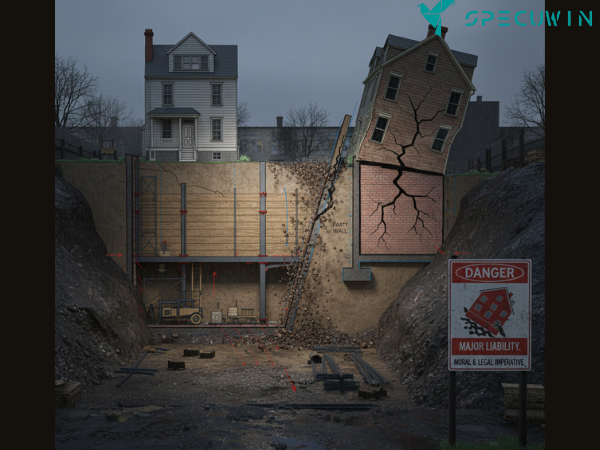
Excavation doesn’t happen in a vacuum, especially in urban areas where houses are built close together. When you dig down, you change the lateral support for the soil next to you the soil that happens to be holding up your neighbor’s house.
There have been terrifying cases in the news where a simple basement expansion caused a neighbor’s party wall to detach or sag. This moves the issue from a renovation project to a massive liability lawsuit. Ensuring you have a qualified engineer to calculate these loads is not optional; it’s a moral and legal necessity.
Read more on:-How to choose the right structural engineer for your project
Identifying the Hidden Dangers Before It’s Too Late:-
Perhaps you bought a house where previous owners did some “DIY” digging, or you suspect a contractor is cutting corners on your current project. How do you know if you are in the danger zone?
Look for warning signs: new diagonal cracks appearing above door frames, floors that seem to slope suddenly, or windows that refuse to close. These are the building’s way of screaming for help. If you see these, you need to stop guessing and get a professional opinion immediately.
Conclusion:-
The allure of extra space is powerful, but the Hidden Dangers of achieving it through unauthorized means are simply too high. Your home is likely your biggest asset, and protecting its bones is far more valuable than an unpermitted extra room. If you are planning to dig, do it right: get the permits, hire the experts, and ensure that the ground beneath your feet is as solid as your plans for the future.
FAQ’s:-
1. Can I dig out my basement myself if I don’t go too deep?
A. Technically, you can physically use a shovel, but it is highly inadvisable and likely illegal depending on your local building codes. Even “shallow” digging can undermine footings if you don’t understand the load distribution of your specific foundation type. Always consult a structural engineer before removing soil near your foundation.
2. What is the difference between underpinning and benching?
A. Underpinning involves extending the existing foundation downwards to a lower depth, which allows you to gain full ceiling height. Benching involves creating a concrete “step” or ledge inside the foundation walls; it’s cheaper and less risky than underpinning but leaves you with a wider perimeter and less usable floor space. Both require permits.
3. Does home insurance cover damage from unpermitted excavation?
A. Rarely. Most homeowners’ insurance policies have clauses that exclude coverage for damage caused by illegal acts, poor workmanship, or work done without required permits. If your DIY dig causes a collapse, you will likely have to pay for the repairs entirely on your own.
4. How do I know if my house has unauthorized basement work?
A. Look for inconsistencies. If the basement finishes look amateurish, if there are no records of permits on the city website for the finished basement, or if you see structural oddities like uneven floors or erratic cracking, it might be unauthorized.
5. How much does it cost to legalize an unauthorized basement?
A. It varies wildly. You will need to pay for retro-active permits (often with penalties), hire an engineer to assess the safety, and potentially pay for expensive construction work to bring the structure up to code. In some cases, it can cost tens of thousands of dollars to fix what was done cheaply.
Read More On:-
For more information about engineering, architecture, and the building & construction sector, go through the posts related to the same topic on the Specuwin Blog Page.
Find out more accurately what we are going to take off in the course of applying leading new technologies and urban design at Specuwin.